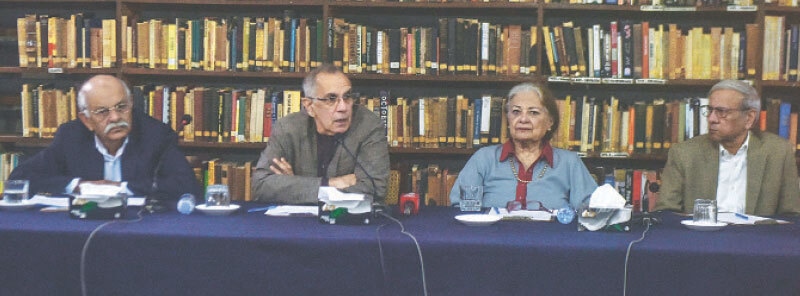
KARACHI: Strains on the global economy, the uprising of Generation Z and its growing impact, as well as issues of war, deterrence and escalation in the world largely shaped 2025 as the Pakistan Institute of International Affairs (PIIA) reviewed the state of global politics on Saturday.
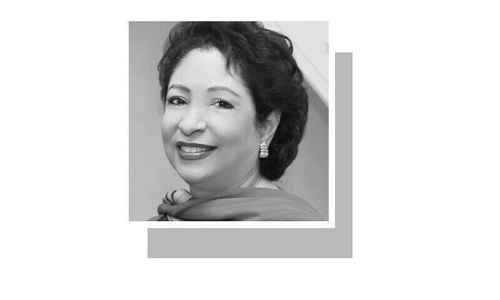
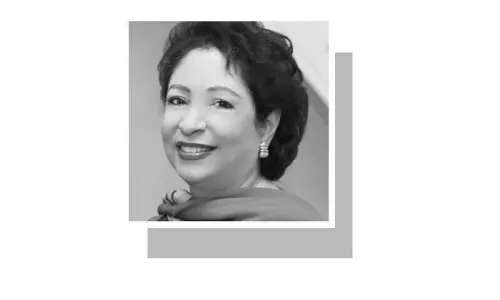
The chairperson of PIIA, diplomat and scholar Dr Masuma Hasan reminded how the past year was full of conflicts, the worst of which was in Gaza. “There was also Sudan where 12 million Sudanese left their own country, there was the Ukraine war, strikes on Iran, while in Haiti, criminal gangs ruled the country. Also, there was the crisis in Venezuela where the president was kidnapped by the United States of America. And in between there were tensions between the US and China and the US and the European Union. Still, the Gaza genocide overshadowed all other conflicts,” said Dr Hasan.
Economist Dr Kaiser Bengali also said that the turbulence created by the US in 2025 is not likely to go away. He also said that talk of Generation Z bringing about change in the world is quite overrated.
“Every generation is different from the previous generation. And every previous generation has contributed something or the other to the world. So to say that this is the generation that is going to change the world is not correct as the world has also been changing,” he said.
State of global politics reviewed in PIIA seminar
“The Gen Z revolts that have been taking place have not delivered anything. The spring revolutions that came did not deliver anything and ultimately the status quo came back, though maybe with different faces and different names,” he added.
“In Bangladesh, nothing will change. The same elite is going to run the country. The only change that has happened is in Sri Lanka where a Leftist party has come into power. Otherwise, Sri Lanka has always been ruled by one or two families. In Pakistan, we overthrew Ayub Khan, we overthrew Musharraf through mass protests but then we found that we were still where we began. No change. So I think that this entire Gen Z thing and its revolt is overrated because change never comes by mobs on the street. In Iran, too, the protests are already dying down and the Ayatollah will continue to rule.
“You need to have an organised resistance. Until and unless there is organised resistance you cannot sustain your movement and bring about the changes that you want to bring. And the thing about organised movement is that you need to organise around a strategy,” Dr Bengali explained.
‘We are living in the era and aura of Trump’
Economist and Executive Director of the Institute of Business Administration (IBA) Dr S. Akbar Zaidi added to that by saying that “We are living in the era and aura of the US President Donald Trump. His is a muscular government,” he said.
“There are especially two instances under the current US President that have shown the military might and the precision of the military might of the US that we had not seen for many decades,” said Dr Zaidi.
“Earlier, there had been many attempts by the US government to intervene to change governments but two things that they did in the last seven months show the precision and military science of the US Army that has Donald Trump as its commander-in-chief. One was about Iran, where the planes flew from the middle of the United States to bomb where Iran’s nuclear facilities were supposed to be. And another thing was the recent kidnapping of Maduro, the president of Venezuela. It was a raid, not an invasion,” he pointed out.
“This has been written about as a lurch to the past, a new kind of imperialism. It is a resource imperialism. It is interesting to see that unlike Iraq or Libya and other places where the mantra was democracy or regime change, in the case of Venezuela it is nothing of the sort. Trump has said that he now runs Venezuela. And it is all for and about oil. It is no longer about democracy or regime change, it is about power and natural resources. The US national defence strategy of 2025 under Trump says that ‘the United States cannot allow any nation to become so dominant that it could threaten our interests’.”
Meanwhile, speaking about war, deterrence and escalation in the world, Air Vice Marshal Dr Muhammad Abid Rao, who is a member of the research faculty of the PAF Air War College, said that in America, their economy is largely based on the sale of weapons. Therefore, it is very important for America to have a war at any given time in different parts of the world.
“If you see from 1945, America came and settled in Europe and the Pacific region and till today they have not vacated those bases, be it UK, Belgium, Holland or Germany. France is the only country there which did not allow the Americans to make a base there. If you see the Pacific to the Philippines, to Japan to Thailand and so many other islands, you will find American bases there.
“They had missed out on the Middle East. So in 1990, America prompted Iraq to take over Kuwait. That gave America an excuse to have the first Gulf War. So they attacked and destroyed Iraq and made bases there. Today, they have bases in Oman, UAE, Qatar, Kuwait, Saudi Arabia. Iraq is wiped out, so is Syria.
“Let me take you back to the Arab-Israel war of 1973. There were moments in that October war when Israel would have collapsed had the Americans not warned them about the Egyptian surprise attack. Israel and America then formulated the policy that any country who has the potential or capability to threaten Israel should be neutralised,” the Air Vice Marshal explained.
Published in Dawn, January 18th, 2026