Paris Mein Aik Din
By Mustansar Hussain Tarar
Sang-e-Meel Publications
ISBN: 978-969-35-3682-9
208pp.
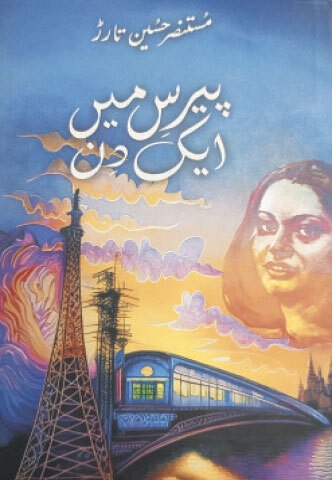
Actor, novelist, playwright and host Mustansar Hussain Tarar is one of Pakistan’s most beloved travel writers. For more than six decades, he has possessed a rare gift: the ability to transform simple journeys into meditative explorations of place, memory and the self. Paris Mein Aik Din [A Day in Paris], is a testament to this talent.
Though he has wandered through a dozen European countries, Paris unfolds in his narrative — sometimes familiar, sometimes transformed — like a dream recalled differently with each glance. From the very first page, Tarar’s storytelling captivates the reader, carrying them along with nostalgia, insight and quiet emotion.
The title may seem modest at first, suggesting a single ordinary day in a famous city, yet the book soon reveals itself as deeply reflective, atmospheric and richly layered. Tarar does not merely describe Paris as the “city of love”, he uses it as a canvas to explore art, history, exile, ageing, nostalgia and the subtle ache of longing. Each street, bridge and café is more than a backdrop — it is a mirror through which the traveller’s inner world and memories reflect.
Tarar chronicles his journey from the Hague to Paris with his wife and granddaughter, Mishal. Though his son and daughter-in-law also accompany them, they appear only briefly and occasionally, enough to remain part of the narrative without overshadowing its central focus.
Mustansar Hussain Tarar returns to Paris after half a century and uses the city as a canvas to explore art, history, exile, ageing, nostalgia and the subtle ache of longing
Much of the book revolves around the tender relationship between Tarar and Mishal. Their small conversations, banter and shared moments bring warmth, softness and intimacy to the story, making it personal, heartfelt and moving. The way he gently teases his wife about the ‘romantic city’ of Paris, with a mix of humour, affection and charm, showcases Tarar’s effortless elegance — class and warmth woven seamlessly into a single playful gesture. These family interactions ground the travelogue in the ordinary yet profound experiences of love, care and connection.
Returning to Paris decades after writing Pyar Ka Pehla Shehr (1974) [Love’s First City], and this time with two of the three women every man loves in his life — his wife and granddaughter — Tarar’s visit is more than nostalgia; it is a tribute.
With the eye of a humourist, the sensibility of a filmmaker and the meticulous care of a writer, he notices the smallest details: sunlight glimmering across wide boulevards, the soft hum of bustling cafés, the gentle, unhurried flow of the Seine, the timeless allure of the Louvre, and the quiet dignity of ancient bridges, libraries and churches. He allows the subtle rhythms of the city to settle in his heart, each observation blossoming into a meditation on time, memory and the enduring, ineffable charm of Paris.
His dialogues with his granddaughter, Mishal, are particularly delightful. They echo conversations that many readers may recognise from their own lives, the gentle push-and-pull between generations. Mishal, unmistakably Gen Z, sometimes agrees with her grandfather’s perspectives and sometimes gently questions them. Their exchanges capture both difference and continuity, yet always conclude with understanding, warmth and a shared sense of connection. Through these moments, the reader witnesses the subtle weaving of familial love into the larger tapestry of a city’s story.
The feeling of hijr — the ache of distance and separation — runs quietly through the book, but with a mature, gentle tone. Even as he walks through Paris, Lahore remains present in his memory. Tarar acknowledges that both he and the city have changed over time. “Neither the madness nor the fairy remains,” he observes, reflecting the inevitable passage from youthful passion to reflective wisdom.
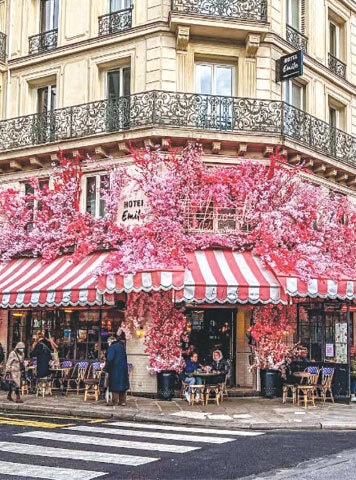
His reintroduction of Paris, enriched by the voice of his younger self, allows readers to experience the city through the eyes of both youth and age. Pascal, the lady love from Pyar Ka Pehla Shehr, lingers in his memory — a soft echo of first love, tender longing, and a Paris that once existed in innocence and emotion.
As always, Tarar blends travel with culture, history and literature. He guides the reader through iconic artworks, timeless stories, poets such as John Keats, and the grandeur of European architecture. Napoleon Bonaparte, the Arc de Triomphe, the Seine and Normandy appear naturally within the narrative, grounding it in history and place.
Through Tarar’s lens, France becomes more than a foreign country — it feels familiar, intimate and alive. Gentle nods to Pascal enrich the experience, delighting readers familiar with his earlier work, while inspiring others to seek out Pyar Ka Pehla Shehr for the first time.
What makes Tarar’s work different is the way he plays with words, seamlessly weaving memory, reflection and factual detail. Reading his work is like watching a carefully composed film unfold before your eyes, where every scene carries emotional depth, every moment resonates, and the city itself becomes a living, breathing character.
Much of the book revolves around the tender relationship between Tarar and Mishal. Their small conversations, banter and shared moments bring warmth, softness and intimacy to the story, making it personal, heartfelt and moving. The way he gently teases his wife about the ‘romantic city’ of Paris, with a mix of humour, affection and charm, showcases Tarar’s effortless elegance — class and warmth woven seamlessly into a single playful gesture. These family interactions ground the travelogue in the ordinary yet profound experiences of love, care and connection.
Ultimately, Paris Mein Aik Din is a deeply human book. It is quiet, poetic and reflective, meant to be savoured slowly, like a gentle stroll through an old European street. The narrative lingers, leaving impressions of beauty, memory, loss and the passage of time. Tarar reminds the reader that travel is not measured in miles but in perception, that even a single day, when observed with attention and wonder, can contain the weight and richness of a lifetime.
For readers who love thoughtful travel writing, subtle philosophy, and quiet emotion, Paris Mein Aik Din is a richly rewarding journey. Tarar proves once again that the magic of travel lies not only in the places visited but in the heart and mind of the traveller — and that through his words, even a single day in a city like Paris can feel infinite.
*The reviewer writes on old films and music and loves reading books. X: *@suhaybalavi**
Published in Dawn, Books & Authors, January 18th, 2026