PHC rules extrajudicial killings, enforced disappearances menace to rule of law
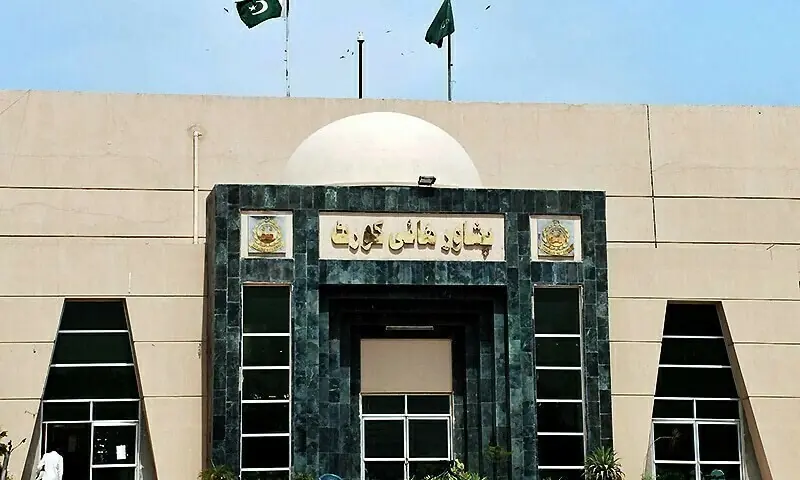

PESHAWAR: The Peshawar High Court has declared that extrajudicial killings, staged and fake encounters, and enforced disappearances constituted a serious menace to the rule of law, public confidence and the fundamental rights guaranteed under the Constitution.
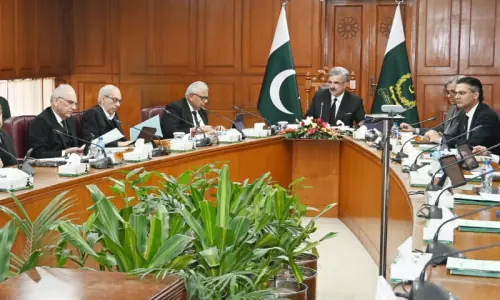
A larger bench consisting of Chief Justice SM Attique Shah, Justice Syed Arshad Ali, Justice Sahibzada Asadullah, Justice Mohammad Ijaz Khan and Justice Salahuddin declared: “No officer shall act beyond or against the law, and all law enforcement authorities are directed to prevent, report, and investigate such incidents. Any participation, complicity, or willful neglect shall attract criminal, civil, and departmental liability.”
The court issued multiple directives and recommendations to stakeholders for reforming the criminal justice system (CJS), directing the provincial government to fully separate the investigation wing of the police from its operation wing with full administrative and financial autonomy.
It declared that to ensure fair, impartial, and transparent, an independent investigation cadre shall be created and all future appointments shall be made exclusively to that cadre.
Issues directives, recommendations for improving criminal justice system
The bench released a comprehensive 149-pagejudgement over the matter after considering the reports and arguments submitted by the stakeholders, including law, home, police, prosecution and health departments, and senior lawyers, and the suggestions made by them for improving the CJS.
“The Provincial Government is confined to the formulation of high policy and superintendence, and shall not, directly or indirectly, interfere with operational command or encroach upon the autonomy and independence of the police hierarchy in the discharge of its lawful functions.”
The court declared that the law department was required to review all laws defining offences, so as to identify overlapping laws or laws creating jurisdictional confusion and address the anomalies highlighted by the bench; and, to propose appropriate amendments to the government for consolidation and clarification.
It added that an independent forensic science agency, with satellite regional offices at each divisional headquarters on the model of the Punjab Forensic Science Agency, shall be established with separate statutory status to ensure quality, authenticity and timely processing and submission of forensic reports.
The bench declared that the forensic laboratories shall function wholly independent of the operational and investigation branches and shall be run by qualified experts.
“Necessary amendments in relevant laws shall be made to secure the complete institutional and functional independence of the existing FSL, staff shortages therein shall be addressed through fresh recruitment, and the proposed FSL project shall be expedited with funds released without delay, to ensure the early and effective functioning of the criminal justice system.”
The judgement was delivered in two public interest petitions filed by a citizen Asifullah and a senior lawyer Shabbir Hussain Gigyani, respectively, related to different aspects of the CJS.
Barrister Amirullah Khan Chamkani appeared for the petitioner Asif Ullah and stated that the CJS in KP had almost collapsed due to structural and procedural failures, and that these deficiencies collectively resulted in systematic violations of fundamental rights, particularly the right to fair trial guaranteed under Article 10A of the Constitution.
Referring to a pilot project for Peshawar pending before the additional chief secretary (home), the bench observed: “Under the said pilot project, the operational, investigation, and prosecution wings of the police shall be distinctly separated at all tiers, and dedicated prosecutors shall be assigned to ensure effective and independent prosecution.”
The bench declared that the said pilot project should be approved and initiated at the earliest possible opportunity, without any further delay.
“The Provincial Government is further directed to ensure the provision of requisite funds, infrastructure, manpower, and other necessary resources to facilitate the effective and smooth implementation of the said project, in accordance with law with a view to alleviating the hardships and grievances faced by the citizens of Khyber Pakhtunkhwa.”
Scores of senior lawyers well versed in criminal law appeared in the matter including president of PHC Bar Association Aminur Rehman Yousafzai, former home secretary Dr Syed Akhter Ali Shah, Tafseel Khan Afridi, Mohammad Nisar Khan, Mohammad TariqYousafzai, Sahibzada Riazat-ul-Haq, Syed Akbar Ali Shah, Astaghfirullah Khan, Ahmad Farooq Khattak, Mian Arshad Jan, Saeed Khan, Sareer Khan, ex-district judge Syed Asghar Ali Shah and others.
The bench discussed in detail provisions of the Constitution, Code of Criminal Procedure (CrPC), Pakistan Penal Code (PPC), KP Police Act, Police Order 2002, international law, etc. and put forward over a 100 directives to all the concerned stakeholders.
Directives for police and investigators: “The power of arrest shall be exercised with reasonable caution and care. Mere registration of an FIR, without sufficient material justifying arrest, shall not ordinarily warrant arrest and shall be avoided. Such discretion shall be exercised uniformly, without selectivity or discrimination,” the bench ordered.
It directed that in the event of an arrest, different guarantees should be observed strictly, including: the right to be informed promptly and clearly of the grounds of arrest; the right to consult and be assisted by counsel; the right against self -incrimination; and, the absolute prohibition of torture, cruel, inhuman, or degrading treatment.
The bench directed that pre and post-arrest medical examinations should be strictly conducted, documented and reported to magistrate, as under Article 14 and 10-A of the Constitution no torture, coercion or unlawful confinement was permissible.
“The final report (investigation report) under section 173 CrPC shall be submitted within 14 days; failing that, an interim challan shall be submitted within the next three days,” the bench declared, adding that failure without lawful justification should attract action under different provisions of the PPC and KP Police Act.
It added that false, defective, incomplete, or misleading investigation reports may attract liability under sections 166(2), 167, and 218 PPC, 118 of the Police Act as well as departmental proceedings against delinquent officers.
The bench ordered the assigning of a reasonable number of cases to each IO, and that no officer be overburdened, so as to improve the quality of investigation. “A clear SOP shall be devised whereby the number of cases assigned to each investigator is determined on objective criteria, including the number of pending cases, their nature, and their severity.”
“Investigating Officers (IOs) shall ensure the preservation and systematic documentation of the crime scene in accordance with modern forensic standards, including photography and videography, preparation of sketches and scene plans, and lawful forensic sampling. Any deviation or non-compliance shall be explained by recording reasons in writing.”
The high court declared for courts that routine remand or judicial custody orders, where challans were not submitted within statutory time, resulted in illegal and unconstitutional detention, violating Articles 4, 9 and 10A of the Constitution and must be stopped forthwith.
It declared that the senior civil judges or judicial magistrates should all conduct monthly surprise visits of the police stations and Jails, with prior intimation to the district and sessions judge. “They shall inspect the condition of lock ups, case property, and other relevant material, and shall report any illegality or irregularity to the Chairperson of the Criminal Justice Coordination Committee.
The bench declared that the prosecutors should actively exercise their statutory duty of supervision under the KP Prosecution Service (Constitution, Functions and Powers) Act, 2005, by scrutinising investigation files from inception to ensure that investigations were lawful, impartial and completed within the statutory timeframe; and for that purpose regular consultation meetings between prosecutors and IOs should be held and documented.
“No challan shall be forwarded to Court unless the prosecutor has furnished a written opinion on its completeness and legal sufficiency. Where necessary, the prosecutor shall require the Investigating Officer to remove defects, collect additional evidence, and avoid reliance on dubious or superfluous witnesses,” the bench declared.
For lawyers, the court ruled, “Any strike, boycott, or deliberate non-appearance before the Court, as well as any act that obstructs access to justice or restrains any person from entering any Court or its premises, is illegal and unconstitutional, being violative of Article 10A of the Constitution, and may, where applicable, attract sections 174, 186(1) and 186(2) PPC for, as the case may be, intentional non-attendance before the Court, obstructing a public servant in the discharge of public functions, or hampering the course of prosecution, in addition to any other penal provisions that may be attracted on a case-to-case basis,” the bench ruled while putting forward multiple directives for the lawyers.”
The court declared that medical officers shall conduct medico legal examinations without influence from the police or any party, and shall prepare medico legal reports strictly in accordance with law, accepted medical standards, and judicial requirements; the reports shall be detailed, clear, legible and free from ambiguity. It added that any attempt at interference shall be recorded and reported to the Illaqa Magistrate or the CJCC (criminal justice coordination committee), who shall take action in accordance with law.
“Delays in medico-legal reports, injury sheets, sexual assault reports, and post-mortem reports undermine investigations. Unjustified delay may attract proceedings under sections 166(1), 175 and 186(2) PPC,” it warned.
The bench declared that the medical officers must receive mandatory training in medico-legal procedures, forensic pathology, sexual assault examination, documentation standards and chain of custody protocols.
Published in Dawn, January 17th, 2026