FCC hints at closing Arshad Sharif case
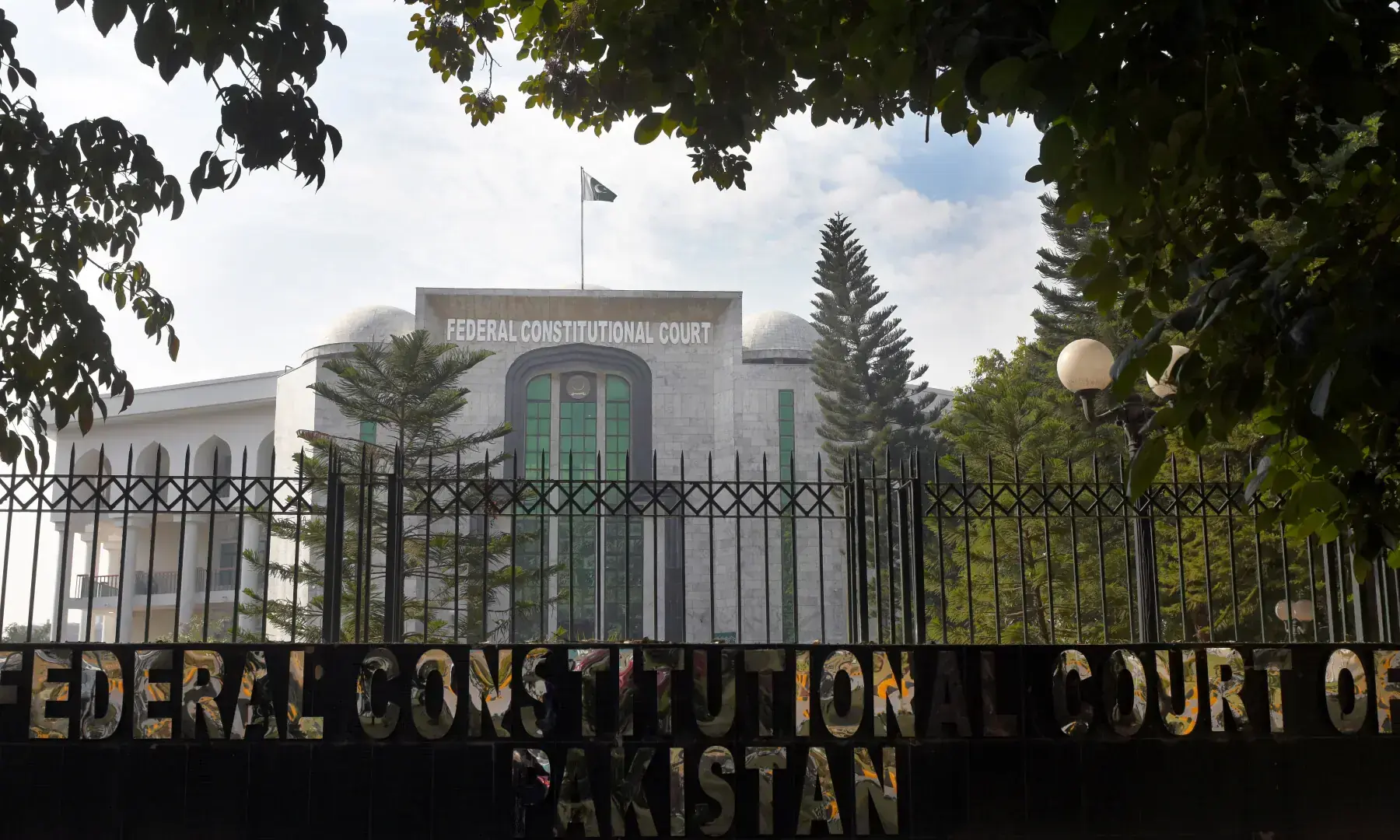

ISLAMABAD: The Federal Constitutional Court (FCC) on Wednesday hinted at closing the ongoing suo motu proceedings initiated to seek an independent and transparent probe into the murder of journalist Arshad Sharif.
“We will make an appropriate order and may seek assistance from the parties if needed,” observed Justice Aamer Farooq, adding that the major issue before the court was how to proceed further in the matter.
Justice Farooq was heading a two-judge FCC bench hearing the case, which was initially taken up suo motu by the Supreme Court.
Earlier, the case was heard by a five-member SC bench in December 2022.
Court cites ‘slow investigation’, MLA agreement with Kenya
However, following the passage of the 26th Constitutional Amendment, it was first transferred to a six-member constitutional bench of the SC and later to the FCC after the 27th Constitutional Amendment.
Arshad Sharif was shot in the head when Kenyan police opened fire on his car on the outskirts of Nairobi on Oct 23, 2022. He had left Pakistan in August 2022 after multiple sedition cases were registered against him in different cities.
On Wednesday, the FCC expressed its intention to close the proceedings after Additional Attorney General (AAG) Chaudhry Aamir Rehman informed the court that a Mutual Legal Assistance (MLA) agreement had been signed between the governments of Pakistan and Kenya in September last year. He added that a request had already been sent for the Special Joint Investigation Team (SJIT), constituted specifically for the probe, to visit the crime scene.
The AAG recalled that the SJIT’s report had already been submitted to the court, adding that the Kenyan government had initially refused to assist in the investigation.
The law officer explained that the government would dispatch the SJIT once the Kenyan government allowed it to inspect the crime scene for further investigation. He added that the team would probe the journalist’s murder based on the evidence provided by the Kenyan government.
‘Slow investigation’
Justice Farooq observed that there was a difference in the manner in which the government and the court approached the matter, adding that the investigation process had been slow, though blame could not be placed on anyone.
He questioned what further action the court could take now that a legal assistance agreement between the two countries had been signed.
During the hearing, the murder of MQM leader Imran Farooq in the United Kingdom was also referenced, with Justice Farooq recalling how Pakistani and British police jointly investigated that case.
However, the AAG argued that the nature of the Imran Farooq murder case was quite different than that of Arshad Sharif, adding that two suspects had already been nominated in the journalist’s murder.
He further stated that both the nominated suspects were still in Kenya and Pakistan had issued red notices through Interpol for their arrest and repatriation for further investigation.
The law officer said investigation on part of the investigating agencies in Pakistan has been completed for now. He also recalled that Prime Minister Shehbaz Sharif had spoken with Kenyan President William Ruto on the phone about Arshad Sharif’s murder case in 2022.
Published in Dawn, January 15th, 2026