The outlook for a consensus on the 11th National Finance Commission (NFC) award currently appears murky within set timelines, both in cases of vertical and horizontal resource distribution as well as sharing of expenditures among the stakeholders.
So far, the working groups, according to a media report, have made limited progress, which, as per the report, makes it difficult for the consolidation of their recommendations within the time frame. The commission was due to meet in January.
Despite the tough challenges they face, it is incumbent on all stakeholders to join hands to achieve a consensus on the new NFC award, upholding the rights of the federating units.
No doubt, the eight working groups set up by the federal government include issues with no easy solutions. They will recommend the percentage of resources to be distributed between the centre and the four provinces, the vertical transfers, national debt composition and its utilisation, and the inclusion or exclusion of certain taxes in the divisible pool.
Provincial representatives insist on greater autonomy, citing increased tax revenue collection over the past year, even as the NFC award continues to be delayed
The centre, says a The Express Tribune analyst, wants to exclude customs duties from the purview of the divisible pool that is divided among the five governments. According to the Revenue Division Year Book 2025, the provisional net total collection of customs duty by the Federal Board of Revenue (FBR) was Rs1.28 trillion in FY25 or 10.9pc of the total tax revenue.
Similarly, in the NFC group meeting on the sharing of divisible pool resources for the federally administered tribal districts merged with Khyber Pakhtunkhwa (KP), the KP government has reportedly proposed the creation of a 10-year special grant from the federal divisible pool to address what it described as “historical development deficits” in the merged area. The grant, officials said, would bring the region on a par with the rest of KP and the country. However, the federal government says the province is getting its due share.
The International Monetary Fund projects Pakistan’s provincial tax-to-GDP ratio to rise from 0.9pc in FY25 to 1.6pc by FY28, with total collections expected to exceed Rs3.1tr by FY30. The federal tax revenue is expected to remain largely flat during this period. The Fund says the future revenue growth will be driven mainly by provinces.
However, the Fund notes that this provincial revenue increase is contingent on the successful rollout of agricultural income tax (AIT) reforms and an expanded sales tax on services.Significant obstacles to realising the full potential of AIT remain, including fully operationalising information sharing between the FBR and provincial tax authorities.
Former FBR chairman Syed Shabbar Zaidi says the exemption from the levy of Sindh Sales Tax on Services Act 2011 should be removed, and all retailers and wholesalers should be subjected to taxation under the Act. The jurisdiction of the Federal Sales Tax Act 1990 should end, and registration of such retailers and wholesalers should be transferred to the provinces.
The Sindh Revenue Board (SRB) has posted a robust half-yearly growth of 21pc for FY26 by collecting Rs161.4bn compared to Rs133.3bn in FY25. In December, SRB recorded a surge in revenues by 25pc.
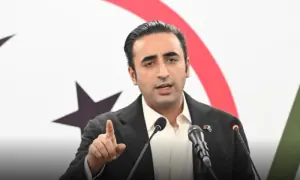
And on Dec 9, PPP Chairman Bilawal Bhutto Zardari had urged the government to transfer the collection of sales tax on goods to the provinces, saying the provinces have proven their capacity to take the lead in collecting the sales tax on services after the 18th Amendment.
According to the Revenue Division Year Book, the total net sales tax collection was provisionally estimated at Rs3.9tr for FY25 or 33.2pc of the federal tax revenue.
A working group chaired by KP’s Finance Minister will now “deliberate and suggest measures for improving the overall tax-to-GDP ratio”. Notable here is that the KP Revenue Authority recorded a 30pc increase in collection of sales tax on services amounting to Rs23.3bn during the first six months of this fiscal year compared to Rs17.9bn in the same period last year.
The Centre has been levying presumptive taxes on services under the Income Tax Ordinance 2001, sales tax on gas, electricity and telephone services and federal excise duty on several services, according to analysts Huzaima Bokhari, Dr Ikramul Haq and Abdul Rauf Shakoori. In a joint Business Recorder article, they wrote that the present situation on the financial front could have been avoided had the centre allowed the provinces to generate their own resources through sales tax on goods.
Despite the constitutional requirement to allocate 57.5pc of the NFC divisible pool to provinces, Dr Hafiz Pasha said they received only 45.8pc in the last fiscal year. Speaking at a Social Policy and Development Committee seminar on NFC recently, he explained that a nearly 12pc share was withheld either by charging petroleum levy on products that are not part of the divisible pool or by getting back transferred money in the shape of cash surpluses. The federal government collected over Rs1.2tr in petroleum levy, and the provinces also saved Rs921bn as cash surplus.
As highlighted in a 2023 World Bank report, the federal government retains ministries linked to devolved subjects and spent Rs328bn on them. A working group will make recommendations on sharing financial expenses incurred by the federation in areas under provincial jurisdiction.
Published in Dawn, The Business and Finance Weekly, January 12th, 2026