Ban Faqiran: where Gandhara whispers from the Margallas


 0
0
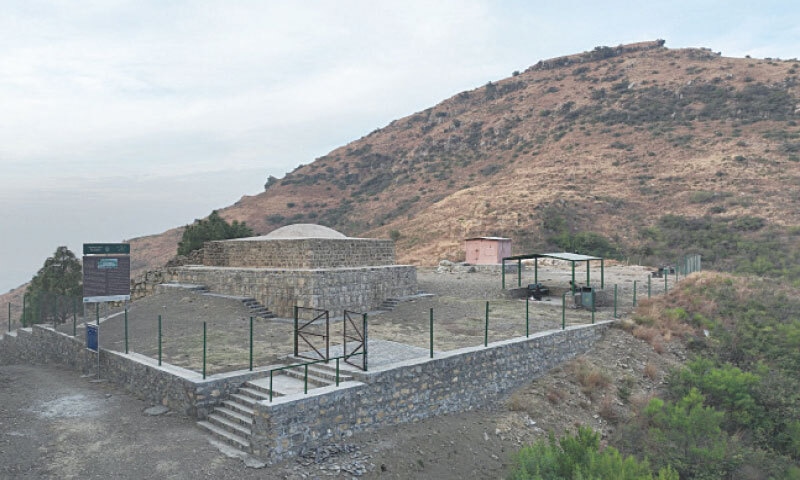
Perched quietly on a southern spur of the Margalla Hills, Ban Faqiran is one of those rare archaeological landscapes where history does not announce itself loudly.
Instead, it breathes patiently through stone, wind and memory. Known locally as Ban Faqiran, this Buddhist monastic complex lies about two kilometres southwest of the famed Shah Allah Ditta Caves, within the present-day limits of Islamabad, yet spiritually and historically anchored to the ancient world of Gandhara and Taxila.
Accessible from Golra Sharif (E sector) and from D-12 via Shah Allah Ditta village, the site can also be reached through two age-old mountain tracks, one winding eastward through Shah Allah Ditta and the other approaching from the west via Giri, Taxila. These natural corridors once carried monks, traders, pilgrims and armies, binding the Soan and Taxila valleys into a single civilisational landscape.
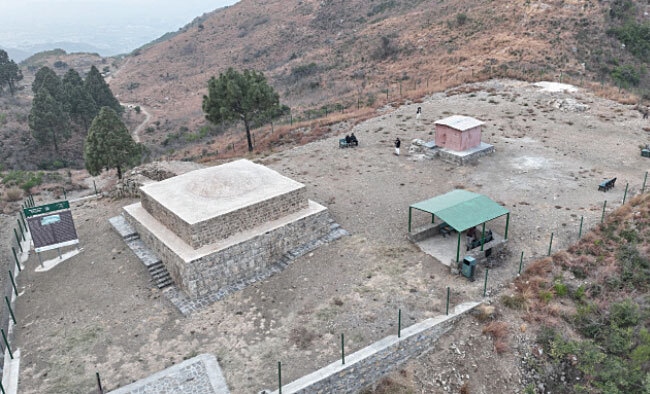
The Ban Faqiran complex crowns a ridge nearly 850 metres above sea level, overlooking the historic divide between the Taxila and Soan valleys of the Pothohar Plateau. Archaeologically, it centres on a Buddhist stupa dating from the 2nd to the 5th century CE, an era when Gandhara flourished as a centre of Buddhist learning, art and monastic life.
Islamabad, often perceived as a modern capital, in fact stands upon one of the world’s oldest continuously inhabited regions. As noted by the late Prof Ahmad Hasan Dani, the Potohar Plateau preserves an unbroken archaeological sequence from the early Stone Age to the Buddhist zenith of Gandhara. Over the last six decades, discoveries from the Taxila and Soan valleys have expanded this narrative, revealing a cultural continuum stretching back millions of years.
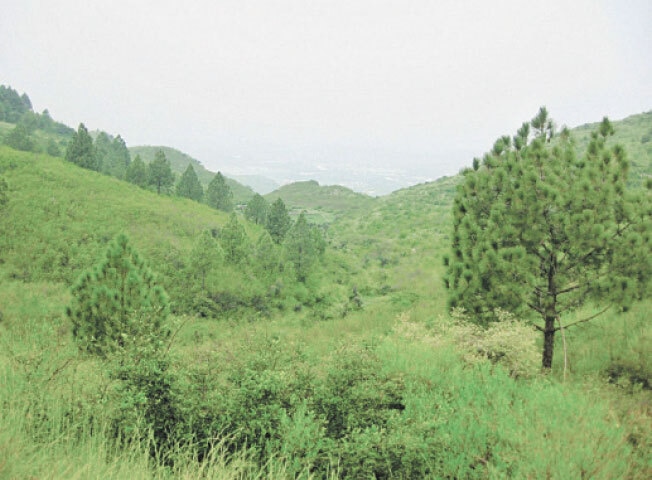
Encircled to the north and west by the Margalla range, identified by scholars as Mar-i-Qila, a term closely linked to the Sanskrit Takshashila (Taxila), Ban Faqiran stands at a historic crossroads. From the Palaeolithic age through Aryan settlements, and later the passage of Iranians, Greeks, Scythians, Parthians, Kushans, Shahis, Huns and Mughals, this corridor shaped the destiny of the subcontinent. Armies and caravans alike passed through what is today the Rawalpindi–Islamabad region on their way to the plains of Hindustan.
According to Dr Abdul Ghafour Lone, the archaeologist who carried out the first excavation at the site, Prof Dani was the first to identify Ban Faqiran as a Buddhist stupa location, proposing that a nearby water reservoir marked the site of a monastery.
Dr Lone said archaeological evidence suggests that the nearby caves were originally used by Buddhist monks for meditation in the early centuries of the Christian era, later occupied by Hindu sadhus, and eventually by Muslim ascetics during Mughal times. He noted that a perennial spring flows beside these caves, lending the site both sanctity and serenity.
According to Arshadullah Khan, an official of the Federal Department of Archaeology, Ban Faqiran comprises two distinct archaeological zones. The upper complex, housing the Buddhist stupa, falls within Islamabad’s jurisdiction and dates back to the 2nd century CE.
Roughly 200 metres to the west lies the lower complex, within Punjab province, containing the ruins of a small mosque and a large water reservoir from the late Mughal period. Together, they narrate a layered story of sacred continuity and transformation.
Remarkably, the Unesco World Heritage sites of Giri Buddhist Stupa and the Dharmarajika monastic complex at Taxila lie barely three kilometres away, reinforcing Ban Faqiran’s integral place within the greater Gandhara sacred geography.
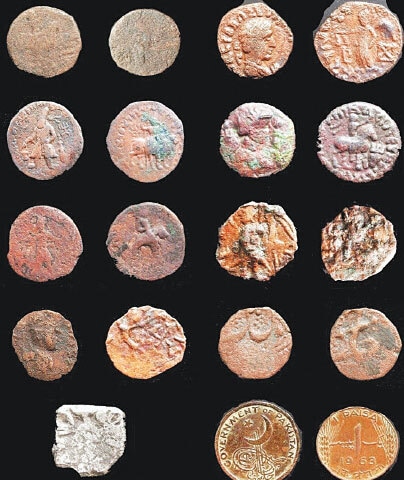
Excavations launched in 2015 by the Department of Archaeology and Museums, with support from the National Fund for Cultural Heritage, marked Islamabad’s first systematic archaeological dig. Among the most evocative discoveries were ten rare coins recovered from different strata, including a silver punch-marked coin from the late Achaemenid period found within the stupa.
The stupa suffered damage during heavy monsoon rains in 2020, but restoration work led by archaeological engineer Mohammad Azeem helped stabilise collapsed sections. Today, the site is fenced, signposted and equipped with basic visitor facilities, including interpretive boards, seating and shelters.
Following Partition in 1947, the Hindu population of Shah Allah Ditta migrated, and the caves came under the control of the Evacuee Property Trust Board.
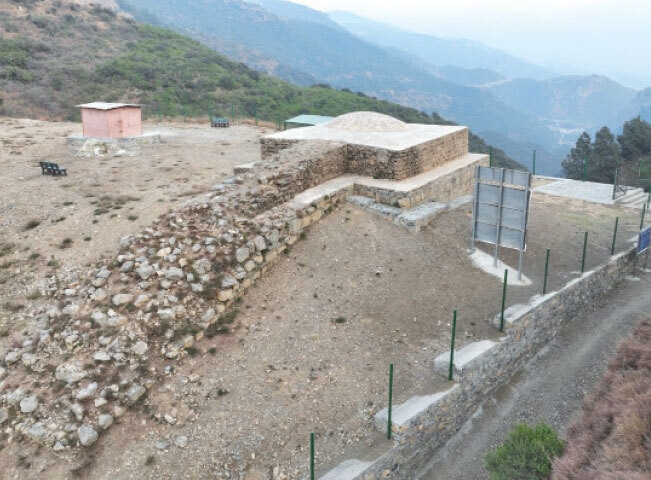
Recognising its significance, the government formally protected the Ban Faqiran Buddhist Stupa on May 27, 2016, under the Antiquities Act 1975, followed by the protection of Shah Allah Ditta Caves in August the same year.
Published in Dawn, January 12th, 2026