Law minister defends 27th Amendment as ‘historic step’


 0
0
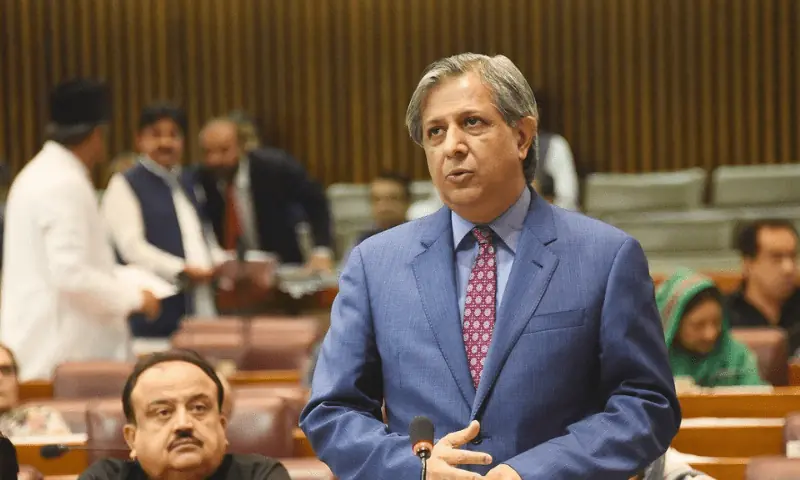

ISLAMABAD: Law Minister Azam Nazeer Tarar on Thursday defended the 27th Constitutional Amendment as a historic step that fortifies Pakistan’s federal structure, countering criticism that it undermines judicial independence.
Speaking at the book launching of Tea Talk, a compilation of columns by Advocate Talat Abbas Khan, here at the Supreme Court Bar Association (SCBA), the law minister emphasised that the amendment’s cornerstone achievement was establishment of a Federal Constitutional Court (FCC).
“This is a monumental contribution of the Parliament to strengthen the federation,” the minister said, adding that by ensuring equal provincial representation in the FCC, the government has addressed a longstanding national demand.
The minister’s remarks come in response to an Amnesty International report that described the amendment as the “crescendo of a concerted and sustained attack on the independence of the judiciary, the right to a fair trial, and the rule of law in Pakistan”.
Mr Tarar urged critics to understand the amendment’s intent before dismissing it, noting that the FCC was originally envisioned in the 2006 Charter of Democracy, a document endorsed and signed by all major political parties, including the founder of the PTI, PPP, PML-N, and JUI-F’s Maulana Fazlur Rehman.
Establishment of FCC termed ‘cornerstone achievement’
He said the demand for such a court gained momentum amid widespread concern over the Supreme Court’s expansive use of suo motu powers under the now-defunct Article 184(3). “When such judicial actions led to the disqualification of lawmakers and even elected prime ministers, the call for a dedicated constitutional court grew louder,” the minister said, adding that the power to choose representatives rests solely with the people, not the judiciary, which must not engage in political engineering.
The idea behind setting up of the FCC was to strengthen the federation by giving equal representation to all federating units of the country and since federal capital was also part of the federation, therefore, it should also be given a representation in the FCC.
The minister outlined the structural imbalance the FCC seeks to correct. Previously, the Supreme Court’s composition was linked to the size of provincial high courts, leading to a predominance of judges from Punjab, which has the largest high court. Smaller provinces like Balochistan had minimal representation.
Since the Lahore High Court has the biggest number of judges to the tune of 60, therefore, the Supreme Court always enjoyed the majority of judges from the Punjab, he explained. Likewise, he said, the number of judges in the Balochistan High Court was less and, therefore, the number of judges from that province was also less, adding that the same was the case with Sindh and Khyber Pakhtunkhwa provinces.
The FCC creates a new forum to address grievances of deprivation and rift among smaller provinces, Mr Tarar said.
Published in Dawn, January 9th, 2026