Israeli attacks in Gaza kill four children, three others
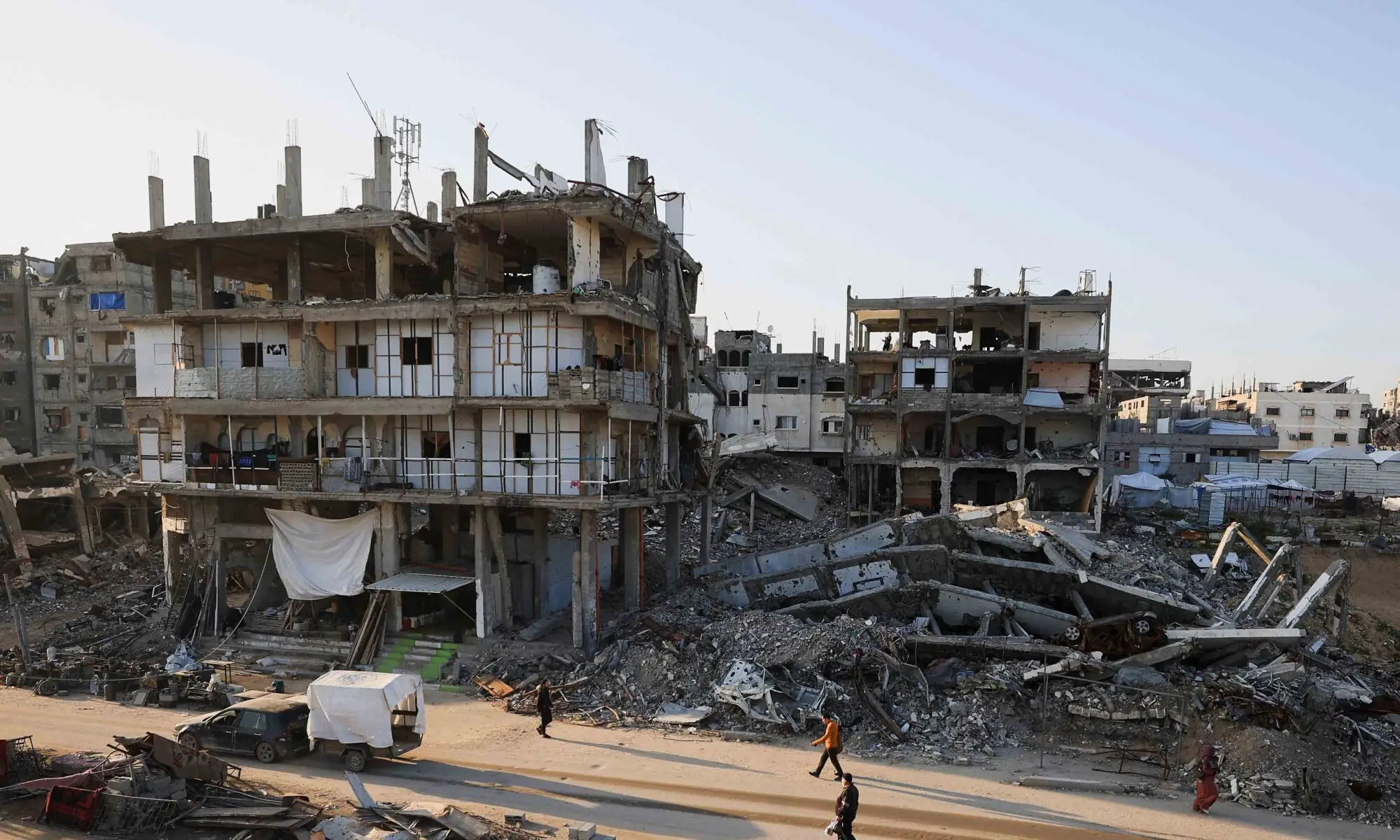
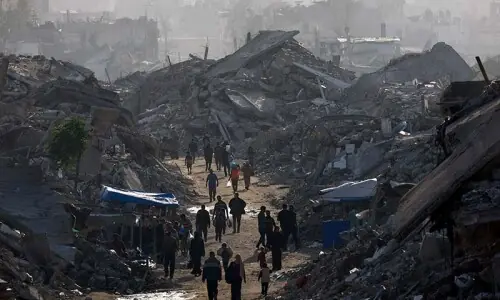
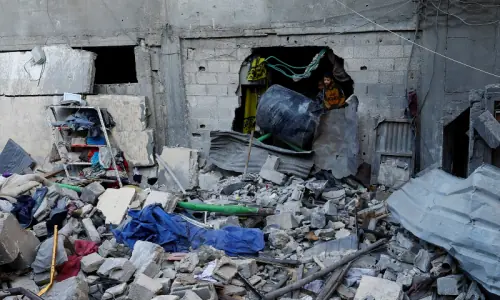
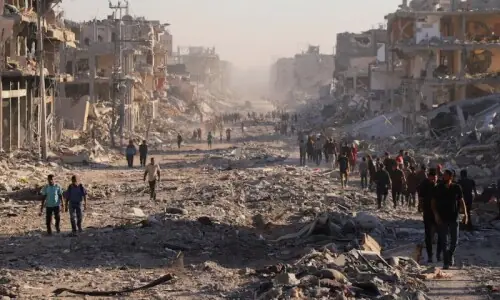
GAZA CITY/GENEVA: Gaza’s civil defence agency said Israeli attacks in the Palestinian territory on Thursday killed seven people, including four children, despite a ceasefire that has largely halted the fighting.
Four people, including three children, were killed when a drone struck a tent sheltering displaced people in southern Gaza, agency spokesman Mahmud Bassal said.
In the north of the Gaza Strip, an 11-year-old girl was killed near the Jabalia refugee camp, and a strike on a school killed one person, while a drone near Khan Yunis in the south killed a man, the agency added.
When asked, the Israeli military said it was checking the reports.
Earlier on Thursday, the military said a projectile was launched “from the area of Gaza City toward the State of Israel” but that it fell within the Gaza Strip.
Tel Aviv bars some aid workers as groups face suspension
“Shortly after, the (military) precisely struck the launch point,” it said in a statement.
Since October 10, a fragile US-sponsored truce in Gaza has largely halted the fighting between Israeli forces and Hamas, but both sides have alleged frequent ceasefire violations.
Israeli forces have killed at least 425 Palestinians in Gaza since the ceasefire took effect, according to Gaza’s health ministry.
The Israeli military said militants have killed three of its soldiers during the same period.
Israel bars aid workers
Israel said on Thursday it had barred the entry to Gaza of foreign medical and humanitarian staff whose organisations were ordered to cease operations unless they register employee details with Israeli authorities and meet other new rules.
Fearing a renewed humanitarian crisis if medical and aid services can suddenly no longer access shattered Gaza, some of the 37 international nongovernmental organisations that were ordered to halt work are weighing whether to submit staff names to Israeli authorities, two aid sources said.
Three of the aid groups said their foreign staff were told by Israeli authorities this week that they could not enter Gaza.
Israel’s diaspora ministry, which manages the registration process, says the measures are meant to prevent diversions of aid by Palestinian armed groups. NGOs say sharing staff details poses too much of a risk, pointing to the hundreds of aid workers who were killed or injured during the two-year Gaza conflict.
Israel has shared little evidence of aid being diverted in the Palestinian enclave, an allegation that was disputed in a US government analysis.
The diaspora ministry said that while the NGOs had been granted 60 days to conclude operations, “the entry of foreign personnel into Gaza is not approved”.
It said international staff with “approved organisations”, including the United Nations, could continue work as usual.
Three prominent global NGOs — Medecins Sans Frontieres (MSF), Medecins du Monde Suisse, and the Danish Refugee Council — said their international staff were refused entry to Gaza this week. Foreign aid staff had generally been permitted to rotate in and out of Gaza since the start of the conflict.
Some of the 37 banned groups operate specialised services like field hospitals, aid officials say. MSF bolsters six Gaza health ministry hospitals and runs two field hospitals. The Medicos del Mundo NGO screens Gaza residents for malnutrition and provides mental health services.
“Without nutritional staff doing the screening and primary healthcare centres doing the therapeutic feeding and referral of patients with severe malnutrition to in-patient care, the whole system breaks down,” an aid source said.
Published in Dawn, January 9th, 2026