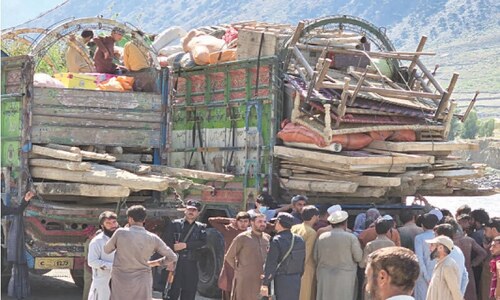
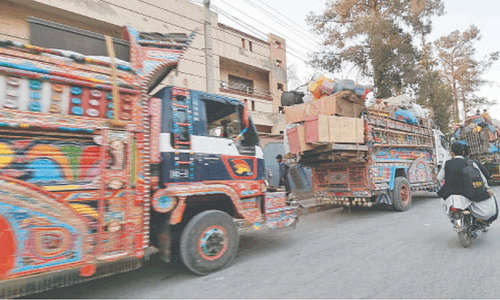
SC orders return, restoration of refugee camp land in Chitral
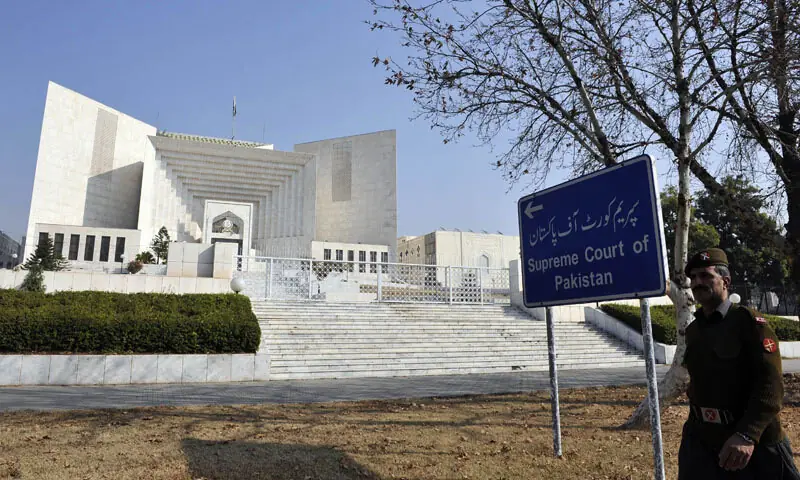

• Rejects plea by KP commissioner for Afghan refugees; orders department to clear the land and pay compensation
• Holds that farmland acquired in 1983 must be returned to owners in the same condition
ISLAMABAD: The Supreme Court affirmed on Wednesday the right of landowners in Chitral to receive their agricultural land — which was initially acquired in 1983 for setting up a camp for Afghan refugees — in its original condition.
The court also upheld the compensation, due to the landowners, at the rate of Rs600 annually per unit 108 sq ft — a unit of land locally known as Chakoram.
Headed by Chief Justice Yahya Afridi, the three-judge bench dismissed an appeal by the Commissioner for Afghan Refugees Khyber Pakhtunkhwa, and upheld a Feb 27, 2025, decree by the Peshawar High Court Circuit Court Chitral requiring the government to clear the land and pay rent for the property, leased since 2005.
The ruling centres on a controversy that began when the commissioner rented land in 1983 from Sardar Abdul Ghani Khan and Khalil Ahmad, residents of Kaisoo village in Darosh tehsil. The land was acquired to establish a camp for Afghan refugees, and mud houses were constructed to house them.
Although the camp was vacated in 2005, the Supreme Court was told the remains of the mud houses and other debris were left behind in semi-constructed form.
In its judgement, the high court had observed that the leftover material should have been removed by the commissioner and the land should have been handed over in the same condition — i.e. fit for agricultural use — as it was when acquired.
The court noted that because the construction material prevented the owners from utilising the land for farming, compensation was justified.
The high court regretted that the department, “instead of removing the material and debris used for the construction of the mud houses … opted for litigation”.
Justices Shahid Bilal Hassan and Shakeel Ahmad joined the chief justice in affirming that lower judicial forums had rightly awarded compensation.
The courts set the rate at Rs600 annually per Chakoram, from 2005 until the land is cleared and returned to the owners.
Advocate Zartaj Anwar, representing the commissioner, argued in the appeal that the high court had erred by awarding compensation past the 2005 evacuation date.
The appeal further contended that the rate of Rs600 lacked “evidentiary support or reference to statutory guidelines”.
The petitioner also claimed the lower court violated the principle of “res judicata” under the Code of Civil Procedure by allowing the owners to pursue a fresh claim on a matter that had already been adjudicated.
But the Supreme Court rejected these arguments, finding that the basic facts regarding the damage to the property were admitted and established in earlier litigation.
Published in Dawn, January 8th, 2026