LOOKING back at 2025, several regional inflection points stand out: Pakistan’s four-day confrontation with India, the conflict between Israel and Iran less than a month later, followed by Pakistan’s subsequent cross-border strikes targeting terrorist infrastructure in Afghanistan. Yet the coda to these episodes — India’s insistence that the conflict with Pakistan is merely paused rather than resolved, fresh American threats against the Iranian regime, and unabated terrorism within Pakistan — suggests that whatever semblance of regional stability currently exists is provisional at best.
First, take India, whose regional clout has taken several hits. Chafed by US claims of a decisive American intervention in the conflict with Pakistan, shaken by the loss of military hardware, and facing worsening relationships with its smaller neighbours, the BJP finds itself, perhaps for the first time, on the regional back foot. The reflexive temptation will be to look for external wins that can offset domestic perceptions of weakness abroad, and it would certainly help if those new wins could simultaneously amend the international narrative around how the four-day May crisis played out, or at the very least, make the existing narrative slightly less equivocal.
Second, the threshold for crisis initiation between India and Pakistan is now low and dangerously arbitrary. It is clear now that the Indian establishment may choose to invoke even the slightest unrest in India-held Kashmir as a justification to resume hostilities with Pakistan.
This is problematic given that recent reporting from India itself acknowledges that anti-India discontent is spreading in IHK, while the central government’s intelligence failures around Pahalgam point to clear limits on its capacity to pre-empt indigenous trigger events that could easily cascade. (It also doesn’t help that India’s leaders continue to pretend that the choice to attack a neighbour and test its red lines in a nuclear-armed neighbourhood was some sort of tactical or strategic master stroke).
The risks warrant careful steps to maximise safety.
Next, consider Pakistan’s western front. Following US strikes against Venezuela, there is a real possibility that the Trump administration may seek to double down on efforts to pursue regime change in Iran. Any direct conflict with Tehran will put Pakistan in a difficult position, especially if it is asked to either support Washington even indirectly in unseating the regime in Tehran, or to endorse any other regional actions by the US in contravention of international law.
These risks warrant careful consideration of the measures that Pakistan can take to maximise its own safety and not find itself in a security predicament on either its western or eastern fronts in the coming months. With India, it is, of course, imperative that the absence of meaningful crisis-management mechanisms be addressed. Outside players could potentially play a role in encouraging New Delhi to re-institutionalise at least some channels of bilateral communication that can be pre-delegated and operationalised in the event of a crisis trigger.
In the medium term, strengthening deterrence in South Asia will also require clearly communicating to not just India but also to Afghanistan the costs of continued warfare through groups such as the TTP and BLA. That message could be reinforced by partners in the Gulf and the US in the case of India, and by China in the case of Afghanistan, especially as the economic and strategic significance of Balochistan increases for global players. Indeed, if Pakistan can frame proxy activity as a threat to regional commerce and returns on investment, rather
than simply bilateral grievances, it might be able to raise the reputational costs for India as well as the Taliban regime in Kabul should such activity persist.
Finally, on Iran, the Pakistan army chief’s newly acquired currency with the Trump administration might be a useful commodity to leverage, if only to underscore to Washington the risks of intervention in an already fragile neighbourhood. While it is clear by now that the Trump administration will ultimately act as it sees fit, the role of regional allies and partners may still carry weight should the US contemplate a wider conflict.
To that end, clearly laying out potential spillover effects, including in Balochistan where the US has a growing interest, could be an element that ultimately informs the administration’s calculus.
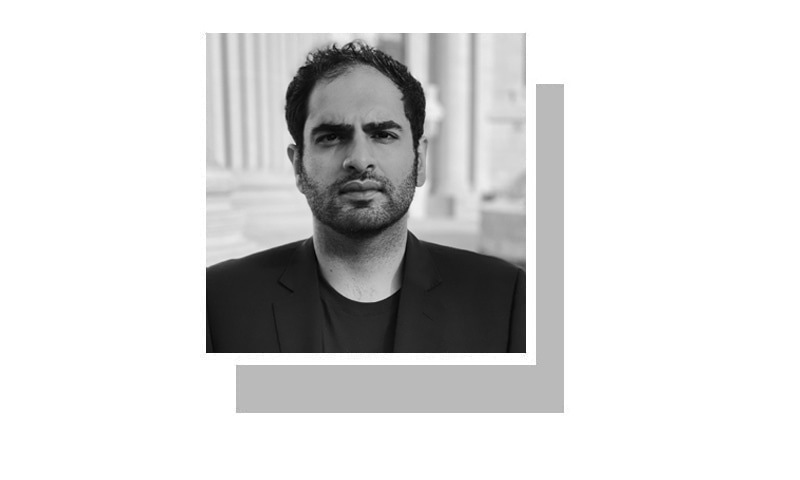
The writer is an assistant professor of political science at Tufts University.
Published in Dawn, January 7th, 2026