Azerbaijan will not send troops to Gaza
BAKU: Azerbaijan has no intention of sending its troops for peacekeeping operations outside its borders, including in Gaza, President Ilham Aliyev said on Monday.
Aliyev, interviewed by Azeri television channels, said Azerbaijan had been in consultation with the US administration about the operation of a peacekeeping force in Gaza.
“We prepared a questionnaire and provided it to the American side. No participation in peacekeeping forces is envisaged,” Aliyev said.
“I am not considering participation in hostilities outside Azerbaijan at all.”
An Azeri government source had said in November that Azerbaijan would provide no troops for such an operation unless there was a complete halt to the “fighting in Gaza”.
Foreign Press Association criticises Israel for maintaining ban on media’s access to the Palestinian territory
Meanwhile, an international media association criticised the Israeli government for maintaining its ban on unrestricted media access to Gaza, calling the move disappointing.
The Israeli government had told the country’s top court in a submission last week that the ban should remain in place, citing “security risks” in the Gaza Strip.
The submission was in response to a petition filed by the Foreign Press Association (FPA), which represents hundreds of journalists in Israel and Palestinian territories. It sought immediate and unrestricted access for foreign journalists to Gaza Strip.
“The Foreign Press Association expresses its profound disappointment with the Israeli government’s latest response to our appeal for full and free access to the Gaza Strip,” the association said.
“Instead of presenting a plan for allowing journalists into Gaza independently and letting us work alongside our brave Palestinian colleagues, the (Israeli) government has decided once again to lock us out” despite the ceasefire in the territory, it added.
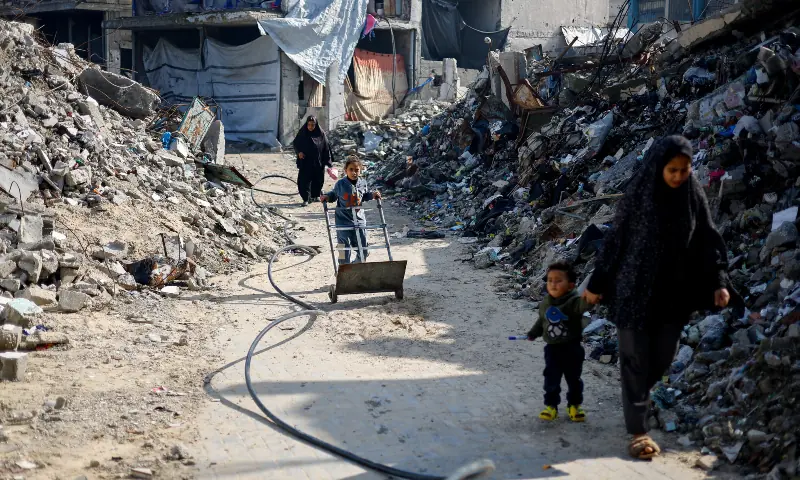
Since the outbreak of the Gaza conflict in Oct 2023, Israel has barred foreign journalists from independently entering the devastated territory.
Instead, Tel Aviv has allowed only a limited number of reporters to enter Gaza on a case-by-case basis, embedded with its military inside the blockaded Palestinian territory.
The FPA filed its petition in 2024, after which Israel’s supreme court granted the government several extensions to submit its response.
Last month, however, the court set Jan 4 as a final deadline for the government to present a plan for allowing media access to Gaza.
In its submission, the government maintained that the ban should remain in place.
“This is for security reasons, based on the position of the defence establishment, which maintains that a security risk associated with such entry still exists,” the Israeli government’s submission said.
The government also said that the search for the remains of the last prisoner held in Gaza was ongoing, suggesting that allowing journalists in at this stage could hinder the operation.
The remains of Ran Gvili, whose body was taken to Gaza after he was killed during the Hamas raid on Oct 7, 2023, have still not been recovered despite the ceasefire.
The FPA said it planned to submit a “robust response” to the court, and expressed hope the “judges will put an end to this charade”.
“The FPA is confident that the court will provide justice in light of the continuous infringement of the fundamental principles of freedom of speech, the public’s right to know and free press,” the association added.
Israel’s supreme court is expected to issue a ruling on the matter, though it is unclear when a decision will be handed down.
Published in Dawn, January 7th, 2026