

Item — a title that tells you everything about the film — sits squarely in the tradition of Pakistani cinema over the past decade: well-intentioned, driven by a filmmaker’s faith in a narrative approach that doesn’t quite serve the story, and destined to vanish from cinemas within a week!
As expected, showtimes thin quickly after the weekend because Pakistani audiences can smell a clunker a mile away.
The first red flag is the trailer, proudly headlined by an item number, where a dancer gyrates before leering, money-throwing men. It’s the sort of gaudy spectacle old Lollywood (and modern Bollywood) once flaunted to sell tickets. The tactic has never worked well here, so why celebrate it — especially when Pakistani cinema routinely champions women’s rights without resorting to lewdness?
Don’t hold your breath for an answer.
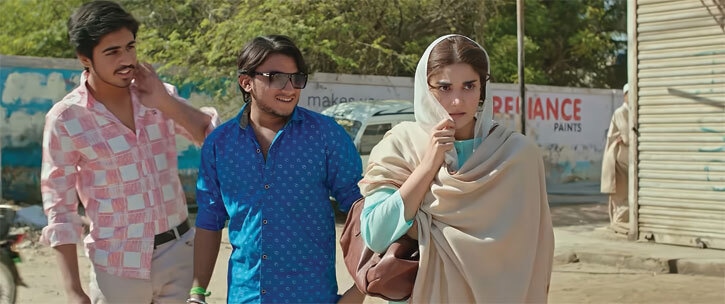
The lead is Mahnoor (Aliya Ali), a lower-middle-class woman whose life is a thesis on male depravity. Waiting for a bus, she is catcalled by young men, ogled by a middle-aged biker and harassed by a septuagenarian who inches (or hops) uncomfortably close to her on a bench. The bus ride is worse: a man repeatedly bumps into her, and another invades a female passenger’s space by clutching the back of her seat.
Item is designed to put 99 percent of the world’s men in their place by showcasing women as ‘items’ and then angrily berating society for labelling them as such
Work offers no refuge. Earning a meagre Rs 15,000 a month, Mahnoor’s sleazy boss attempts to get close by doubling her salary and keeping her late in the office. The message is blunt: men are bad. One of the few exceptions is her father (Behroze Sabzwari, effective in limited screen time), an invalid who succumbs to social pressure and dies.
Shunned by her aunt (Sangeeta) and spiralling into depression, Mahnoor misses her MCAT exam. Finding other work is impossible and she narrowly escapes being trafficked — this time by a woman, the only bad female in the film — before a PR executive, also a woman, suggests she become a model.
Five years later, now called Mahi, she is a successful actor living in DHA, awaiting the release of Item — a movie apparently designed to put 99 percent of the world’s men in their place by showcasing women as ‘items’ and then angrily berating society (well, mostly men) for labelling them as such. However, one saintly man (Azad Khan) remains: a quiet, wealthy CEO raised by a kind mother.
Love blossoms until a scandal breaks, delivering the high point writer-director Huma Shaikh (who also writes the story, screenplay and dialogue) has been steering towards: a combative monologue aimed at the media, society and men at large.
The arguments, Mahi says out loud in a television interview, are that women can wear skimpy or sleeveless dresses because they do so at fashion events and parties, item numbers are legitimate entertainment, advertising uses women to sell everything, and that Hollywood’s bestselling products have explicit content and are R-rated (her examples are Fifty Shades of Grey and Sacred Games).
Please don’t inquire about the logic.
The replies are simple; pity no one makes them. Only a niche segment of Pakistani women go sleeveless, but none dress with the immodesty of an item-number dancer. Item numbers — even the rare ones executed with some class — offer nothing beyond cheap spectacle. And in what universe is gyrating before men considered empowering? Endorsing item numbers fatally contradicts the film’s core argument that women shouldn’t be labelled ‘items’; if the argument was meant sarcastically, it didn’t land.
By the way, G, PG and PG-13 ratings now dominate Hollywood while R-rated erotic thrillers have been in decline for two decades.
Not everything is wrapped in contradiction. There are moments of insight, like Mahnoor, penniless, finding tattered notes in her late father’s pocket, or clinging to his wheelchair after hitting the big time. Tackling sexual harassment and rape would have been commendable if good narrative decisions backed the intention.
Speaking of which, the songs by M. Arshad are an awkward hodgepodge from a bygone era. As far as background music goes, one lone, melancholic score — I kid you not — drones throughout every scene, killing any potential for tension, levity or emotion. Aliya Ali’s performance, though capable, mirrors the score. Her constant melancholy leaves little room for nuance, making it hard to invest in her character.
Before the climax, we get a big reveal (Spoiler alert!): Mahnoor secretly runs an NGO for helpless women. But why the secrecy? Why not leverage her celebrity to help the cause? And why act in a film such as Item, which actively undermines her stance, when she herself was a victim?
The climax delivers a bizarre conclusion: kung-fu fighting! Every woman should be trained in martial arts, and eve-teasing is punished with over-the-shoulder throws on to the sidewalk, as the final shot demonstrates.
I’d argue that there are better ways to make a film but, as a man, I’d prefer not tasting the pavement.
Released by Cinepax Media and rated U — one thinks, given the subject matter, Item should be PG-13 at least
Published in Dawn, ICON, January 4th, 2026