NA Speaker Sadiq, Indian FM Jaishankar shake hands in Dhaka in first high-level contact since May conflict
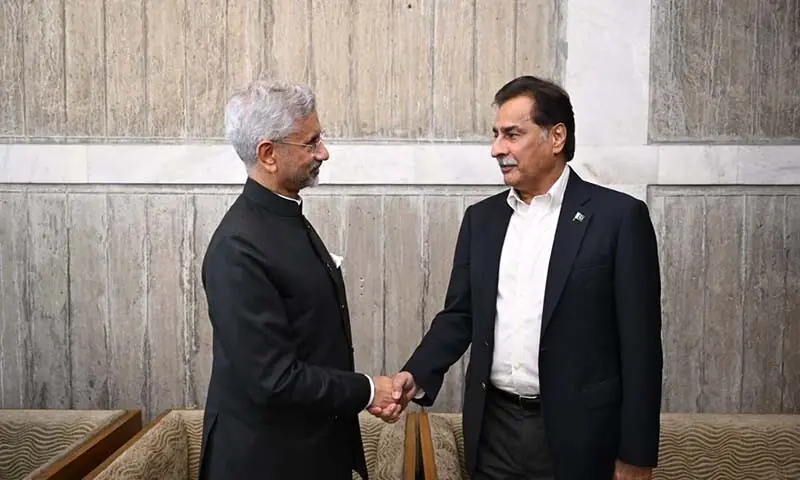
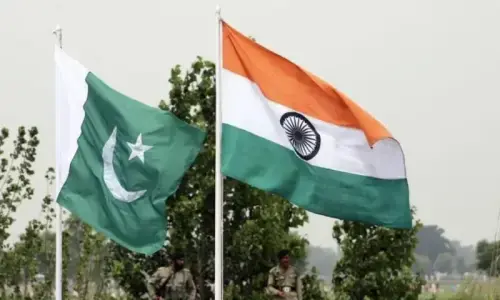
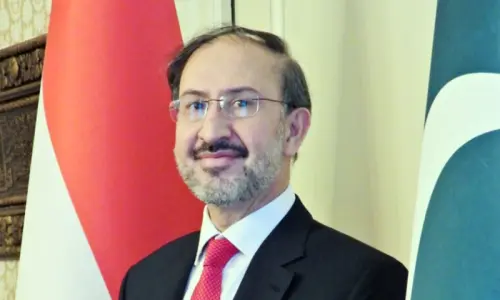
Speaker of the National Assembly Ayaz Sadiq and Indian Foreign Minister Subrahmanyam Jaishankar shook hands in Dhaka on Wednesday, marking the first high-level contact between Pakistani and Indian officials since the military conflict in May of this year.
Relations between Islamabad and New Delhi reached their lowest point this year following an attack in Pahalagam, in Indian-occupied Kashmir. India blamed Pakistan, while Islamabad denied any connection and offered — and continues to offer — an independent probe.
A press release from the NA Secretariat stated that during Sadiq’s visit to Dhaka for former Bangladeshi prime minister Khaleda Zia’s funeral, Jaishankar approached him for a handshake.
“Indian External Minister Dr S Jaishankar approached the Speaker [of the] National Assembly and shaked hands,” the press release read.
“During this interaction, Dr S Jaishankar introduced himself to the speaker and told the speaker that he had recognised him [sic].”
The press release added that since the Pahalgam attack, Pakistan has “consistently emphasised dialogue, restraint and cooperative measures, including proposals for peace talks and joint investigations into the alleged false flag Pahalgam incident, in order to prevent unprovoked aggression and escalation“.
Following the Pahalgam incident, India took a raft of unilateral diplomatic measures against Pakistan.
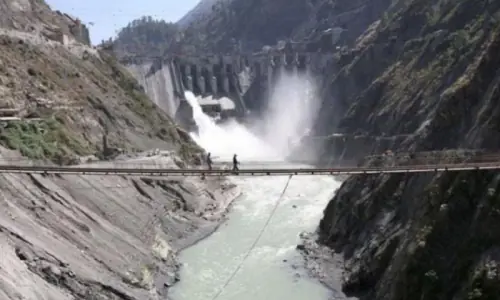
Among the Indian measures, the suspension of the Indus Waters Treaty (IWT) stood out as the most severe. The 1960 pact, brokered by the World Bank, has endured through wars and decades of hostility. Its suspension, therefore, marked a watershed moment in the already fraught relationship between the nuclear-armed neighbours.
India further lowered diplomatic ties by closing down the main border transit point, framing the attack as a grave provocation that warranted significant diplomatic, economic, and logistical pressure on Pakistan.
Pakistan called for an independent and transparent investigation into the attack, strongly denying India’s accusations.
However, New Delhi launched deadly air strikes in Punjab and Azad Kashmir on May 7, marking the beginning of a four-day clash between the two nuclear-armed neighbours. After tit-for-tat strikes on each other’s airbases by the two sides, it took American intervention on May 10 for both sides to finally reach a ceasefire.
In June, the Permanent Court of Arbitration (PCA) — an organisation that provides a framework for international disputes — issued a Supplemental Award of Competence, stating that India cannot unilaterally hold the IWT in abeyance.
Earlier this month, Pakistan’s Foreign Office had sounded the alarm on New Delhi’s “weaponisation of water” following abrupt variations in the flow of the Chenab and Jhelum rivers, which caused consternation among farmers in Punjab.
At the time, Foreign Minister Ishaq Dar had noted that the Permanent Court of Arbitration (PCA) had also reaffirmed the continued validity of the treaty and its dispute-resolution mechanisms. In addition, he cited concerns expressed by UN rapporteurs over India’s actions in connection with the treaty.