Conflicting findings in parallel civil, criminal proceedings threaten administration of justice: SHC
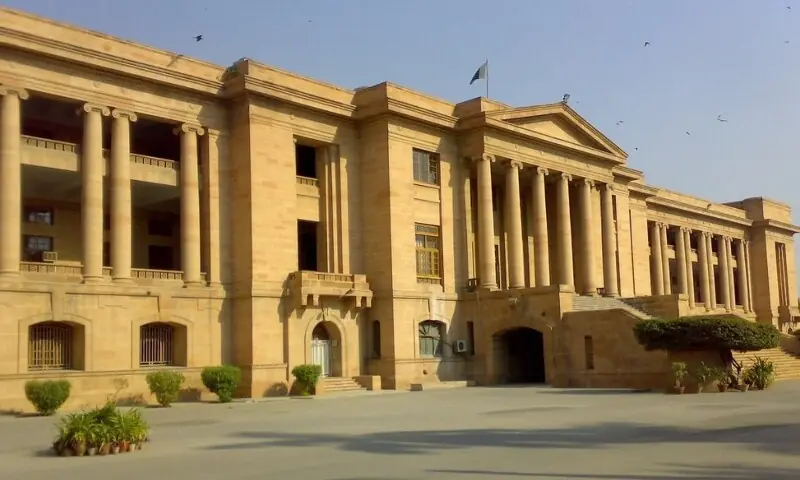
KARACHI: The Sindh High Court has observed that conflicting findings during parallel civil and criminal law proceedings threaten the consistent administration of justice and violate the doctrine of consistency in judicial determinations.
A single-judge bench headed by Justice Syed Fiaz-ul-Hassan Shah also said that a comparative analysis of civil and criminal law revealed potential challenges when concurrent proceedings occurred, as both are fundamentally distinct in their features, scope and objectives.
“The purpose of criminal proceedings is to punish an offender for the commission of an offence, whereas the object of civil proceedings is to declare or enforce legal rights. Because of these differences, both proceedings can coexist and run simultaneously without any legal restriction,” it added.
The bench made these observations while deciding two criminal miscellaneous applications filed by some officials of the Sindh Revenue Board against a decision of a sessions court, which had ordered registration of a case against the applicants.
Sheeraz Khan had approached the sessions court in Malir, seeking registration of an FIR, and claimed to be a lawful leaseholder/licensee of over 90 acres of Pakistan Railway’s land designated for farming and cultivation purposes, located near Jumma Goth Station Yard in Ibrahim Hyderi. He submitted that in April, the revenue officials and others had entered the premises and demolished the boundary walls of the cattle farm.
On the other hand, the applicant argued before the SHC that a notice was issued for the removal of alleged encroachments, claiming that the land belonged to the Sindh government and denying the ownership or entitlement of Pakistan Railway.
After hearing both sides and perusal of the record, the bench in its order noted that the absence of any revenue entry in favour of Pakistan Railways, coupled with the failure of both counsel for the complainant and the state prosecutor to produce such documentation, cast serious doubt on the legal entitlement of Railways to the disputed land, as mere departmental documents or claims of allotment were not sufficient to establish ownership unless duly reflected in the revenue record.
“A comparative analysis of civil and criminal law reveals potential challenges when concurrent proceedings occur. If civil and criminal trials run simultaneously, and the criminal case results in a conviction while the civil case grants rights or declarations to the same person, it creates conflicting findings. Such contradictions threaten the consistent administration of justice and violate the doctrine of consistency in judicial determinations”, it added.
It said, “This distinction is particularly clear when a civil court’s decree or direction issued in writ jurisdiction, based on facts and documents considered during civil proceedings, cannot be re-litigated in criminal trials. Such findings remain binding unless legally set aside through appropriate judicial processes.
The bench said that the question of ownership and possession of the land in question can only be conclusively determined by a competent civil court.
Published in Dawn, December 29th, 2025