

Nigeria signals more strikes likely in ‘joint’ US operations
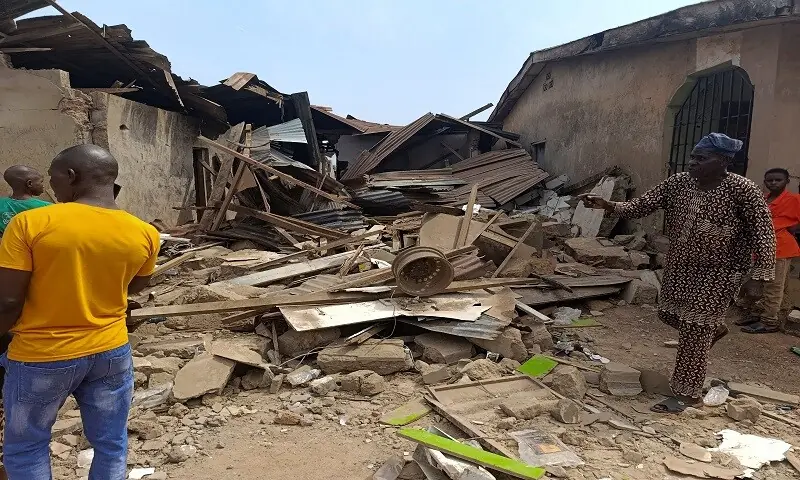
Nigeria on Friday signaled that more strikes against terrorist groups were expected after a Christmas Day bombardment by US forces against militants in the north of the country, which it said was a joint operation with its military.
The west African country faces multiple interlinked security crises, with terrorists waging an insurgency in the northeast since 2009 and armed “bandit” gangs raiding villages and staging kidnappings in the northwest.
The strikes came after Abuja and Washington were locked in a diplomatic dispute over what US President Donald Trump has characterised as the mass killing of Christians amid Nigeria’s myriad armed conflicts.
A Pentagon official told AFP that “the Department of War worked with the government of Nigeria to carry out these strikes” and that they “were approved by the government of Nigeria”, without saying whether Nigeria’s military had been involved.
US defence officials later posted a video of what appeared to be a nighttime missile launch from the deck of a battleship flying the US flag.
Meanwhile, Nigeria’s military said in a statement that its forces, “in conjunction with the United States”, had conducted “precision strike operations”.
Both countries said the strikes targeted militants linked to the Islamic State group, without providing details.
Washington’s framing of the violence in Nigeria as amounting to Christian “persecution” is rejected by the Nigerian government and independent analysts, but has nonetheless resulted in increased security coordination.
“It’s Nigeria that provided the intelligence,” the country’s foreign minister, Yusuf Tuggar, told broadcaster Channels TV, saying he was on the phone with US State Secretary Marco Rubio ahead of the bombardment.
Asked if there would be more strikes, Tuggar said: “It is an ongoing thing, and we are working with the US. We are working with other countries as well.”
Targets unclear
The Department of War’s US Africa Command said “multiple ISIS terrorists” were killed in an attack in the northwestern state of Sokoto.
Residents in the far-flung villages of that state told AFP they were shocked by the blasts. The strikes hit multiple locations, including a town that residents said was not a militant stronghold.
Which of Nigeria’s myriad, and well-documented, armed groups were targeted remains unclear.
Nigeria’s terrorist groups are mostly concentrated in the northeast, but have made inroads into the northwest.
Researchers have recently linked some members of an armed group known as Lakurawa — the main terrorist group located in Sokoto State — to Islamic State Sahel Province (ISSP), which is mostly active in neighbouring Niger and Mali.
Other analysts have disputed those links, and research on Lakurawa is complicated as the term has been used to describe various armed fighters in the northwest.
“We initially thought it was (an) attack by Lakurawa,” said Haruna Kallah, a resident of Jabo town.
That the explosions were in fact the result of a US strike “surprised us because this area has never been a Lakurawa enclave, and we have never had any attacks in the last two years.” Tukur Shehu, a resident of Tangaza, a neighbouring district, said two strikes targeted Warriya and Alkassim villages — known to house Lakurawa camps, from where they launch attacks and keep hostages.
Public opinion divided
Public opinion on the surprise strikes was split.
“America has made its way by force in our country, to kill our people,” said Sulaiman Ibrahim, an imam in Lagos.
Emmanuel Udoh, a member of the clergy at Living Faith Church, told AFP: “We are grateful with what the US has done. We are grateful with what the Nigerian government is trying to do.”
While the Nigerian government has welcomed the strikes, “I think Trump would not have accepted a ‘No,’” said Malik Samuel, an Abuja-based researcher for Good Governance Africa, an NGO.
Security analyst Brant Philip called the timing, on Christmas Day, “a symbolic start to official US operations in Nigeria”, adding: “The operational results of the strikes are not significant, but much is expected soon.” Tuggar said that Nigerian President Bola Tinubu “gave the go-ahead” for the strikes.
The foreign minister added: “It must be made clear that it is a joint operation, and it is not targeting any religion nor simply in the name of one religion or the other.“



























