WHERE ARE TV DRAMAS HEADING?
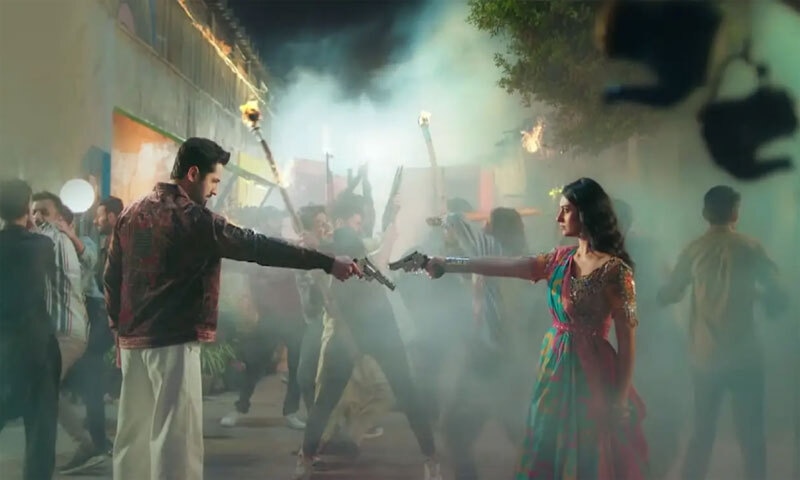
This year was not a great year for the mega serials that the big three entertainment channels — Hum TV, Geo TV and ARY — were banking on.
Apart from Sher and Parwarish (both ARY), big-budget shows such as Humraaz (Geo), Sanwal Yaar Piya (Geo), Ae Ishq-i-Junoon (ARY), Daayan (Geo) and Case No 9 (Geo) made ratings, but none justified the hype or became the blockbusters their producers were banking on.
An array of dazzling star performers and a script written by Khalilur Rehman Qamar could not push ARY’s Humayun Saeed and Sajal Ali-starrer Main Manto Nahin Hoon beyond the average, while a great story such as Biryani (ARY) was strung along too long and fizzled out to a mediocre ending despite a mesmerising beginning.
Sher, Parwarish, Qarz-i-Jaan (Hum), Mann Mast Malang (Geo), Jama Taqseem (Hum), Naqaab (ARY), and the recent Meri Zindagi Hai Tu (ARY) are among the big hits that justified their budgets. What worked with them was what always works — the smaller serial with a strong story that connected with the audience.
WHAT WERE THE DRAMA TRENDS?
Determining trends over a year of television entertainment is not always easy. Like the attention of modern TV audiences, trends come and go and do not always sustain beyond a season. And whether they will sustain into the coming years is also a risky prediction, because so many other factors affect what happens.
Pakistani TV dramas are increasingly making their mark internationally, gathering new audiences in Bangladesh and Arab countries as well as the usual ones in India, Europe and North America. As the year draws to a close, Icon asked its television reviewer to assess the discernible trends of Pakistani dramas over 2025 and whether they might indicate what we can expect to see in the new year
There were, however, some obvious trends in the 2025 drama season. Most could be identified as the hidden hand of market forces obviously inspired by commercial success, while others were deeply rooted in culture. The cultural ones are, perhaps, the most significant because they hold up a mirror to the society’s aspirations for itself, while commercial success is a snapshot of a moment.
THE LOVE FOR THE STALKER…
Various iterations of the one-sided love that will not take no for an answer, have been perfected by Danish Taimoor in serials such as Deewangi, Ishq Hai, Kaisi Teri Khudgharzi and, to a lesser extent, Feroze Khan in dramas such as Khaani, Gul-i-Rana, Ishqiya and Khuda Aur Mohabbat 3.
Other actors have taken up this dysfunctional mantle, such as Mikaal Zulfikar’s character in Manjali, but they have been treated as negative characters, not the misunderstood hero. Unfortunately, this disturbing trend looks like it will continue because, despite the criticism, it is consistently rewarded by audiences across the Subcontinent and in the diaspora, making such serials blockbuster hits.
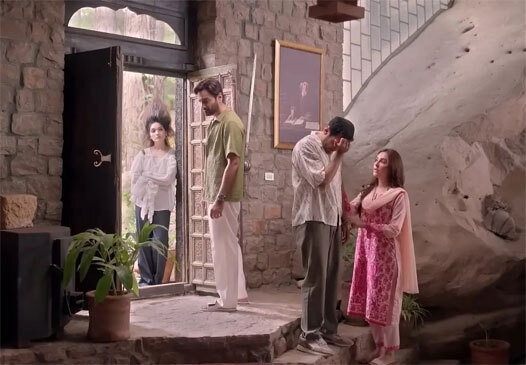
The formula is simple: a pretty young girl from a conservative, middle class background meets and slaps a spoiled, wealthy “bad boy”, thus beginning a lifelong attachment that she just cannot shake off.
The slap is an essential part of the formula, as are the many angry, violent outbursts from the hero, mixed with public humiliation, broken relationships and even kidnapping that the heroine must suffer because of the hero’s singular passion. Wealth and power are also important as it is never “Sheeda”, the middle-aged vegetable seller from across the road, who falls for our heroine. It’s always the spoiled scion of an upper-class family.
The most important ingredient is the absence of consent; the heroine must never actually want the hero. The thrill of the chase is only enhanced by her adamant resistance, combined with the underlying reassurance that, in the end, “haseena maan jayegi” [the damsel will surrender]. This is the energy that pushes the story forward.
The slap is an essential part of the formula, as are the many angry, violent outbursts from the hero, mixed with public humiliation, broken relationships and even kidnapping that the heroine must suffer because of the hero’s singular passion.
The current blockbuster Meri Zindagi Hai Tu is a modified version of this tale, but the hero has been allowed some redemption by backing off and doing a little introspection — but only after setting fire to the heroine’s car.
… AND DESPERATE WOMEN
This is a corollary to the above obsession. A man can burn a woman’s car and punch her brother in the face but will be forgiven 20 episodes down, while a clingy woman doing much less will not be forgiven.
For every obsessive hero, the drama universe automatically produces an equal and opposite female protagonist. She can be a wealthy, elite-class girl steeped in privilege or the middle-class cousin, but her prime purpose in life will be to keep throwing herself at the hero.
It seems both these tropes — the obsessive male and the clingy woman —still find plenty of takers in our TV drama audiences.
CHANGING FAMILY DYNAMICS
Family-oriented serials are always popular but, in a pleasant change of tone, we are seeing dramas such as Jama Taqseem that do not just extol the virtues of staying together.
Themes of sexual harassment, domestic violence and how, sometimes, living apart can foster more affection than forced unity, have been explored before. In both Parwarish and Jama Taqseem, the gap between the needs of the younger generation and traditional parenting styles were explored.
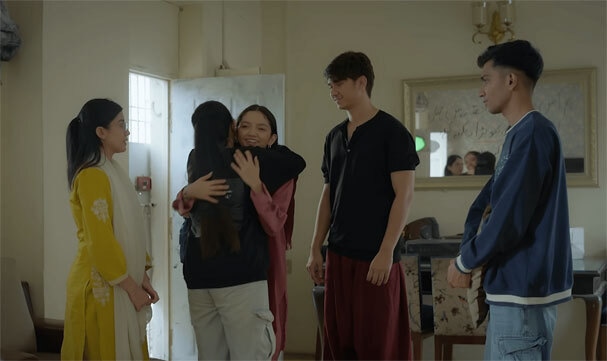
The importance of mutual respect in parental-child relationships and trust-building, rather than authoritarian attitudes, was emphasised. In Parwarish, we see that constant bickering and the inability of parents to compromise can have a devastating effect on their children, despite wealth and education.
Both dramas also showed how controlling or over-protective parents can stunt the maturity and growth of even their adult children. Looking at the dysfunction of families rather than just an idealised view of them was a welcome change.
WORKING WOMEN
In a refreshing change, our serials have also stepped back from demonising working women as permanently unhappy and on the edge of a divorce, because of their lack of kofta-making skills.
Goonj (Hum), Jama Taqseem, Mohra (Geo), Hijr (Hum), Raja Rani (Hum), Ae Ishq-i-Junoon, Pal Do Pal (ARY) and Dastak (ARY), all showed women stepping into the work force at every level, working through their struggles with their careers and relationships.
Acknowledging the fact that many couples rely on double incomes or that a single woman can have not just a job but a career other than being a doctor is a move towards reality.
STAR PLUS-ISATION
Pakistani dramas are known for their thoughtful, realistic exploration of societal issues and complex human emotions. But modern tastes for quick and easy serials have produced a new hybrid, with a decidedly Indian touch.
Cartoonish villainy, basic protagonists, lovers frozen in long gazes, extended monologues without rebuttal, dramatic moments rather than story progression and the classic giveaway of reels of film wasted on showing us everyone’s expressions, illogical plot twists, terrible make-up and wigs, combined with often grand sets, are all hallmarks of a show that is not trying for any authenticity but aiming for theatrics.
Of such shows, Daayanwas a prime example. Other ‘successful’ serials such as Mohra, Jurrwaan (Hum), Mann Mast Malang and Iqtidar are all examples that lean into this genre.
DARK COMEDY
While Green TV did introduce some edgy horror comedy with Lutram Putram as part of their Siyaah series, it was aimed at a more mature audience.
The super-hit Jinn Ki Shaadi Unn Ki Shaadi (Hum) marked a return to the kind of family viewing that was once provided by the PTV classic Ainak Wala Jinn. Combining traditional folklore, star power and a lot of contemporary nuances, the serial produced as many laughs as shivers, cutting a wide swathe through every demographic for viewership.
FOCUSING ON MENTAL HEALTH
In a surprisingly progressive move, Channels such as Express Entertainment and Green TV took the initiative and invested in stars for projects that tackled mental health.
Although at times flawed, Behroopiya (Green)was a mostly insightful attempt at illustrating the complexities of rare, multiple personality disorders, while Dil Dhoondta Hai Phir Wohi (Express) delved into the struggles of a woman whose husband develops early onset Alzheimer’s disease.
While shattering some of the ill-informed myths that have grown up around such illnesses and their treatment, the stories highlighted the amount of help caregivers need.
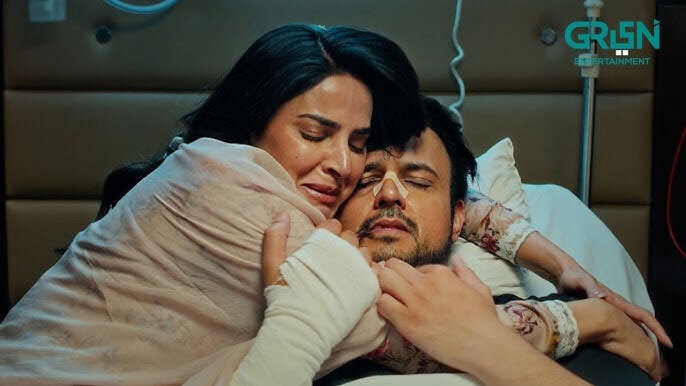
Green TV’s Pamaal alsoillustrates how psychological issues that are ignored or papered over can devastate the lives of those under the influence of the affected. Malika’s (Saba Qamar) life becomes a test of endurance after marrying Raza (Usman Mukhtar), a man with deep-rooted narcissistic tendencies.
Similarly, Parwarish highlights how easily children can fall prey to depression, eating disorders and suicidal thoughts due to parental expectations. This can be an incredibly positive trend but only if the makers can restrain their more commercial imperatives, and use authentic research to build their stories.
THE NEW AND IMPROVED DIASPORA
Expatriate Pakistanis finally got a positive boost in their representation this year. Parwarish showed how many pressures Pakistani-American children face while living with two cultures, and Qarz-i-Jaan showed some painfully truthful Canadian-Pakistanis.
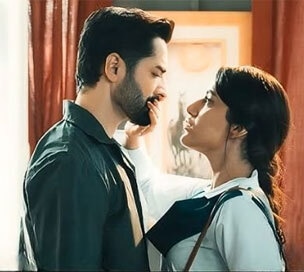
What has been missing this year are authentic stories about the immigrant experience. The one exception was Green TV’s amazing action thriller series Faraar which shone a light on the nexus of human trafficking and the desperation of immigrants. Such stories are especially important when we regularly see undocumented Pakistanis on the lists of drowning victims from illegal boats headed to Europe.
In general though, the lives of immigrants and the dynamics that push educated Pakistanis to leave for legal employment overseas are being ignored, which is surprising given how much of a footprint Pakistani TV dramas have now established abroad.
RUSHED ENDINGS
The bane of every drama fan is the rushed finale.
After stretching a series in the middle, makers often cobble together a clumsy ending because their actors are unavailable, or the writer cannot draw all the tracks together. The worst part is this often happens to a well-made, successful serial, because commercial concerns always trump artistic completeness.
Biryani is an obvious example. Despite stellar performances and an intriguing story, the ending felt patched together, completely disconnected to the depth and cohesion of the first two-thirds.
If a script does escape this trap, there is another snare waiting in the form of pat, almost childish solutions to appease traditional, conservative sentiments, belying the concepts the writer was initially challenging.
A plea to producers: please think of your legacy as well as immediate commercial concerns. The artistic integrity of your product will last a lot longer than the value of that packet of dish soap you are selling.
A GROWING GLOBAL AUDIENCE
Despite a ban on Pakistani content via YouTube in India, Indian audiences keep tuning in for content. Hundreds of years of cultural and linguistic history are hard to erase, especially if the content resonates.
As Bollywood pivots to jingoism, historical revisionism and propaganda, average people have turned to serials that reflect real issues affecting their lives. The recent surge in viewers from Bangladesh, despite a turbulent past, is further proof that South Asians are reconnecting over serials, as they once did over the universalism of Hindi cinema.
The audience for Pakistani dramas (and Pakistan’s unappreciated soft power) is now growing in Arabic-speaking countries through Hum Arabia and ARY Arabia. Dubbed serials are being watched not just by the far-flung diaspora but other native populations, just as we watch Turkish shows. Some Pakistani series are already being shown on the popular Turkish channel Kanal 7, but have yet to gain a popular foothold.
This growing global audience — and the income from online views that now often top a billion in some cases — should help Pakistani drama producers increase their budgets but, also, more importantly, lead them to rethink their storylines and what they are promoting on the global stage. Hopefully, it will also encourage them to try new things.
The writer is Icon’s TV reviewer
Published in Dawn, ICON, December 28th, 2025