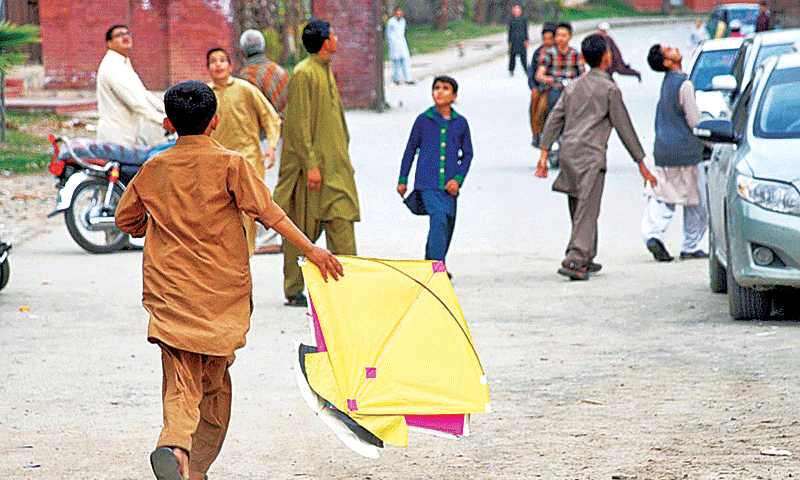
LAHORE: The Punjab Assembly on Thursday passed the Punjab Regulation of Kite Flying Bill, 2025, with a majority vote, introducing a comprehensive legal framework to regulate kite flying across the province to protect human life and property.
The bill, which cleared the assembly’s Standing Committee on Home Affairs on December 15, proposed a near-total ban on kite-flying, except on specific days and designated locations across the province, with strict penalties to curb fatal accidents and property damage.
The bill will now be sent to the governor for his signature to make it an act of the provincial assembly.
Under the new regulations, the use of metallic wire, nylon string, and chemically or glass-coated kite strings has been completely banned. It prescribes strict punishments for flying, manufacturing, storing, or selling kites without permission.
According to the bill, violating the restrictions on kite flying may result in imprisonment ranging from three to five years, a fine of up to Rs2 million, or both.
Manufacturing or selling kites and prohibited strings carries even harsher penalties, including five to seven years’ imprisonment or a fine of up to Rs5m.
In cases where children are found violating the law, action will be taken under the Juvenile Justice System Act 2018. If fines imposed on minors are not paid, authorities will be empowered to recover the amount from parents or legal guardians as arrears.
The offences under the law have been declared non-bailable and cognizable.
Deputy commissioners have been authorised to grant conditional permission for kite flying on specified days and at designated locations. During permitted kite flying, mandatory safety measures for motorcyclists will be enforced.
It further makes registration compulsory for the manufacturing and sale of approved kites and strings. Selling kites or permitted equipment without registration may result in imprisonment from one to five years, a fine, or both.
Police have also been empowered to make arrests without a warrant in such cases. Officers with the rank of sub-inspector or above have been authorised to conduct searches and seize prohibited material.
The bill added that the provincial government may also grant arrest and search powers to other agencies and a formal mechanism has been introduced for the registration and cancellation of kite flying associations, with deputy commissioners empowered to revoke registrations in case of violations.
It also provides a multi-tier right of appeal at the magistrate, deputy commissioner, and commissioner levels. It includes a provision for rewarding informers with up to Rs5,000 for reporting violations.
The new legislation repeals the Punjab Prohibition of Kite Flying Ordinance, 2001 and grants the government full authority to frame rules, regulations, and guidelines for the effective implementation of the law.
As per the rules, which were notified last Sunday, kite manufacturers, traders or sellers of authorised kite flying material must apply to the DC and provide specified documents.
Kite flying associations can also register themselves with the DCs concerned through an online application by the association president or general secretary.
The DCs must verify the contents of applications and documents within 10 days of receiving them. Upon verification, the DC shall decide the application and issue a certificate of registration having a one-year validity.
Specifications for permitted kites were also shared. A ‘patang’ shall not exceed 35 inches in width and 30 inches in length, while a ‘gudda’ cannot exceed 40 inches in width and 34 inches in length.
‘Dor’ (string) must be made of cotton with not more than nine threads and no less than 28 counts. The string must be wound in the shape of a ball, since spools are prohibited.
The Punjab government lifted a ban on the Basant festival after 18 years, with the festival slated to be celebrated in February next year. It was banned in 2007 because of an increasing number of deaths and serious injuries caused by sharp kite strings, particularly to motorcyclists and pillion riders.