Interim bail of Imran, Bushra extended till Jan 27


• Court directs ex-PM to appear at next hearing in person or via video link
• Lawyer again barred from meeting PTI founder to sign power of attorney
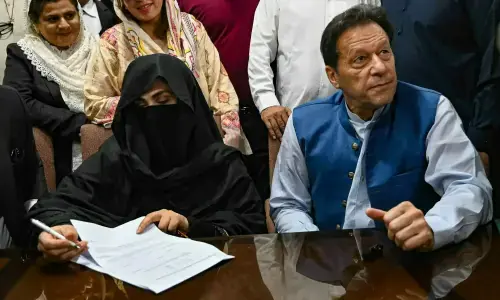
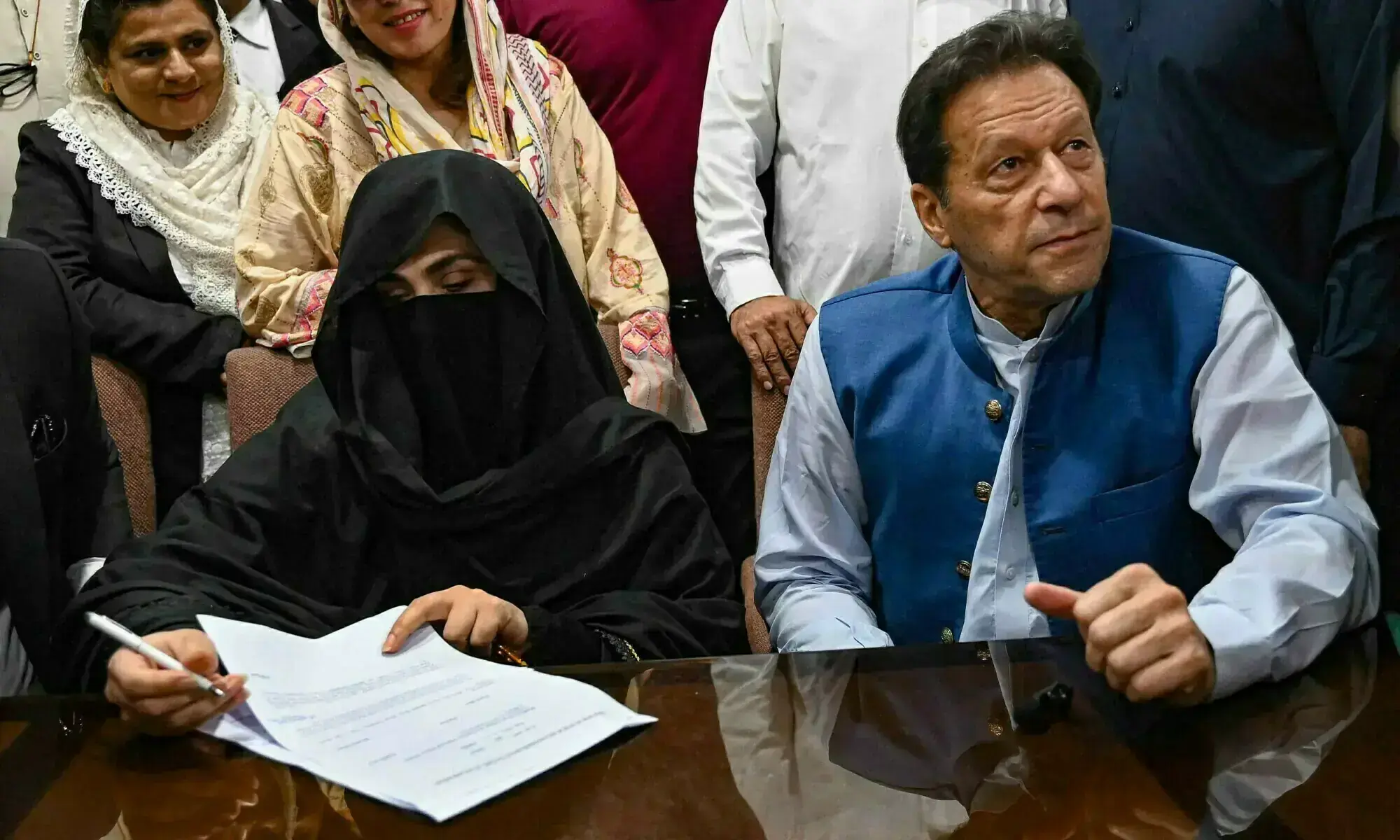
ISLAMABAD: A local court on Tuesday extended the interim bail of PTI founder Imran Khan and his wife Bushra Bibi in the May 9 cases and five other matters, while directing the former prime minister to appear at the next hearing either in person or through video link.
Additional District and Sessions Judge Muhammad Afzal Majoka heard the pre-arrest bail applications. Advocate Shamsa Kayani appeared on behalf of the PTI founder and Bushra Bibi. However, arguments on the bail pleas could not be advanced due to the unavailability of the ex-PM.
Consequently, the court extended the interim bail and adjourned the hearing till Jan 27, directing that the PTI founder’s appearance be ensured on the next date.
Apart from the May 9 cases, other cases, including attempt to murder and submission of alleged fake receipts, have been registered against the former prime minister. A separate case pertaining to the alleged submission of fake receipts related to Toshakhana gifts has also been lodged against Bushra Bibi.
Meanwhile, Additional District and Sessions Judge Chaudhry Amir Zia also extended Bushra Bibi’s interim bail on her pre-arrest bail application and adjourned the matter till Jan 27. A case was registered against her at the Ramna police station under the Peaceful Assembly and Public Order Act and other relevant provisions.
Meeting denied again
Separately, PTI lawyer Khalid Yousaf Chaudhry was once again not allowed to meet Imran Khan to obtain his signature on the power of attorney papers for filing an appeal against his recent conviction in the Toshakhana case.
The PTI condemned what it termed “deliberate obstructions” to the party founder’s right to appeal in the Toshakhana-II case, alleging that prison authorities were preventing Imran Khan and Bushra Bibi from meeting their counsel at Adiala jail to sign the power of attorney. In a statement, the party said that making the PTI founder’s counsel wait for hours, closing the legal desk and denying facilitation for execution of the power of attorney amounted to a “planned attempt to obstruct access to justice”.
The PTI maintained that under Rules 178 and 179 of the Punjab Prison Rules, 1978, every prisoner has the legal right to meet his/her lawyer, sign legal documents and file an appeal, adding that prison authorities were not empowered to create hurdles in this regard.
The party further alleged that the denial of the right to appeal violated Articles 10-A, 4, 9, and 25 of the Constitution, and demanded immediate and unhindered access of the ex-PM to his counsel to enable him to pursue his legal remedies.
Published in Dawn, December 24th, 2025