1
1
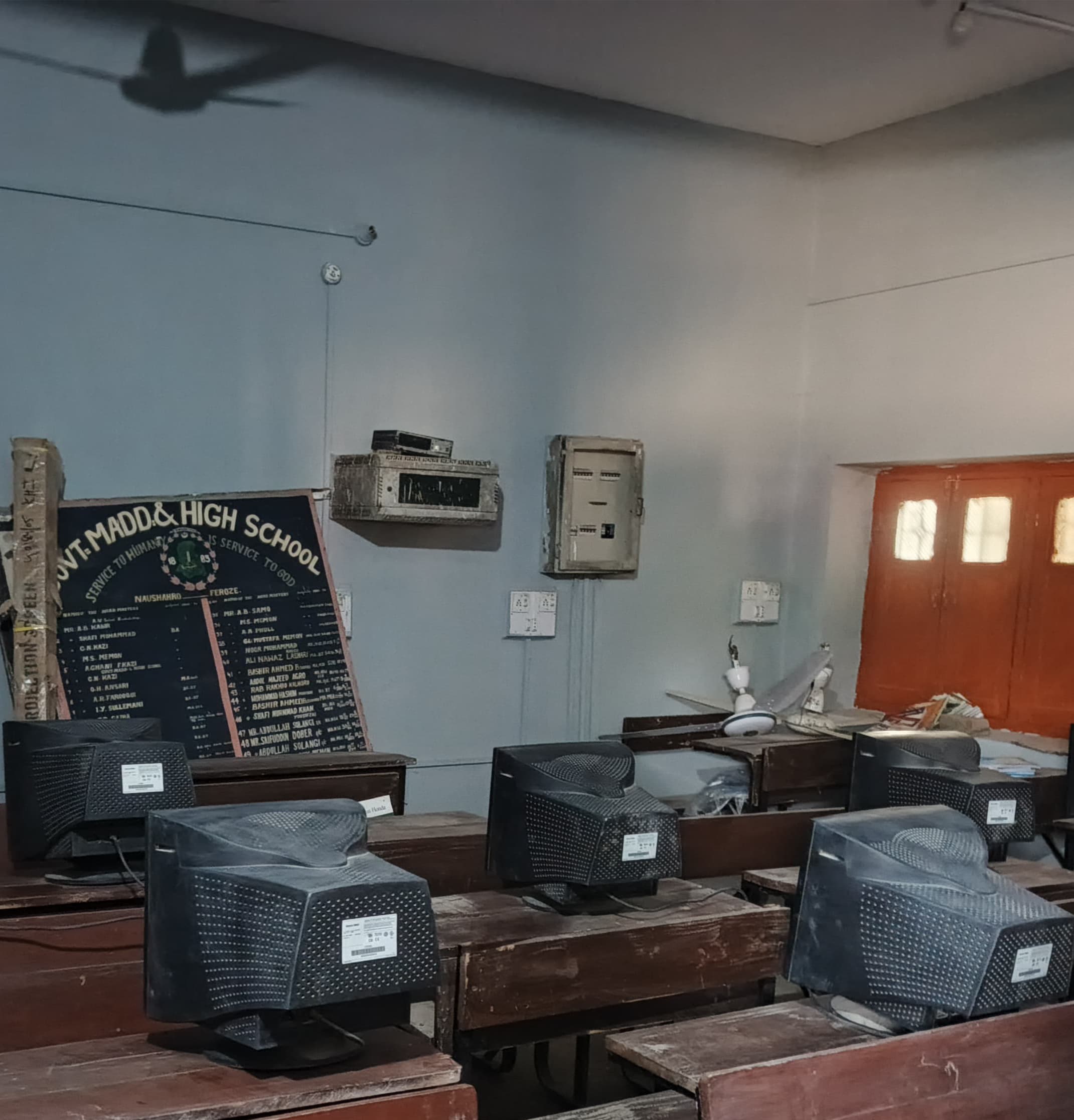
WHILE the state prioritises information and communication technology (ICT), it is deeply troubling to witness the state of computer education at the Government Madressa and Campus High School, Naushahro Feroze, an institution with a long academic history and over 1,800 enrolled students.
In an age where digital literacy defines a child’s future, the school’s computer lab, as can be seen in the accompanying image, is like a silent monument to administrative neglect.
The lab is practically non-functional. Almost all computers are outdated, dead, or missing from the original inventory. The monitors do not switch on, keyboards and CPUs are unusable, and even the printers belong to a generation now obsolete. The school is forced to rely on a single working laptop and one projector, leaving hundreds of students without any meaningful exposure at all to ICT.
The school, however, is not an isolated case. The government continues to high-light its commitment to digital education, signing agreements and launching ICT initiatives with international partners. Yet, the reality on the ground exposes a stark contradiction.
Without maintenance, monitoring and technical support, equipment delivered to schools simply deteriorates into scrap, and entire generations lose access to skills that are essential for survival in a modern economy.
The students of Sindh deserve far better. A functional ICT lab is not a luxury in this age; it is a fundamental requirement, and its absence represents a systemic failure that must be rectified without any delay.
Dr Abdul Qadeer Memon
Naushahro Feroze
Published in Dawn, December 20th, 2025