IHC issues order on Christian sanitary workers’ rights


 0
0
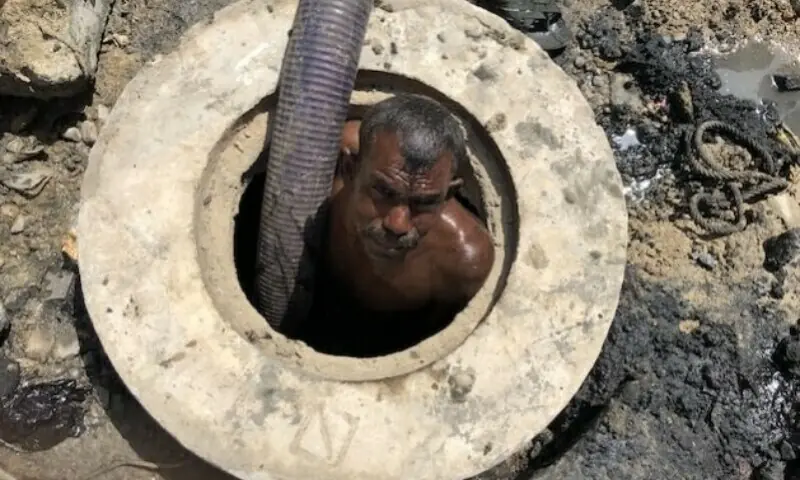

• Directs immediate protective measures for sewerage workers nationwide
• Recognises repeated deaths of manual scavengers as grave rights violations
• Over 70 workers killed since 1988 due to toxic sewer gas
ISLAMABAD: The Islamabad High Court (IHC) has directed the federal government to immediately implement protective measures for sewerage workers across the country, declaring the continued deaths of Christian labourers engaged in manual scavenging a grave violation of fundamental rights and a persistent failure of the state to fulfil its constitutional obligations.
Justice Raja Inaam Ameen Minhas, in a detailed judgement issued on Tuesday, allowed a public interest petition filed by the Center for Rule of Law Islamabad Pakistan (CROLI) and the Pakistan United Christian Movement (PUCM). The petitioners had sought enforcement of safety protocols, a ban on manual scavenging, and legislative reforms to safeguard the rights of sewerage workers, most of whom belong to the Christian community.
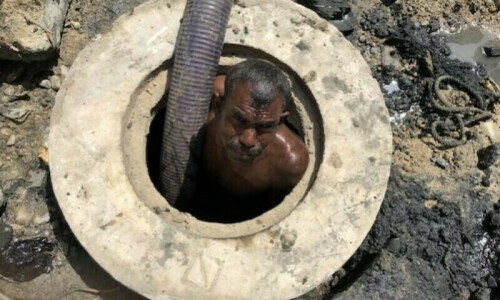
The court noted with concern that more than 70 Christian workers have died since 1988 due to exposure to poisonous gases in sewers, while civil society reports documented at least 10 deaths since 2019, primarily due to the absence of protective gear. According to the National Commission for Human Rights and other rights bodies, over 80 per cent of sewerage-related jobs in Pakistan are held by Christians, despite their small share in the national population.
Justice Minhas observed that ministries and departments, instead of acknowledging their responsibility, attempted to evade accountability by shifting blame to one another. “Has the exercise of public office been reduced to mere evasion of duty? Does the Constitution not guarantee equal protection to all citizens? Are the lives of sewerage workers less valuable than those of other citizens?” the judgement asked.
The court held that the state has a “solemn constitutional obligation” under Articles 9, 25 and 27 to protect the lives, dignity and equality of all citizens, including those performing hazardous work. It further noted that Pakistan’s commitments under the Universal Declaration of Human Rights and domestic labour laws require the provision of safe working conditions.
The judge highlighted that sewerage workers are routinely exposed to toxic underground gases, risking collapse, death, organ damage and serious infections — dangers that are “entirely avoidable” through proper equipment, monitoring devices and safety protocols. The continued omission by state authorities, the court held, amounted to a “systemic deficiency” requiring judicial intervention.
Allowing the petition, the IHC directed the federal government to issue a circular to all federal and provincial ministries, autonomous bodies and regulated private entities, ensuring that workers engaged in sewer maintenance are provided with functional protective gear, gas detectors, ventilation arrangements and first-aid facilities.
The government must also ensure that similar measures are enforced in the private sector.
Additionally, the court ordered the Ministry of Law and Justice to initiate legislation — or amendments to existing laws — to safeguard the rights, safety, compensation and insurance coverage of sewerage workers.
Justice Minhas further required all respondents to submit compliance reports within two months to the Deputy Registrar (Judicial), confirming implementation of the court’s directives.
The judgement underscores what the court described as Pakistan’s “constitutional commitment to equality and justice,” emphasising that “a nation cannot progress while consigning its citizens to hazardous working conditions without the basic necessities required to perform the job and preserve health.”
Published in Dawn, December 10th, 2025