Unesco puts musical instrument Boreendo on heritage safeguard list


 0
0

KARACHI: The ancient musical instrument Boreendo has been officially inscribed on the Unesco List of Intangible Cultural Heritage in Need of Urgent Safeguarding.
The decision was taken during the 20th session of the Intergovernmental Committee for the Safeguarding of the Intangible Cultural Heritage in New Delhi.
Boreendo is an eco-friendly musical instrument made from clay and holds significant cultural importance as it belongs to the people of Mohenjo Daro and Indus Valley civilisation.
Announcing this on the floor of the Sindh Assembly on Tuesday, Sindh Culture Minister Syed Zulfiqar Ali Shah said that the honour represented a major milestone in safeguarding Sindh’s musical heritage and cultural identity on a global scale.
“The inscription puts Sindh’s folk music and craftsmanship on the global stage, creating new opportunities for research, collaboration, and international recognition,” he added.
Inscription puts Sindh’s folk music and craftsmanship on global stage, minister tells PA
He said Boreendo was simple in design yet profound in spirit. “At present there is only one known Borendo maestro — ZulfikarLoond — and the instrument is crafted by UstadAllahDino, a master artisan whose hands carry the legacy of this craft,” he added.
He said that the Sindh government, through the culture department, had been actively working on the preservation, revival, and promotion of indigenous arts and instruments.
“We are also thankful to the federal government and Unesco Pakistan for their cooperation and support in achieving this milestone,” he said, adding: “We also highly appreciate the efforts of Meeza Ubaid, a cultural expert consulted in preparation of Boreendo dossier.”
‘Landmark victory’
Separately, a Unesco press release termed the decision a landmark victory for cultural preservation.
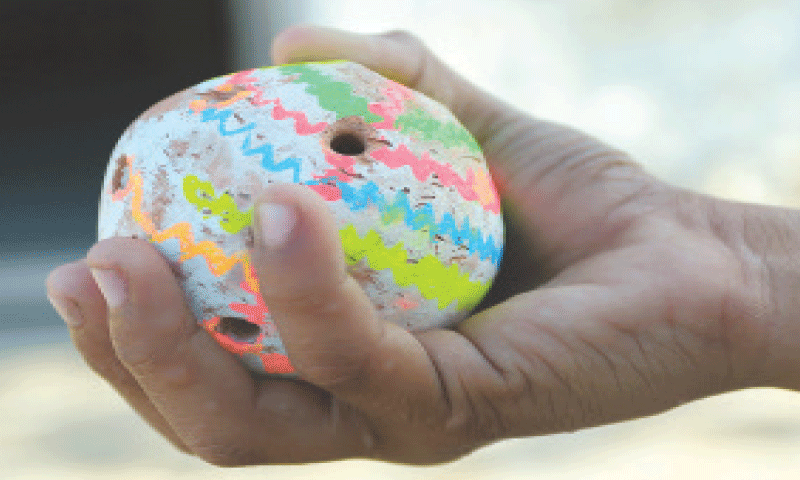
It said the Boreendo is a unique, spherical folk instrument handcrafted from clay, known for its haunting, soulful melodies played during winter bonfires (Mach Kachehri) and cultural festivals in Sindh.
The inscription endorses a comprehensive safeguarding plan developed by Pakistan’s government in close collaboration with the local community of Keti Mir Muhammad Lund.
Key initiatives include establishing training programmes to transfer the unique skills of clay moulding and tuning to youth, integrating Boreendo music into school curriculums and community workshop and creating sustainable livelihoods for artisans through cultural festivals and global promotion.
The Boreendo’s distinct design—a hollow clay ball with sound holes, often painted with intricate motifs by the women of the village—is a testament to sustainable, eco-friendly art.
By placing it on the Urgent Safeguarding List, Unesco and Pakistan highlight the urgent need to support the practitioners who keep this fragile heritage alive against the challenges of modernization and climate change.
Published in Dawn, December 10th, 2025