Sri Lanka doubles troops for flood disaster recovery


 0
0
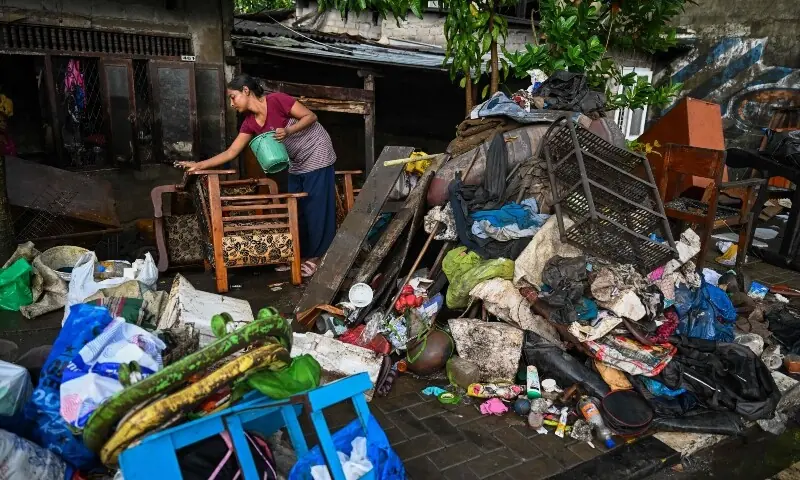

Sri Lanka has almost doubled its military deployment to regions struck by a cyclone that has killed 627, sending tens of thousands of troops to help areas hit by a wave of destruction, the army said on Monday.
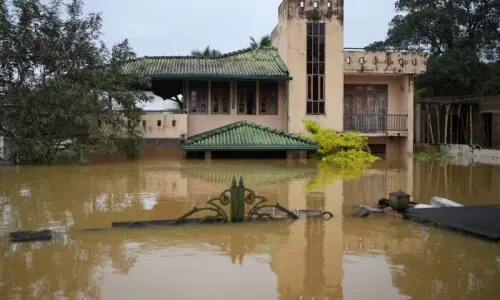
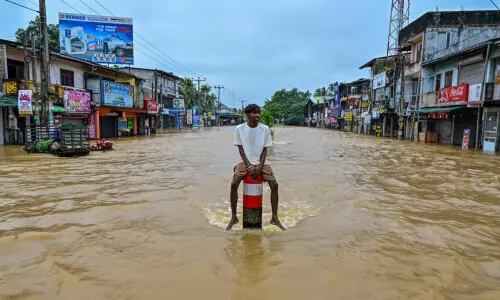
More than two million people — nearly 10 per cent of the population — have been affected by the disaster caused by Cyclone Ditwah, the worst on the island this century.
Sri Lanka is expecting further heavy monsoon rains on Monday, topping 50 millimetres in many places, including the worst-affected central region, the Disaster Management Centre (DMC) said. It has also issued warnings of further landslides.
The DMC has confirmed 627 deaths, with another 190 people unaccounted for since November 27, when intense rains brought on by Cyclone Ditwah triggered landslides and floods.
The disaster management agency warned residents to “take adequate precautions to minimise damage caused by temporary localised strong winds and lightning during thundershowers”.
Army chief Lasantha Rodrigo said 38,500 security personnel had been deployed to boost recovery and clean-up operations in flood-affected and landslide-hit areas, nearly doubling the inital deployment.
“Since the disaster, security forces have been able to rescue 31,116 people who were in distress,” Rodrigo said in a pre-recorded statement.
Army spokesman Waruna Gamage said additional troops were deployed as the rescue efforts turned into a recovery operation.
“We have almost doubled the deployment as we are now engaged in rebuilding roads, bridges and also helping with the clean-up of drinking water wells contaminated with floodwaters,” Gamage told AFP.
The tea-growing central region was the hardest hit, with 471 deaths reported, according to official data.
President Anura Kumara Dissanayake, who has described the disaster as the most challenging faced by any Sri Lankan government, last week visited affected areas to monitor relief operations.
He also unveiled a recovery package offering 10 million rupees ($33,000) for victims to buy land in safer areas and rebuild.
The government will also offer livelihood support and cash assistance to replace kitchen utensils and bedding and to buy food.
It is not yet clear how much the relief package will cost the government, which is still emerging from its worst economic meltdown in 2022, when it ran out of foreign exchange to finance even the most essential imports.
Dissanayake has said the government cannot fund the reconstruction costs alone and has appealed for foreign assistance, including from the International Monetary Fund.
More than 75,000 homes have been damaged in the disaster, including nearly 5,000 that were completely destroyed. A senior official earlier estimated recovery and reconstruction costs could reach US$7 billion.