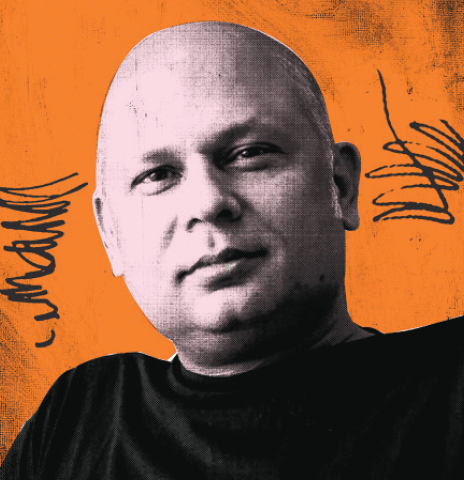
On the sidelines of a literary festival in Lahore a few years ago, I spent one of the most enriching days ever when it comes to enjoying poetry.
In the late afternoon of a pleasant day, along with other friends, I spotted poet Afzal Saahir roaming about in the food court set up for the festival. We invited him to join us for chai and pakorras and share some of his poetry. When we got up and were moving towards one of the halls of the Al-Hamra Arts Council to attend a regular session in the festival, someone from behind tapped me on my shoulder and said: “Forget about the session you are planning to go to. Come with me now and I will introduce you to a poet from my city.” Without turning my head back, I could recognise the definitive tone of artist Akram Varraich’s voice.
It is not the landmarks or monuments that define a city for me. I love history but, when I visit a place, it is not sightseeing that attracts me but looking for people of my ilk — people whose company one can enjoy, one can learn from, crack jokes with, who are genuine in their emotions and with whom one can have a grog and a meal in deep comfort. Such individuals define a city. Akram Varraich has been living in Lahore since long but he defines Wazirabad for me. He is not simply an artist of considerable merit but an ambassador-at-large for Wazirabad.
That evening, Malik Khalid, who now lives in London, was introduced to me by Varraich. We have been the best of buddies since. The other person from Wazirabad I was introduced to was the affectionate and warm Sharjeel Anzar, a connoisseur of art and literature. Finally, the same evening, I met a fascinating poet, Raja Sadiqulla.
He tried to wriggle out of the situation but we didn’t give up on our demand for Sadiqulla to recite his verse to us. Finally, he agreed and shared a few of his delightful and riveting Punjabi poems. I felt so good in my heart that I stayed back in the courtyard listening to Sadiqulla instead of attending a run-of-the-mill festival session.
Raja Sadiqulla has published two collections of poems in Punjabi. The book that has recently appeared, titled Fragrance of Seven Colours, is a translation by Munawar A. Anees of Sadiqulla’s poems from his first collection, Pehla Puur. It is a novel publication because English translations, along with Punjabi in Gurmukhi and Nastaleeq scripts, are provided in it in parallel.
What makes Sadiqulla prominent among his generation of poets is four things he captures that define his very being and his artistic sensibility: the character of changing seasons, the variety and vastness of colours, deep-seated human compassion and the ever-expanding universe of pain.
Most poets tend to repeat what has been felt and said in terms of content, be it experience or habitat. It takes immense confidence and incredible skill to create a modern and relevant diction and style which can suitably reflect the concerns and themes of the contemporary human condition.
For someone steeped in reading and writing poetry, the experience of reading classical works in our civilisational languages — from Sanskrit to Persian to Sindhi to Punjabi to multiple dialects of Hindustani or Urdu — is not just awe-inspiring, it is intimidating. Punjabi classical poetry is so exhaustive and overwhelming in defining the emotional, physical, psychological and historic experiences of an individual and the collective, that the ability to move forward is cautioned by both reverence and the fear that reverence for classics instills into a poet’s heart.
From Baba Farid to Hafiz Barkhurdar to Waris Shah to Bulleh Shah, there are giants who stand tall and remain above us. Consequently, most poets tend to repeat what has been felt and said in terms of content, be it experience or habitat. Even if they experiment with new genres, the atmosphere of metaphors and symbols does not change. It takes immense confidence and incredible skill to create a modern and relevant diction and style which can suitably reflect the concerns and themes of the contemporary human condition. Sadiqulla effortlessly joins that small group of contemporary poets who have been successful in doing that.
Sadiqulla kneads his poems in the dough of nature — birds, flowers, water and earth. Then he bakes these poems in the oven of suffering that consciousness brings. All of this is captured beautifully in the English translations. In his poem ‘Paper Boats’, he says: “…The flight of birds carries hidden writing/ That can be read only by the caged ones.” In ‘Flood’, he writes: “All was washed away/ The pain of separation kept floating in the eyes.” In ‘A Different Evening’, Sadiqulla says: “…And the morning was born out of the dew of another day/ Even if there is no moon, there is always an imperceptible moonlight/ Sometimes night wakes up prematurely/ When the jasmine flower is not plucked/ Know that in the season of rendezvous, the separation has slowly crept in…”
The loneliness and angst that the enormity and indifference of urban life offers is best depicted by Sadiqulla in his poem ‘City’: “Someone accompanies you in the deserted places/ On busy streets you wander alone.” These lines take me back to his poem ‘Palkhoo’, where there is a celebratory tone of belonging in his voice: “…Beyond the Palkhoo stream is our village/ Where flows the eternal river Chenab.”
Munawar A. Anees, with a doctorate in biology and regarded professionally accomplished in his subject, has a keen eye for good verse. He has done a huge favour to lovers of poetry worldwide by translating Sadiqulla’s Punjabi poetry into English.
Translation itself is a creative process, less valued than it should be. We also understand that translating poetry is more difficult than translating prose. However, Anees has applied himself with care and meticulousness when transforming Punjabi idiom into English, without losing its essence.
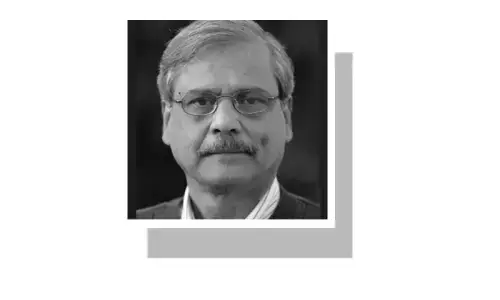
The writer is a poet and essayist. His latest collections of verse are Hairaa’n Sar-i-Bazaar and No Fortunes to Tell
Published in Dawn, Books & Authors, December 7th, 2025