Thousands of trade union workers protest India’s new labour codes
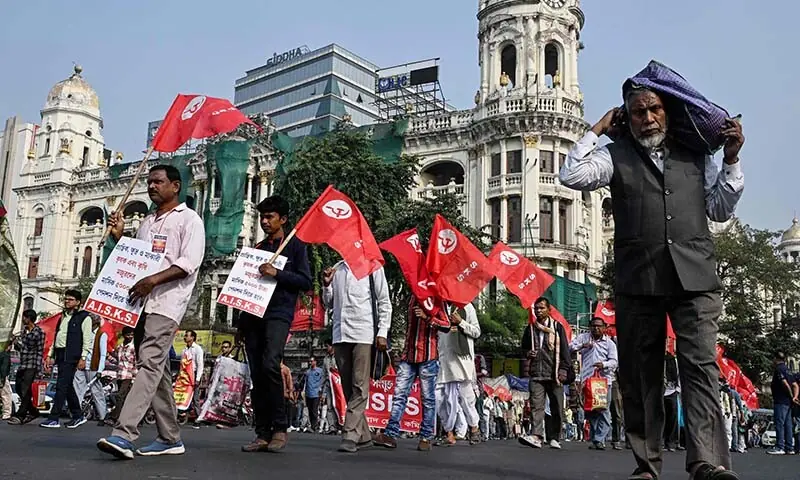

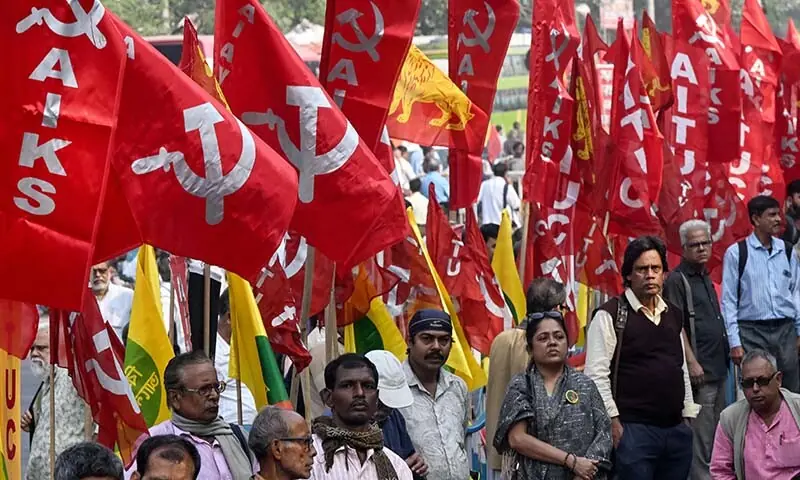
Thousands of trade union workers across India protested on Wednesday against the government’s rollout of new labour codes, saying they would lead to corporate exploitation and erode their hard-won rights.
The world’s fifth-largest economy last week implemented long-awaited labour laws that will replace colonial-era legislation and simplify a maze of confusing regulations.
The overhaul consolidates 29 existing labour laws into four key codes, with the number of rules being cut from more than 1,400 to about 350, but unions say the reforms will hurt workers’ rights.
Gautam Mody from the New Trade Union Initiative said workers from across all sectors were protesting on Wednesday outside factories and in many city centres.
“Workers have been blindsided by the government,” he told AFP. “We want fairness, justice and equity before the law, which are being denied under the new codes.”

While the new regulations boost safety standards and mandate guaranteed social security benefits for gig workers, they also allow for longer factory shifts, make it tougher for workers to conduct strikes and easier for medium-sized firms to fire employees.
A controversial key provision raises the threshold for firms that needed prior government permission for layoffs from 100 to 300 workers, which means companies with up to 300 employees can retrench staff without any approval.
‘Deceptive fraud’
The move has sparked worry among trade unions, aligned with parties opposed to Indian Prime Minister Narendra Modi, who have called it a “deceptive fraud” against the nation’s working people.
The Centre of Indian Trade Unions (CITU) said in a statement that the government wanted to portray these codes as “pro-worker” and “modernising”.
But “in reality they constitute the most sweeping and aggressive abrogation of workers’ hard-won rights and entitlements since Independence, aimed at facilitating corporate exploitation, contractualisation and unrestrained hire-and-fire”.
Modi has said the overhaul represented an opportunity to eliminate compliance-intensive labour laws, often seen as preventing the Indian economy from wooing foreign investors.
He has described the changes as “one of the most comprehensive and progressive labour-oriented reforms since Independence.”
India remains the world’s fastest-growing major economy, but a slowdown over the last year has left it short of the 8 per cent growth rate that most economists say is needed to create millions of well-paying jobs for its people.
US President Donald Trump’s tariff blitz, partly sparked by the White House’s anger over New Delhi’s purchases of Russian oil, has also clouded the country’s economic outlook and raised questions over its energy security.
Analysts at Nomura said in a recent note that the labour law reform was an “attempt to modernise disparate, arcane and compliance-intensive labour laws” that have emerged as one of the “major challenges to the ease of doing business”.
But they added it was “part of a broader trend by the government to hasten economic reforms, especially in the wake of the 50pc Trump tariffs”.