Health authorities accused of ‘underreporting’ dengue deaths in Punjab


 0
0
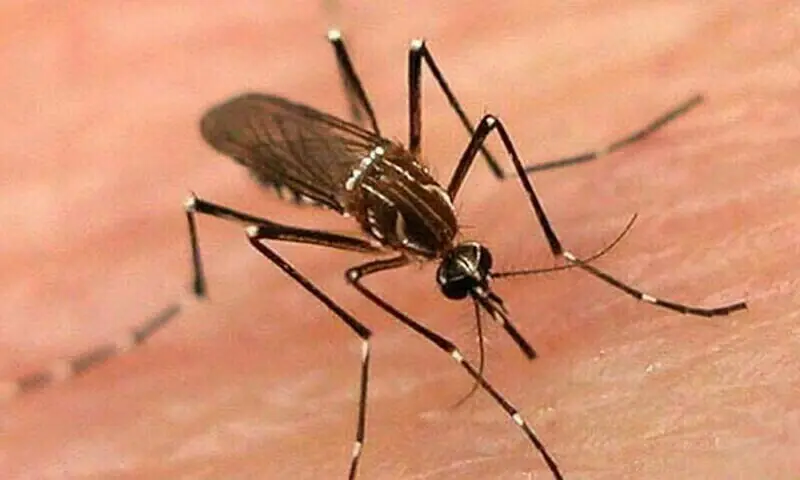

LAHORE: Dengue has hit most parts of Punjab, particularly the south of the province, amid some inside reports claiming that the deaths by the virus are occurring but the health authorities are allegedly ‘concealing the impact of the viral infection through under-reporting of the cases’.
The situation is said to be alarming in two major cities – Multan and Faisalabad – where the disease’s spike has exposed the tall claims of the health department that the ‘dengue situation is under control’.
The reports surfacing in south Punjab, particularly those from Multan, revealed that the number of patients tested positive for the dengue virus has increased 10-fold during the last few weeks or so.
Some local senior medical and health experts claimed that many deaths by the dengue had occurred but the officials who were supposed to report the fatalities officially in the health department, were strongly conveyed ‘to stop notifying the dengue deaths’ in the official record ‘till further order.’
Meanwhile, the Dengue Expert Advisory Group (DEAG) has also exposed the health department when it pointed out the criminal negligence which led to the dengue spread in parts of Punjab.
“It is noted that deficiencies and discrepancies in preventive and control measures are contributing to the continued spread of the dengue, thereby worsening the situation in some districts of Punjab,” reads an alert issued by the DEAG here the other day.
A senior health expert from south Punjab told this reporter that the district commissioners (DCs) and chief executive officers (CEOs) of the respective districts are the two key officials who are reportedly exerting pressure on the relevant officials to stop reporting the ‘dengue deaths’ and the actual number of the positive cases on ‘dengue dashboard’.
Referring to a fresh suspected death of a young man, Mohammad Imran, due to the onset of dengue fever, he said, the patient was a security guard and admitted to the Medical Unit-I of the hospital with profuse internal bleeding, or haemorrhage.
The official claimed the NS 1 test was to be performed during the first few days of high grade fever to confirm that the patient was suffering from dengue or not.
In this particular case, he said, the samples of the patient in-question for NS 1 tests were dispatched on 9th day of the onset of the fever and the result tested him negative for the virus.
“The percentage of positivity decreases rapidly as the days of fever passes on and usually become negative after 5-7 days of onset of illness”, quoting standard guidelines of the World Health Organization (WHO), he said.
The WHO further explains a negative NS1 test does not mean that the patient does not have dengue due to the low sensitivity and if the patient is fulfilling the criteria of suspected dengue, the patient should be managed accordingly.
The official declared it a deliberate attempt to delay a specific diagnosis process for the confirmation of the virus in order to obtain results of choice with a prime purpose of misleading the public.
According to the other test reports performed in this regard, Imran was a confirmed patient of the dengue virus.
On Tuesday evening, he breathed his last due to the continued internal bleeding as his platelet counts had dropped to critical level -6,000-, he said.
The official claimed that many deaths occurred during the last few weeks in government hospitals of Multan due to the dengue fever and were not reported officially.
He further revealed that the wards designated for the dengue fever in Nishtar, and the two district headquarters hospitals of Multan have no space these days to accommodate more patients.
Resultantly, the doctors began to shift them to the medical units and other wards of the hospitals.
Talking about the prevailing practice these days, he alleged the DC and the CEO of District Health Authority Multan reportedly issued instructions to the relevant health officials not to report the true burden of the dengue cases, particularly, of the deaths on the ‘dengue dashboard’ until further order.
An official letter issued by DEAG Punjab Chairperson Prof Dr Muhammad Khurram has also pointed out similar matter with clear warning about the spread of dengue in most parts of Punjab.
“It has been observed with grave concern that the dengue fever cases are rapidly increasing in districts of south Punjab, particularly, in Multan and Faisalabad”, reads the letter.
Prof Khurram said the worsening situation in this regard came to the notice of the medical experts in the DEAG meetings held on Nov 1 and Nov 12.
Furthermore, the Institute of Public Health (IPH) also highlighted the spike in dengue cases in its report issued on Nov 12, he said.
The DEAG letter suggested to the primary and secondary healthcare departments to take emergent measures for controlling the epidemic in the province.
The Group has also declared many other districts high risk for dengue outbreak including Kasur, Sahiwal, Rahim Yar Khan, Attock etc and advised the health authorities to initiate forthwith anti-dengue activities to prevent the epidemic of the disease and effective containment of the situation.
A senior public health expert blamed the health department for launching anti-dengue field activities just a few weeks back.
As per the standard guidelines, the comprehensive vector control and surveillance measures were to be initiated from June or July in order to eliminate the mosquitoes producing dengue virus, declaring it a wilful negligence that must be probed at a high level.
Published in Dawn, November 19th, 2025