Afghan refugees in Pakistan live in larger households with more dependents: UN survey
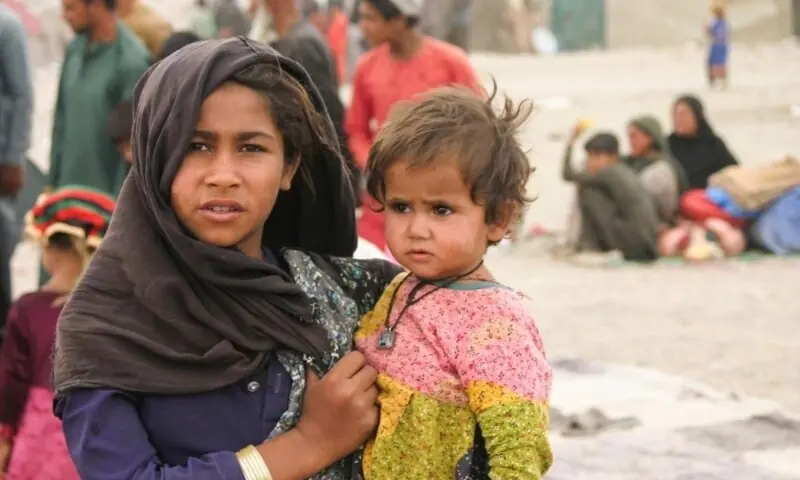

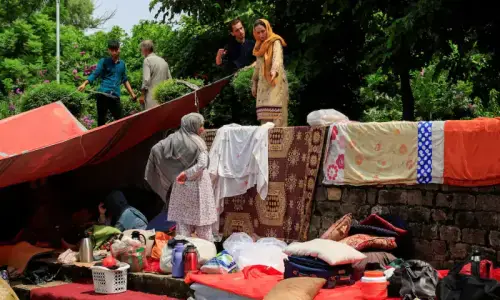
ISLAMABAD: Afghan refugee households in Pakistan face a higher dependency burden and are considerably larger, with an average size of 8.9 members, compared to host communities living nearby, which have an average size of 6.7, a recent United Nations High Commissioner for Refugees (UNHCR) survey revealed.
“On average, refugee households have more members than host community households and the national average,” the report ‘Forced Displacement Survey — Pakistan, 2024’ says, adding that the national average is 6.3, according to the Pakistan Bureau of Statistics.
The survey highlights a significant dependency burden, with the age dependency ratio at 137 among refugees and 105 in the host community.
This indicates more than one dependent for every working-age individual in both groups, a figure higher than the world average of 55. The data also showed 54 per cent of children in refugee households are under age 4, compared to 31 per cent in the host community.
Says the typical refugee family has 8.9 people, exceeding the national average of 6.3.
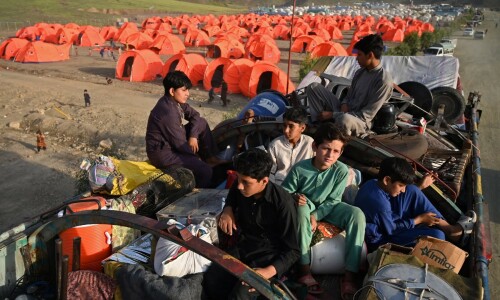
Also, the refugee population is predominantly young, with half of all refugees, nearly 620,000 children, under the age of 15.
Child marriage rates were also found to be alarmingly high. Approximately 5pc of refugee girls are married before the age of 15 and 25pc before 18.
This means one in every four girls in the refugee community is married before adulthood. The rates are lower but still significant in the host community, where 2pc of girls are married before 15 and 12pc before 18.
According to Unicef and the World Bank, child marriage is closely linked to poor health outcomes, reduced educational attainment, and economic hardship — particularly among vulnerable populations such as refugees.
The survey also sheds light on the origins of the refugee population, revealing that the majority were born in Pakistan. Around three-quarters of refugees aged 18 and above were born in the host country.
Only 24pc, or approximately 160,000 individuals, were born in Afghanistan. Nine in ten refugees have at least one parent who is or was also a refugee.
Marriage rates among household heads are high in both communities. Among refugees, 96 percent of males and 60 percent of females are married. In the host community, 95 per cent of male household heads and 40pc of female household heads are married.
This potentially indicates that among both refugees and host communities, most female-headed households are single-parent households.
For over four decades, Pakistan has hosted more than three million Afghan refugees, making it one of the world’s leading refugee-hosting nations. The survey focused on Afghan refugees holding Proof of Registration (PoR) cards, the majority of whom live in Khyber Pakhtunkhwa and Balochistan.
In addition to registered refugees, UNHCR has recorded data on approximately 190,000 Afghan asylum-seekers and refugees who arrived after the Taliban takeover in 2021.
Of these, an estimated 110,000 are considered to have “extreme vulnerabilities and would be at risk of imminent harm if returned to Afghanistan”.
The Forced Displacement Survey (FDS) is UNHCR’s flagship programme for producing high-quality data on displaced populations. Data collection for the survey was conducted by the Centre for Development and Evaluation (C4ED) under UNHCR supervision between March 2024 and January 2025.
Published in Dawn, November 14th, 2025