FO takes note of PCA clarifications on Indus Waters Treaty decision

The Foreign Office (FO) issued a statement on Wednesday in response to clarifications issued by the Court of Arbitration on the Indus Waters Treaty (IWT), saying that Pakistan had taken note of the decision and calling the clarifications “helpful”.
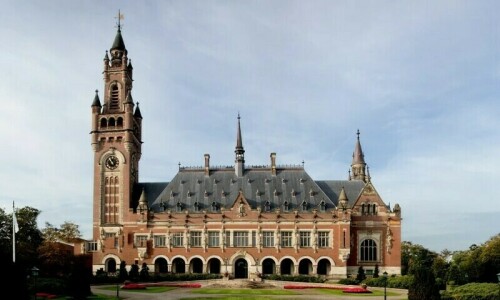
The Hague’s Permanent Court of Arbitration (PCA) had issued its Award on Issues of General Interpretation of the IWT on August 8. On September 19, Pakistan initiated an arbitration against India under the provisions of the IWT, which India suspended unilaterally following a four-day conflict between the two countries in May.
The PCA on Saturday issued clarifications on its decisions surrounding the treaty in response to the request, which concerned the interpretation and application of the IWT to certain design elements of run-of-river hydroelectric plants (HEPs).
The FO statement added that Pakistan had also taken note of the procedural order issued in parallel with the decision.
In response to a Procedural Order also issued in light of the decision, in which the court invited both parties to report on the status of Neutral Expert Proceedings, the FO said, “The Neutral Expert proceedings were initiated on India’s request with their next phase scheduled to take place in Vienna from 17-21 November 2025. While India has decided to halt its participation, Pakistan continues to fully participate in the Neutral Expert proceedings in good faith.”
It added that in this regard, the Neutral Expert had ruled that India’s non-participation could not operate as a bar to the proceedings going forward.
According to a press release issued by the PCA, the requested clarifications included those in relation to Article III, which concerns the Western rivers, and paragraph 8 of Annexure D, which concerns new run-of-river hydro-electric plants that India may construct on these rivers.
“The award also addressed a related question on the legal effect of decisions issued by dispute resolution bodies under the Treaty (namely, courts of arbitration and neutral experts),” the press release said.
The court found Pakistan’s request for clarification to be “timely” and provided clarifications as to the meaning and scope of several aspects of its decisions, as well as its reasoning behind them. According to the statement, it also found that its clarifications would have the same binding effect as the original award.
The court clarified that its decisions on paragraph 8(a) of Annexure D to the treaty were “not limited to freeboard but, rather, extend to all components of run-of-river hydro-electric plants that India may construct on the Western rivers”. It also stated that the decisions “further prohibit any design that would allow … the works themselves to be capable of raising artificially the water level in the operating pool above the Full Pondage Level specified in the design”, whether from the outset or via later modifications.
The body further clarified that its references to “designing an Annexure D, Part 3 HEP” and the “design” of an Annexure D referenced mandatory design criteria, to be applied at the outset — i.e. at the time of planning. It added that these criteria were distinct from post-commissioning operational constraints on a HEP and could not be satisfied “simply by an acknowledgement of or commitment to operational restraint”.
However, it declined Pakistan’s request to clarify that a crest-gated spillway with gates extending above Full Pondage Level was prohibited under paragraphs 8a and 8e of the annexure, as well as that the design of an Annexure D, Part 3 HEP must always include an ungated spillway. It stated these clarifications to be outside the scope of its award.
The Court of Arbitration further clarified that its reference in paragraph 742 to the list of data and information that India is required to convey to Pakistan is an indicative list and is not comprehensive.
It additionally clarified its finding that pondage required for firm power would be calculated “based on, among other things, a realistic, well-founded, and defensible projection of the proposed Annexure D, Part 3 HEP’s installed capacity and anticipated load, reflecting the fluctuations in the discharge of the turbines arising from variations in the daily and weekly loads of the plant, as set forth in Paragraph 2(c) of Annexure D”.
Once again, it declined the request for clarification as to how the treaty regulated the basis upon which India must determine the installed capacity and anticipated load of a proposed Annexure D, Part 3 HEP, and, once determined how these elements were to be taken into account to calculate maximum pondage.
As well as terming this to be outside the scope of the award, it recalled its conclusion that “Pakistan or India may seek to pursue the matter through the Treaty’s dispute resolution procedures, including a further phase of these proceedings”. It confirmed that it was open to conducting a further phase of These proceedings upon request from either party.
The court also issued Procedural Order No. 16, as part of which it confirmed that it would continue to conduct these proceedings “in a phased manner, bearing in mind the status of, and developments concerning, the proceedings taking place before the Neutral Expert”.
It invited each party to provide written submissions on the status of these proceedings and its views as to any further phases of the proceedings with respect to any matters that were not resolved in the award.