UN agency works out six-month flood response strategy
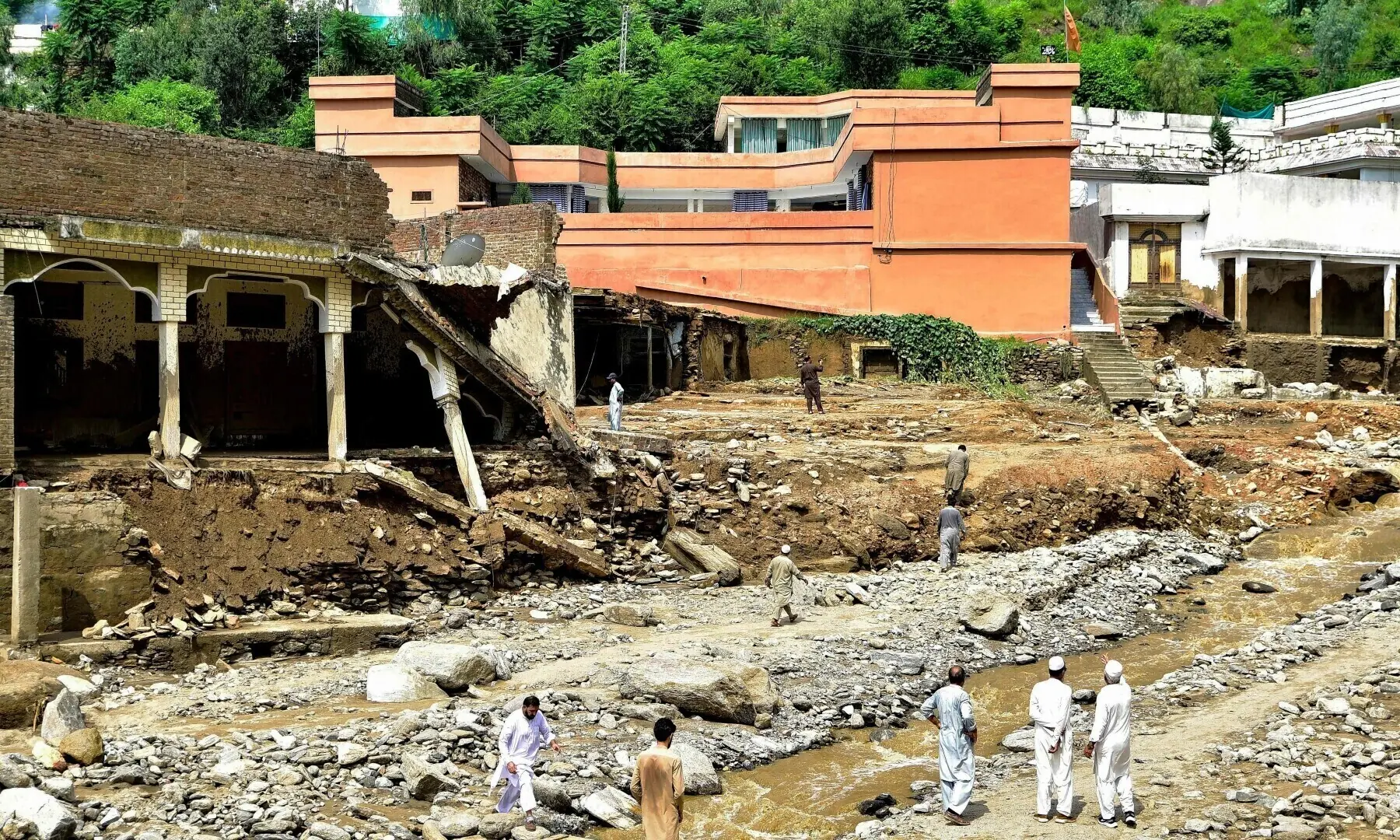
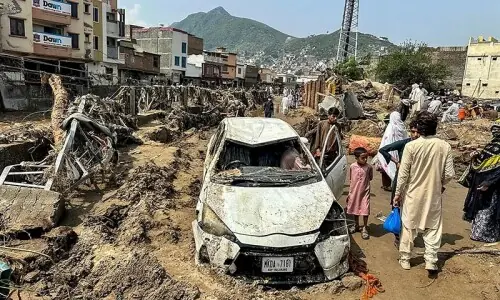
ISLAMABAD: The United Nations Office for the Coordination of Humanitarian Affairs (UN-OCHA) has worked out a response strategy to complement the Pakistan government’s early recovery efforts in the wake of this year’s monsoon floods, by focusing on both humanitarian and early recovery activities in 14 prioritised districts of Punjab, Khyber Pakhtunkhwa and Gilgit-Baltistan.
A new UN-OCHA report released on Thursday says the strategy, part of a broader support plan consolidated by the agency, will run through six months, ending in April next year, with activities based on findings from the Rapid Need Assessment (RNA).
The findings of the RNA were instrumental in identifying response and coverage gaps, and formed the basis for the district prioritisation of the current Support Plan for Relief and Early Recovery.
Following the assessment, the Punjab districts of Muzaffargarh, Multan, Khanewal, Jhang, and Bahawalpur were identified as high priority, while Bahawalnagar, Hafizabad, Okara, and Rahim Yar Khan were categorised as medium priority. Based on earlier but separate assessments in KP, the districts of Buner, Shangla, and Swat were prioritised, while in GB, Diamer and Ghizer were identified for this purpose.
Support plan
The support plan identifies the sector’s needs articulated in the RNA and the affected communities. It will be implemented through close coordination with the federal, provincial, and district governments.
As part of the support plan, $7.9 million in multipurpose cash assistance (MPC) will be distributed to support 1.2 million people, enabling vulnerable communities to meet their diverse needs in a flexible and dignified manner.
The MPC has been integrated across key sectors such as food security, agriculture, livelihoods, WASH (Water, Sanitation and Hygiene) project, shelter, and protection — providing both sector-specific and standalone support.
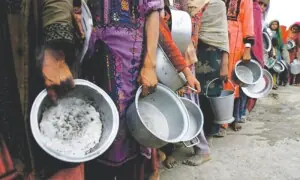
In an important sector like food security and livelihood, the response will adopt a dual-track approach. It will address immediate food and livelihood needs while laying the groundwork for early recovery and climate resilience.
The total funding requirement of the food security, agriculture and livelihoods sector to implement the above activities is $42.6m, of which $11.8m is required to provide relief and lifesaving assistance and $30.8m is required for early recovery.
Published in Dawn, November 7th, 2025