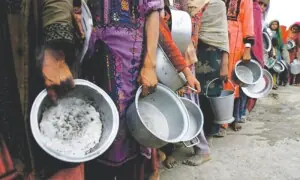
LAHORE: The participants in a forum stressed the urgent need of grants rather than loans to support recovery efforts of flood-affected communities and also called for coordinated action among the government bodies, NGOs and local stakeholders to ensure sustainable rehabilitation.
The Muhammad Nawaz Sharif University of Agriculture, Multan (MNSUAM), organised a public forum on “Climate-Resilient Flood Recovery: Demand Grants, Not Loans.”
The event brought together representatives from the NGOs, academia and local communities to discuss practical approaches for post-flood recovery in the severely affected areas of tehsils Jalalpur Pirwala and Alipur.
MNSUAM Vice Chancellor Prof Dr Asif Ali stressed the importance of a centralised focus on climate change mitigation as a key factor in preventing future disasters.
He highlighted the growing threats of heatwave and smog and emphasized the need
for efficient water management and the practical implementation of climate adaptation strategies.
Doaba Foundation Manager Programmes Jawaid Iqbal opened the session by outlining the main objectives of the forum to advocate for grants instead of loans for flood-affected communities and to prepare a joint mission report highlighting flood impacts for presentation on global platforms to mobilize international support.
Prof Dr Hammad Nadeem Tahir underscored the importance of community-based and government-supported strategies for effective disaster management and recovery.
Prof Dr Abdul Ghaffar discussed pre and post-flood recovery challenges, including resource management, livestock feed shortages and drainage issues in low-lying areas.
He proposed formation of technical teams for field-level support, promotion of silage and hay production, provision of improved seed varieties, and establishment of early warning systems.
Dr Khurram Mubeen presented findings from a joint post-flood survey, comparing district-specific damages and recovery needs in Jalalpur Pirwala and Alipur.
The report detailed crop and livestock losses, recovery challenges, and proposed interventions.
Zulkifl Ashraf from the Doaba Foundation highlighted emergency agricultural input support, integrated livestock, infrastructure rehabilitation and district-specific recovery priorities.
Dr Nabeel Ahmad Ikram shared details of MNSUAM’s initiative to distribute free kitchen gardening kits among flood-affected families to promote food security and household resilience.
The forum concluded with a unified call to action to amplify the voices of affected communities and advocate for “Grants, Not Loans” in flood recovery.
Published in Dawn, November 4th, 2025