Sherry proposes Pakistan’s own ‘Conference of Parties’ to boost climate resilience

ISLAMABAD: Senator Sherry Rehman has proposed convening Pakistan’s own ‘Conference of Parties’, comprising provinces, experts and people to intensify data-sharing, local innovations, public-private partnerships across the federation and build climate resilience.
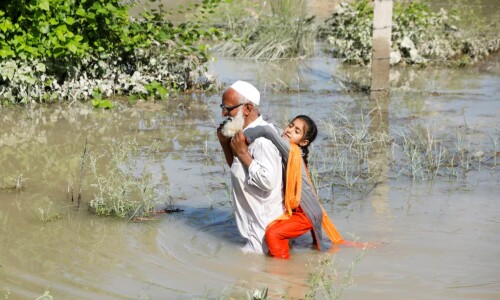
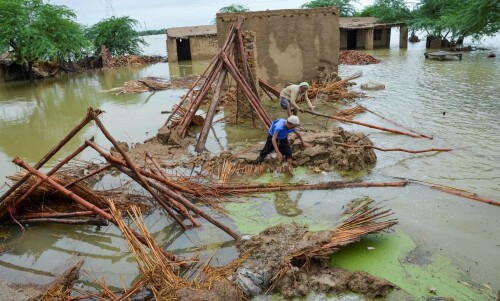
“Every province has its own share of challenges, from drought-hit Balochistan to the deforested valleys of Chitral to flood-hit provinces of Sindh, KP and Punjab. People are still struggling with livelihood challenges in each. Every province has a different topography and different challenge, from mountain to delta, but every province has to act based on its access to resources, both in terms of capacity and finance,” she said while speaking at a pre-COP30 conference. Pakistan Red Crescent Society’s had organised the conference “From Policy to Practice”.
She said, “This is a crucial convening. According to her, climate change is worsening, and the crisis will only gather higher velocity. Without urgent adaptation, the World Bank estimates that Pakistan could lose 18–20 per cent of its GDP by 2050, she said. At COP30, thirty years later, where do we stand today? What are we giving and what are we taking from nature?” she asked.
Touching on global finance, she questioned: “Where is the $300 billion from the New Collective Quantified Goal (NCQG)? What are developed countries contributing to the South? Countries should not have to compete internationally for climate funds - it is a fundamental right. Even early warning systems cost more than we can afford, and these are fundamental to survival now.”
Developed countries should ideally be also asked to submit their internationally determined contributions to the countries who have a negligible carbon footprint. Debt swaps and financial guardrails for the vulnerable must be built because, simply put, our house is burning at 53C every summer.”
Senator Rehman said Pakistan’s nationally determined contributions (3.0) had been updated with ambitious goals, including a target to cut projected greenhouse gas emissions by half - 17 per cent through domestic efforts and 33 per cent conditional on international finance - requiring $565.7 billion by 2035.
“Between 2021 and 2025, Pakistan has already achieved a 37 per cent emissions reduction without external aid,” she noted, but cautioned that the international climate finance conversation must translate into tangible relief for those on the frontlines. “The projected total cost of climate inaction in Pakistan is estimated at $250 billion by 2030 and $1.2 trillion by 2050,” she warned.
She underlined the urgent need to involve the private sector and mobilise innovative financial solutions: “Businesses must be part of building holistic resilience. We need some kind of financial mobilization. We also need to take responsibility for what we can do in terms of delivering climate action at home, in terms of providing sanitation and clean water. Right now we have very high pollution in our air and water, which are not the doing of any global emitter.”
Senator called air pollution a “serial killer,” responsible for over 128,000 deaths annually. She noted that “the Indus is now the second most polluted river in the world,” underscoring the interconnected crisis of air, water and land degradation.
Published in Dawn, November 4th, 2025