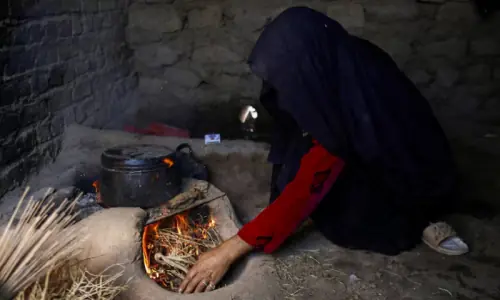
WOMEN shoulder the overwhelming majority of unpaid domestic and care work, a new report by the ILO has revealed. According to the labour body, of the 117.4m Pakistanis engaged in such work, nearly 67m are women. They cook, clean, tend livestock, and look after children, the elderly, and the sick — often without rest, remuneration, or recognition. In contrast, less than half as many men engage in similar duties, and for far fewer hours. This disparity is not only tantamount to gender injustice, it is a major economic blind spot. The time women spend on unpaid labour — over 15 hours weekly compared to less than seven for men — deprives them of opportunities for education, skill-building, and paid employment. It feeds into what economists term ‘time poverty’, trapping women in cycles of dependency and keeping the national female labour force participation rate among the lowest in South Asia. The ILO’s warning that such inequity reinforces the gender pay gap and excludes women from leadership roles is a call Pakistan can ill afford to ignore.
The potential to reform this sector exists. As a ‘pathfinder’ for the Global Accelerator for Jobs and Social Protection, Pakistan has access to global expertise that could transform care work into decent work. Initiatives such as the ILO’s Promoting Rights and Social Inclusion project — which has helped unionise domestic workers in Punjab — show that meaningful progress is possible when policy meets political will. The registration of domestic worker associations and the drafting of employer codes of conduct mark early but encouraging steps towards long-overdue recognition of this invisible workforce. Similar efforts must now extend to other provinces, where millions of informal workers still remain outside any legal or policy framework. To unlock the care economy’s full potential, Pakistan must put commitment into action. Setting minimum training standards, guaranteeing fair wages, and extending maternity and social protection benefits would not only improve livelihoods but also boost productivity. The government’s pledge to raise health spending to 3pc of GDP within the next decade is a step forward; however, real transformation requires sustained investment, better regulation, and public recognition of those who sustain homes, hospitals, and communities. Women’s unpaid labour silently subsidises the nation’s economy. Redistributing this burden — through policy, workplace reforms, and shared household responsibility — is not only justice, it is smart economics.
Published in Dawn, November 3rd, 2025