Decision on sending troops for Gaza peace force ‘in process, has to be finalised’: Asif


 0
0
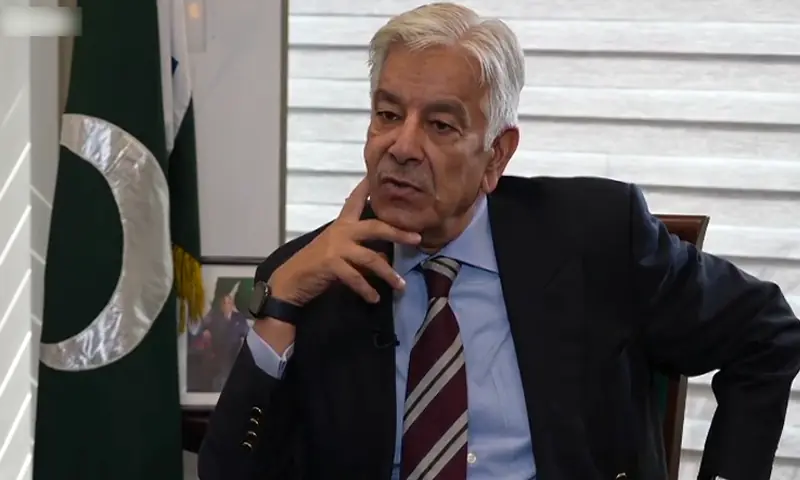

Defence Minister Khawaja Asif on Tuesday said that a decision on sending Pakistani troops for the Gaza peace force was still being finalised and “it is in process”.
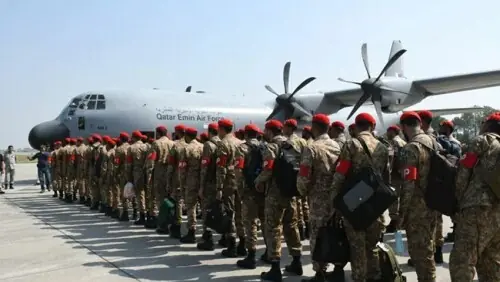
A cornerstone of the US-brokered Gaza Peace Agreement is the establishment of the International Stabilisation Force (ISF), composed mainly of troops from Muslim-majority countries. According to officials close to the discussions, an announcement is expected soon from the federal government regarding the decision.
Officials familiar with the deliberations, who requested anonymity because of the sensitivity of the matter, said discussions within the government and military establishment were at an “advanced stage”. According to them, the tone of internal consultations suggests that Islamabad is inclined to take part in the mission.
Questioned whether any such move was in the offing or not in an interview on Geo News show ‘Aaj Shahzeb Khanzada Kay Sath’, Asif said: “This thing has to be finalised [and] it is in process. The government will take a decision after passing through the process and I don’t want to preempt it.”
He said parliament would be taken onboard and all institutions would be informed about the move.
The defence minister said if Muslim countries took a decision to participate in the peace force and Pakistan also had to take part, then it would be a “moment of pride for the country to play a role in protecting Palestinians”.
“This is an opportunity that Pakistan should avail if it is available to us.”
The ISF’s mandate would include maintaining internal security, disarming Hamas, securing border crossings, and assisting with humanitarian relief and reconstruction under the supervision of a transitional Palestinian authority.
Officials in Islamabad argue that Pakistan’s potential participation stems from both moral responsibility and diplomatic necessity. They noted that Pakistan was part of the original eight-country peace proposal conceived in late 2024, and backed by several Muslim-majority states, that formed the basis of the US-brokered Gaza peace plan finalised earlier this month.
Since the ISF was a key pillar of that plan, officials said, Pakistan’s participation would signal consistency and credibility. Another argument given by the government circles supporting Pakistan’s inclusion in the ISF is its strong track record in international peacekeeping.
Pakistan is one of the largest troop contributors to United Nations peace missions, having deployed more than 200,000 personnel to over 40 operations across Africa, Asia and the Middle East.
Officials contend that this experience not only equips Pakistani forces to manage volatile post-conflict environments but also lends credibility and legitimacy to the ISF.
Beyond moral and operational grounds, foreign policy imperatives also underpin the government’s case for participation. Officials argue that joining the Gaza stabilisation force could strengthen Pakistan’s relations with the United States.
Islamabad’s ties with Washington have been on a gradual mend since Trump’s return to the White House, following years of friction over Afghanistan and counter-terrorism. Participating in a US-supported multilateral initiative, they said, could further this thaw and open avenues for economic cooperation, defence support and regional influence.
However, officials cautioned that there is still no clarity on the legal framework for the deployment. “Ideally, we would like this deployment to take place under a UN mandate,” an official said.
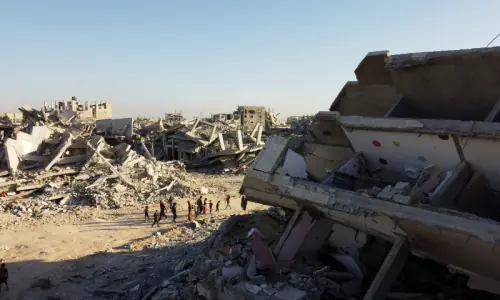
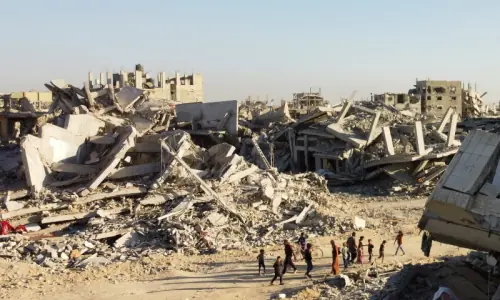
Still, such a deployment would not be without risk. Gaza remains highly volatile, and domestic opinion in Pakistan presents an additional challenge.
Many Pakistanis, deeply sympathetic to the Palestinian cause, may perceive participation in a US-designed stabilisation mission as serving Israeli interests or even as a betrayal of Palestinian resistance. “It’s a difficult but defining choice,” said another official.
Meanwhile, Adviser to the Prime Minister on Political Affairs Rana Sanaullah said in an interview on ARY News show ‘11th Hour’ a day ago that if the Pakistani military got the opportunity to establish peace in Gaza then “I don’t think there can be a better thing than this to save” Palestinians.
He said the above was his personal opinion and he was not aware whether any offer was made or not.