Tarakki, Sohawa stations stand as fading symbols of British-era rail glory


 0
0
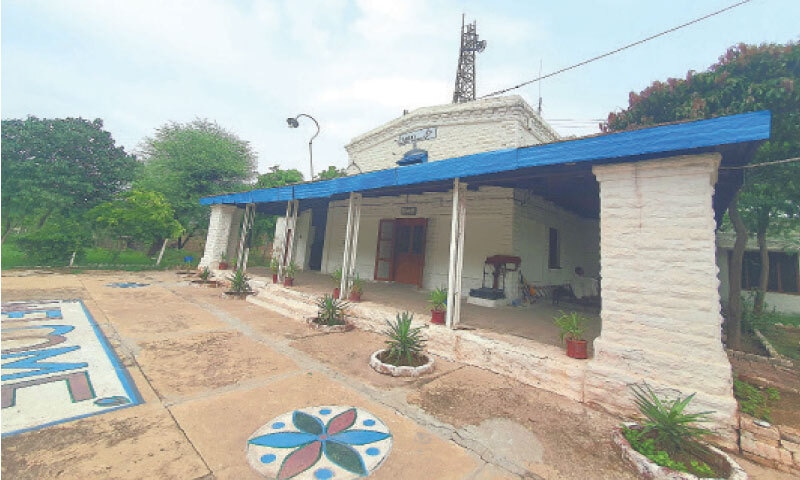

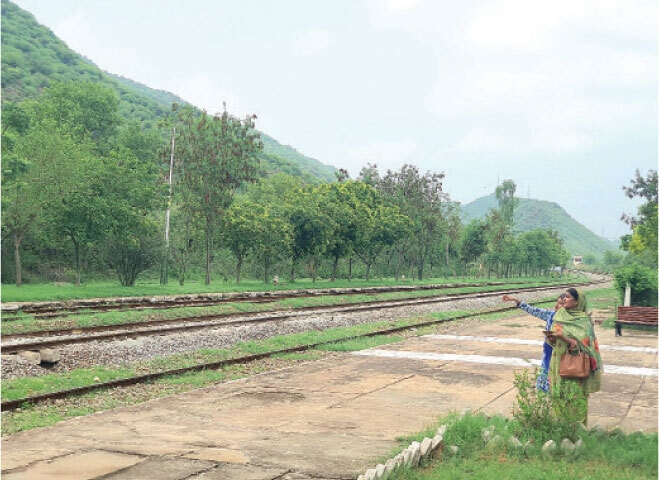
The stone-built structures of Tarakki and Sohawa railway stations, located in the hilly terrain of the Tarakki mountains, are valuable remnants of British-era construction from the time the North Western Railways were established in this part of undivided India.
The beautifully designed stone structures, with their graceful arches, pillars and sloping verandas, still exhibit remarkable symmetry and craftsmanship.
Though they are now crumbling due to poor upkeep and lack of maintenance, their grandeur calls for preservation for generations to come. The old gadgets and telecommunication systems, once introduced to this region, also deserve to be maintained for public display.
Tarakki Railway Station, situated at an elevation of 1,216.8 feet above sea level and surrounded by mountains, is among the most picturesque stations in the northern region.
According to an old station master who served there, Tarakki, like Sohawa, once functioned as a key station for the supply of hard stone blocks. These stone blocks and planks, extracted from nearby hills, were transported by freight trains to other parts of the subcontinent.
The stones were used in the construction of buildings, bridges, fortifications, dams, courts, military barracks and other official structures, many of which still stand today.
The station master added that the scenic height and surroundings of the station continue to attract visitors for sightseeing and picnics. The area is also home to rare wildlife species such as urial, deer and peacocks.
Similarly, the Sohawa station, located at the foothills, features stone-built houses and station buildings. However, these residential structures are now crumbling, and their once-beautiful arches are collapsing into ruins, much like those at the back of the Tarakki station.
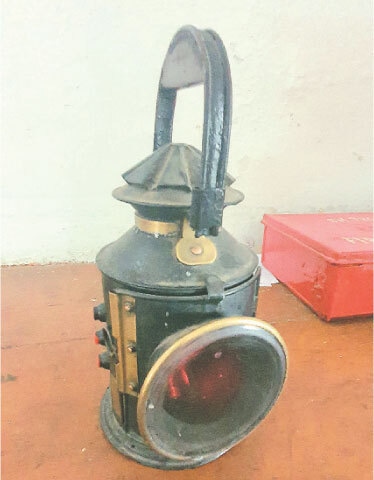
An antique lantern from the British era, once used by station masters to signal green or red to approaching trains, still lies in the Tarakki station office.
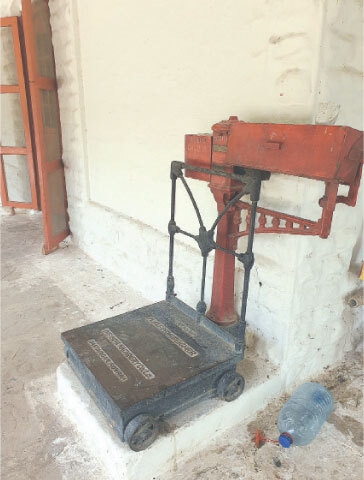
A stout weighing machine boldly inscribed “Atlas Platform Weigher — The India Machinery Co. Ltd., Dassnagar Howrah” also remains on site. This weighing machine, one of the most modern inventions of its time, is still in working condition more than a century later.
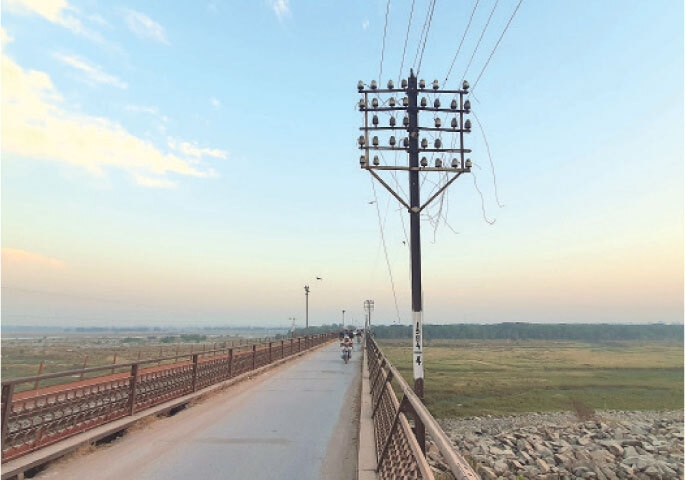
The decay, however, is not limited to these stations. The old telephone transmission lines, part of the first modern communication network introduced by the railways in the subcontinent, are also in disrepair. According to railway officials, the station-to-station linkage now functions only at a limited level after the advent of wireless and mobile networks.
Broken poles and copper wires dangling near the Jhelum Bridge stand as reminders of both the technological advancement of the past and the neglect of today.
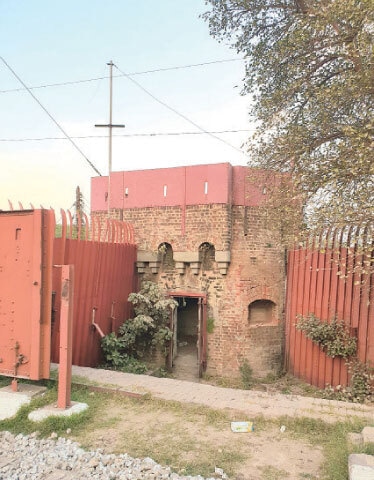
The reinforced bridges at Jhelum, masterpieces of British engineering, continue to serve as vital connections across the river. The block rooms, built with iron sheet roofs to prevent any attempt to disrupt train movement, still exist but are now in a dilapidated condition due to a lack of regular maintenance.
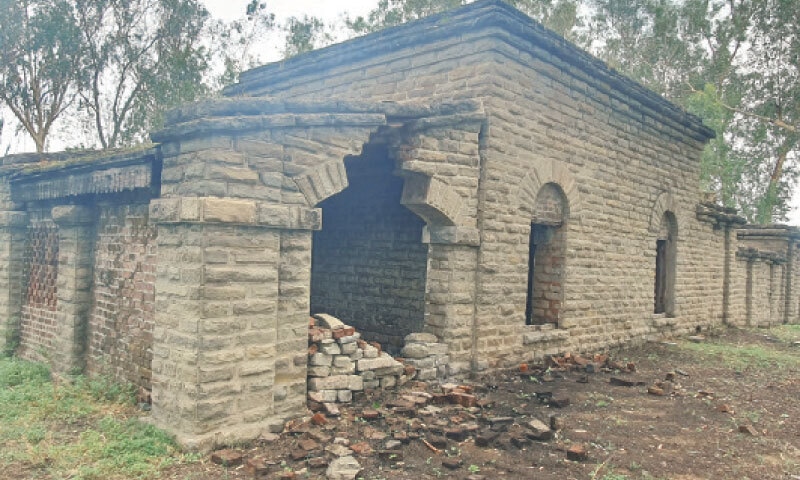
Railway officials said that during the British era, these block rooms were manned by army personnel to ensure the safe passage of trains.
Muhammad Abubakkar, Assistant Engineer (A.En) Jhelum Section of Pakistan Railways, said that requests for repair and maintenance of the buildings had already been forwarded, and if funds were made available, the structures would be restored to prevent further deterioration.
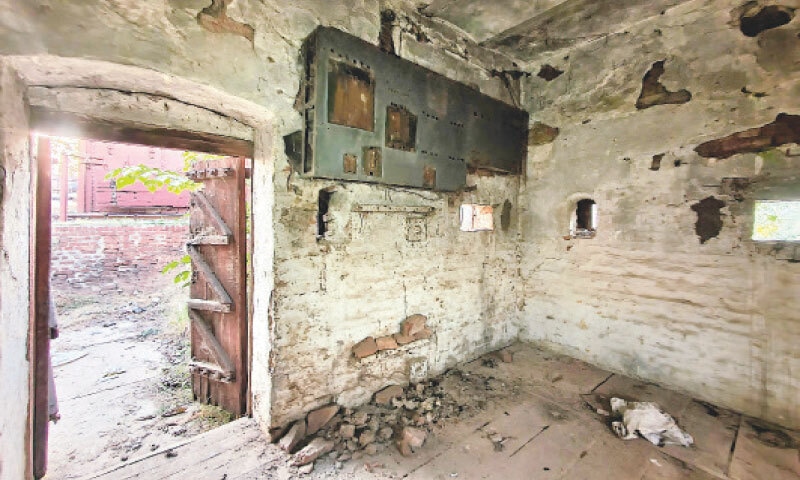
He added that the iron-sheeted block room at the Sarai Alamgir end of the bridge is manned by the district police, while the Jhelum-side room may also be used by the local police if the Punjab Highway Department allocates funds for repair and maintenance of the old bridge, which is currently reserved for light vehicle traffic.
Published in Dawn, October 27th, 2025