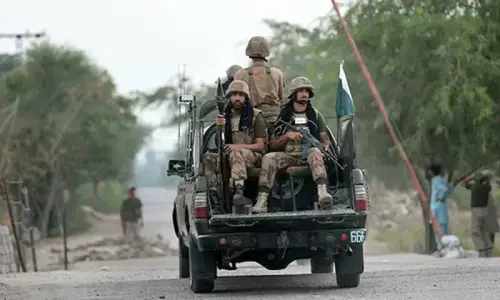
THE closure of Pakistan’s border with Afghanistan since fighting erupted between the two countries earlier this month has brought bilateral trade and transit movement to a standstill, triggering sharp price hikes and mounting trade losses. Nearly two weeks into the stand-off, the fallout is already being felt by both sides. Prices of essential goods, particularly vegetables and fruit, in Pakistan have soared amid acute shortages. Tomatoes, for instance, are now selling for around Rs600 per kilogram, almost five times their usual price for this time of the year. Apples and other fruit, mostly imported from Afghanistan, have also become scarce and prohibitively expensive as major crossings, including Torkham, Ghulam Khan, Kharlachi, Angoor Adda, and Chaman, have been closed since Oct 11 following the worst border clashes since the Taliban’s 2021 takeover of Kabul.
Economic losses are rising with each passing day. According to Quetta-based businessmen, the two sides are losing around $1m daily as the trade worth $2.3bn a year remains suspended. The suspension of customs clearance and movement of goods has led to congestion, particularly at Torkham, where hundreds of export and import vehicles await permission to cross the border. Containers and trucks carrying perishable goods, minerals, medicines and basic food staples such as wheat, rice, sugar, meat and dairy products are stranded at various points on both sides of the border. Some 5,000 Pakistanis are also stuck in Afghanistan, unable to return, with little prospect of the border reopening before a scheduled meeting between Islamabad and Kabul in Istanbul on Sunday. At that meeting, both sides are expected to discuss the recent escalation and future arrangements. The surge in prices of perishable food items could not have come at a worse time for Pakistan’s flood-hit economy. Millions are still reeling from this summer’s devastating deluge that destroyed crops, livelihoods and rural infrastructure, mostly in Punjab. For low-income households already battling inflation and food insecurity, the sharp rise in vegetable and fruit prices is particularly distressing. Even if the situation is not dire, ordinary citizens and traders continue to bear the brunt of the deteriorating relations between Islamabad and Kabul that have brought cross-border trade to a standstill. Unless border trade resumes soon, the compounded shocks of natural disasters, inflation and disrupted supply chains threaten to make life difficult for even more people.
Published in Dawn, October 25th, 2025