A US-Pakistan opportunity

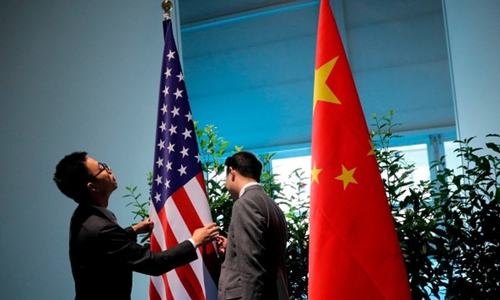
AS someone who’s lived and worked between Pakistan and the United States, I’ve seen this relationship rise with hope and fade with frustration. Still, I’ve never stopped believing in its potential. So when Pakistan dispatched its first-ever shipment of rare earth and critical minerals to the US recently, it felt like more than a transaction — it felt like a meaningful signal.
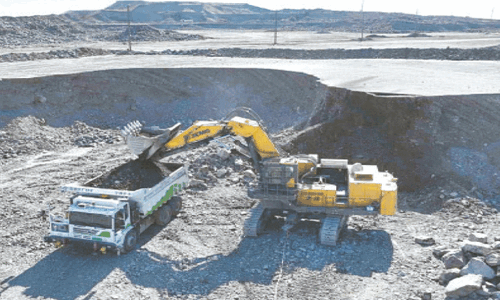
According to international reports, the shipment — containing copper concentrate, antimony, and rare earth elements — was sent under a $500 million investment deal between US Strategic Metals and Pakistan’s Frontier Works Organisation. It wasn’t just a commercial exchange; it showed that the two countries can still build something lasting through cooperation and mutual trust.
The world is going through a massive energy and technology shift. From electric cars to renewable grids, the modern economy now depends on minerals most people never think about. The International Energy Agency projects that global demand for these materials will triple by 2030, with certain battery minerals increasing thirtyfold by 2040.
Meanwhile, the overconcentration of mineral processing in a few countries has become a shared vulnerability. Diversifying supply chains isn’t just smart economics anymore — it’s a matter of trust and long-term security. Pakistan, sitting on vast and largely untapped reserves, could play a real part in reshaping that global balance.
For decades, Pakistan’s mineral wealth has been a story of promise without delivery. Estimates suggest the country’s reserves exceed $6 trillion in value. From Reko Diq’s copper and gold to newly confirmed rare earth and gold deposits in Gilgit-Baltistan, the potential has always been there — it’s the follow-through that’s been missing.
The modern economy depends on minerals most people never think about.
And yet, this isn’t just a story about rocks or maps. It’s about people — a young and ambitious nation of 240 million, and a government that seems more open than ever to responsible investment. The growing interest from US policymakers and investors shows that Pakistan might finally be ready to join the global minerals value chain in a serious way.
If this partnership’s going to succeed, it must avoid repeating the extractive models of the past. What Pakistan and the US need now is a framework built on sustainability, inclusion, and shared prosperity — one that ensures value is created within Pakistan, not merely extracted from it.
That vision can be achieved through five guiding principles. The first is joint exploration and mapping, combining US technical expertise with Pakistan’s on-ground knowledge to responsibly assess and manage resources. The second is environmental stewardship — holding all partners to international standards to safeguard fragile ecosystems, water sources, and local livelihoods.
The third pillar is infrastructure investment, not only in mining zones but also in the surrounding regions, so that roads, ports, and energy systems lift the broader economy rather than serving isolated projects. Equally important is community inclusion, ensuring that local residents benefit directly through employment, training, and equitable revenue sharing. Finally, the long-term goal must be in-country processing — building refining and beneficiation capacity within Pakistan so that the nation moves from exporter of raw materials to creator of value.
This approach would allow both countries to prove that resource partnerships can be transparent, fair, and mutually beneficial — a model for how economic cooperation can strengthen trust rather than dependency.
Beyond corporate responsibility, the government has an equally important role in making sure this opportunity turns into long-term progress. Islamabad should consider applying to the Extractive Industries Transparency Initiative, a global framework that promotes open reporting of mining contracts and revenues. That step alone would boost investor confidence and signal a clear commitment to clean governance.
Equally important is setting up transparent revenue management mechanisms, ensuring that mineral proceeds flow through audited public channels and support social and economic development priorities aligned with Pakistan’s fiscal responsibilities under its IMF programme. Finally, the inclusion of community development clauses within all mineral contracts should be made binding, guaranteeing that local populations share directly in the prosperity generated from their land.
By adopting these reforms, Pakistan can make sure its mineral wealth becomes a national asset rather than a temporary windfall — a base for sustainable, responsible growth.
Handled right, a US-Pakistan minerals partnership could go far beyond supply chains. It could strengthen regional stability, create thousands of jobs, and offer Pakistan a genuine path to sustainable growth. More importantly, it could show that resource partnerships can be transparent, ethical, and fair — a model for how developing economies can negotiate on equal footing.
For the US, Pakistan represents a credible partner in securing critical minerals. For Pakistan, it’s a chance to unlock economic potential while protecting sovereignty and community rights. Both countries now have the opportunity to move past old habits and co-write a new story — one rooted in mutual respect, shared prosperity, and forward-looking growth.
The writer is a Pakistani American entrepreneur with experience in healthcare, digital payments, and technology. He’s the founder of a US-based healthcare organisation, and an economic diplomacy platform focused on sustainable trade and resource partnerships.
Published in Dawn, October 25th, 2025