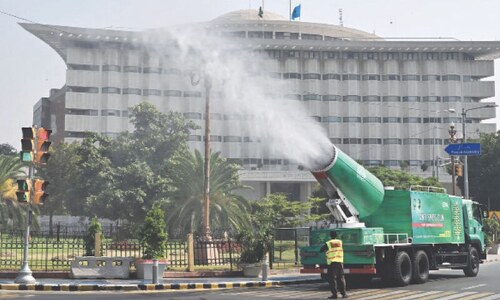
India trials Delhi cloud seeding to combat deadly smog

India trialled cloud seeding over its smog-filled capital for the first time, spraying a chemical from an aeroplane to encourage rain and wash deadly particles out of the air.
Cloud seeding is the practice of using aeroplanes to fire salt or other chemicals into clouds to induce rain.
New Delhi city authorities, working with the government’s Indian Institute of Technology Kanpur, launched a test run on Thursday afternoon using a Cessna light aeroplane over the city’s northern Burari area.
“A trial seeding flight was done … in which cloud seeding flares were fired”, Delhi Minister Manjinder Singh Sirsa said in a statement late on Thursday.
“This flight was the proving flight for checking the capabilities for cloud seeding, the readiness and endurance of the aircraft, the capability assessment of the cloud seeding fitments and flares, and coordination among all involved agencies.”
It comes ahead of a planned rollout of the scheme.
Delhi’s Chief Minister Rekha Gupta said that “if conditions remain favourable, Delhi will experience its first artificial rain on October 29.”
It was not immediately clear what chemical was used in the test to encourage the rain.
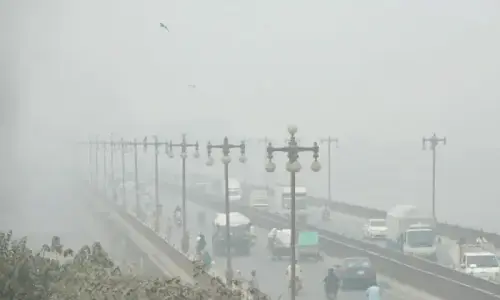
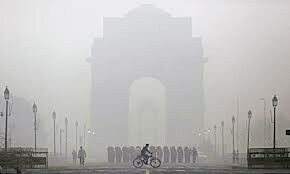
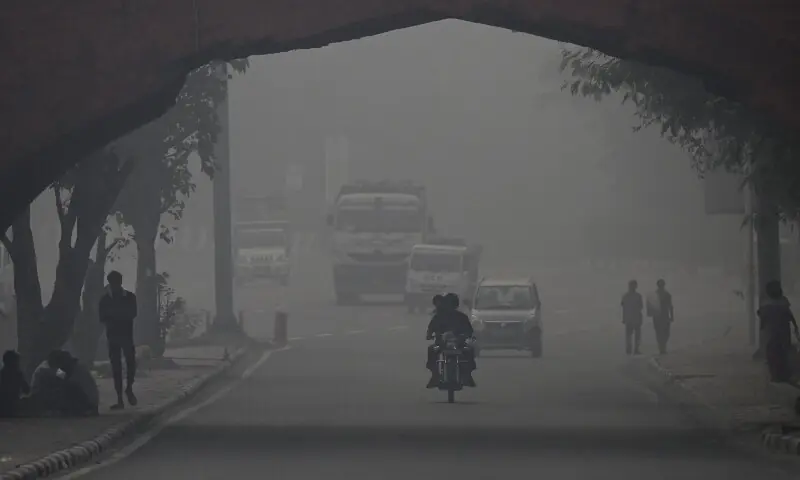
New Delhi and its sprawling metropolitan region of 30 million people are regularly ranked among the world’s most polluted capitals, with acrid smog blanketing the skyline each winter.
Cooler air traps pollutants close to the ground, creating a deadly mix of emissions from crop burning, factories and heavy traffic.
Levels of PM2.5 — cancer-causing microparticles small enough to enter the bloodstream — at times rise to as much as 60 times the UN daily health limits.
Pollution rose this week after days of fireworks launched to mark Diwali, the Hindu festival of lights, shooting PM2.5 levels to more than 56 times the limit.
That came after the Supreme Court this month eased a blanket ban on fireworks to allow the use of the less-polluting “green” crackers — developed to reduce particulate emissions.
At dawn on Thursday, PM 2.5 levels were 154 microgrammes per cubic metre in parts of New Delhi, according to monitoring organisation IQAir, just more than 10 times World Health Organisation limits.
A study found in September that the noxious air is even turning Delhi’s iconic 17th-century Red Fort black.
Scientists warned that the Unesco World Heritage Site is being steadily disfigured by a black crust, according to a study published in the Heritage journal by a joint team of Indian and Italian researchers.
Invented in the 1940s, countries have been seeding clouds for decades to alleviate drought, fight forest fires, and even to disperse fog at airports.
China used it in 2008 to try to stop rain from falling on Beijing’s Olympic stadium.
But research on the effects of cloud seeding on neighbouring regions is mixed — and some evidence suggests it does not work very well even in the target area.