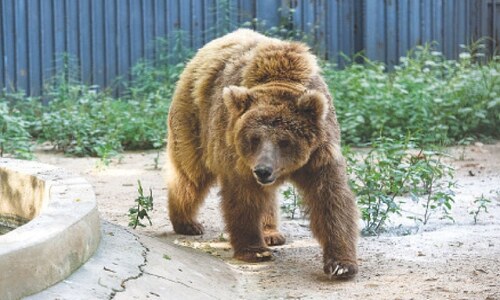
Shrinking habitats, rising poaching push Pakistan’s bears towards the brink
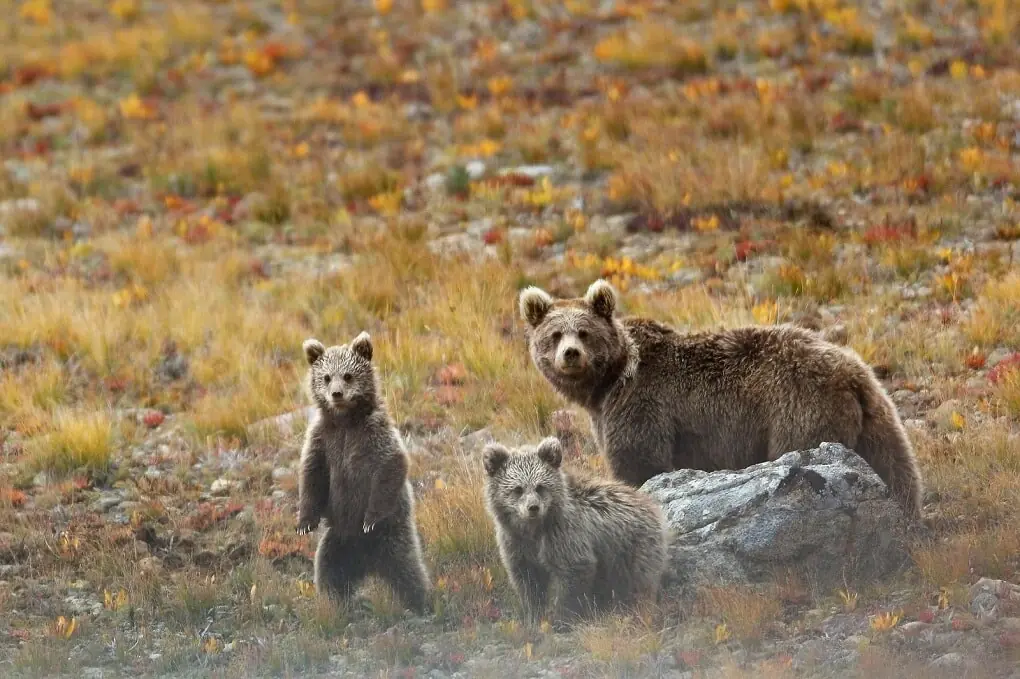

A combination of threats, from shrinking habitats and increased human-animal conflict to poaching and environmental degradation, has accelerated the decline of Pakistan’s bear population over the past decade, according to local wildlife experts.
Although no comprehensive scientific surveys have been conducted to determine the exact numbers of bears in the country, experts estimate a 20-30 per cent decline in their population over the past 10 years.
Muhammad Kabir, head of the Wildlife Ecology Lab at the University of Haripur, said that while a few regions in Pakistan still have healthy bear populations, the overall trend remains worrying.
“So much so, bears have become locally extinct from several areas, where they once were believed to have been in ‘good numbers’,” Kabir told Anadolu.
Pakistan is home to two species of bears — the Himalayan brown bear and the Asiatic black bear.
The black bear is further divided into two subspecies — the Himalayan black bear (U. t. laniger), found in the temperate forests of Khyber Pakhtunkhwa, Azad Jammu and Kashmir and Gilgit-Baltistan, and the Balochistan black bear (U. t. gedrosianus), which inhabits the arid montane regions of Balochistan, particularly around Khuzdar and Kalat districts and adjoining areas along the Iran border.
“Bears have been facing multiple threats, which has put them in the list of highly vulnerable species in Pakistan,” Kabir said.
He cited habitat loss, deforestation, expanding infrastructure, agricultural encroachment and illegal poaching as the leading causes of decline. Human-wildlife conflict, he added, is further exacerbating the situation.
Faizan Ahmad, a researcher at the Pakistan Forest Institute, Peshawar, said the Asiatic black bear — once widespread across Asia’s forests — was now under severe pressure in the country.
“Its population is shrinking, fragmented and increasingly drawn into human-modified landscapes where resource scarcity, habitat degradation, and human–wildlife conflict intersect,” Ahmad told Anadolu.
He added that as human settlements expand and forest ecosystems become more fragmented, bears are often forced into conflict-prone areas, threatening both conservation efforts and rural livelihoods.
Local extinction
There are no official nationwide population surveys for bears in Pakistan, but indirect indicators such as habitat degradation, increased human-bear conflict and poaching reports point to a steady decline.
Based on recent field data, Ahmad said it was reasonable to estimate a 20-30pc population decline in Asiatic black bears over the past decade.
Currently, around 150-200 Himalayan brown bears survive in small, isolated populations across northern Pakistan. The most stable population is found in GB’s Deosai Plateau, where conservation efforts have led to population growth in recent years.
Deosai National Park remains the only protected area in Pakistan where a regular census is conducted to monitor bear numbers. A smaller population also exists in Khunjerab National Park near the border with China.
The forested districts of Swat, Kohistan, Upper Dir and Shangla in KP; AJK’s Neelum Valley and GB’s Diamer district host the Himalayan black bear.
According to Kabir, the combined population of Himalayan and Balochistan black bears ranges between 1,000 and 1,500 individuals.
“Black bear has vanished from several parts of KP, particularly Ayubia region over the past three to four decades,” he said.
Ahmad added that national estimates suggest fewer than 2,500 bears remain across Pakistan, with the Balochistan black bear population likely reduced to fewer than 50 mature individuals.
“This subspecies is now critically endangered in Pakistan and among the least studied large carnivores in the country,” he maintained.
Medicinal value
Despite legal protection, bear cubs are still poached, particularly in early spring when dens are more accessible.
“Local accounts describe poachers lighting fires at den entrances to force mothers and cubs out; the mother is killed, and cubs are sold for bear dancing or bear-baiting,” Ahmad said, referring to the cruel practice where bears are chained and forced to fight dogs for public entertainment.
In addition to illegal trade, bears are hunted in autumn for their pelts and fat. Kabir explained that bear bile (Xiongdan in Chinese) — the dried gallbladder of the Asiatic black bear — has been used in Traditional Chinese Medicine (TCM) for thousands of years.
He said it is believed to treat ailments such as liver disorders, fever, digestive problems and inflammation. Bear bile contains ursodeoxycholic acid (UDCA), a compound also used in modern medicine to treat certain liver diseases and dissolve gallstones.
However, the extraction of bile and gallbladders is highly controversial due to its cruelty and devastating impact on wild populations. Conservationists and animal welfare groups have long called for synthetic or plant-based alternatives to bear bile products.
Ahmad emphasised that conservation measures must include habitat protection and restoration, conflict mitigation, den protection, community engagement and long-term monitoring.
“Community-based conflict mitigation strategies, such as compensation schemes, use of non-lethal deterrents and crop protection measures are essential to shift from conflict to coexistence,” he said.
He added that engaging local communities in conservation not only safeguards camera traps and monitoring infrastructure but also encourages local stewardship of wildlife resources.
Ecological threat
Azan Karam, a Swat-based wildlife expert, warned that Pakistan’s declining bear population poses a serious ecological threat because bears play a crucial role as both keystone and umbrella species.
“Its presence supports essential ecosystem functions such as seed dispersal, carcass scavenging and insect regulation, all of which contribute to forest regeneration, nutrient cycling, and overall ecosystem health,” Karam told Anadolu.
He said a reduction in bear numbers could disrupt these natural processes, leading to long-term ecological imbalance.
“Moreover, as an umbrella species, conserving the black bear means protecting large, diverse habitats that also support many other wildlife species. Its decline signals broader biodiversity loss across Pakistan’s temperate forests,” he added.