0
0

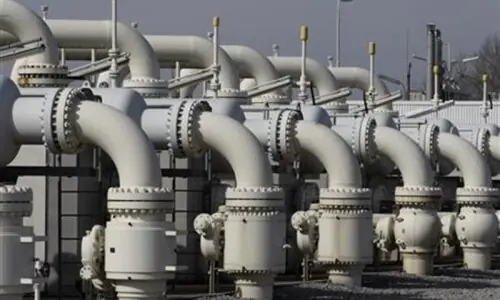
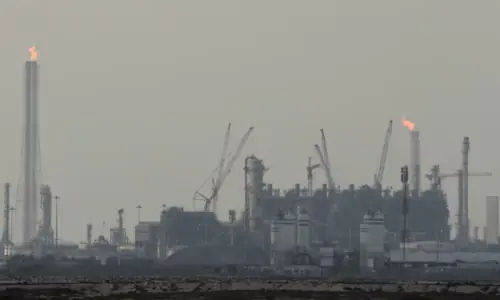
ISLAMABAD: A research study by the Competition Commission of Pakistan (CCP) has highlighted that state-owned entities (SOEs) hold monopolistic dominance in the import, storage and distribution of liquefied natural gas (LNG), while stringent licensing and tariff regulations restrict private sector participation in the sector.
The study, titled “State of Competition in the LNG Sector in Pakistan”, examined the structural, regulatory, and behavioural barriers to competition in the country’s LNG market. The study was commissioned by the Finance Division and conducted by the CCP’s Research Department.
The report assesses the impact of SOEs such as Pakistan State Oil (PSO), Pakistan LNG Ltd (PLL), Sui Southern Gas Company Limited (SSGCL), and Sui Northern Gas Pipelines Limited (SNGPL) on market dynamics, access, and efficiency in the LNG value chain.
The CCP’s research identifies critical challenges affecting the LNG market, including limited infrastructure access and slow implementation of third-party access (TPA) rules. It also highlights the accumulation of circular debt amounting to Rs2.86 trillion as of January 2024, largely due to delayed tariff adjustments and diversion of re-gasified LNG (RLNG).
The report offers strategic recommendations for reform, aligned with international best practices and guided by the World Bank’s Markets and Competition Policy Assessment Toolkit (MCPAT). These include establishing a ‘One-Stop-Shop’ for LNG import clearance through a Central Coordination Committee (CCC) and fast-tracking the implementation of TPA rules for LNG terminals and pipelines.
The CCP also suggests unbundling the Sui companies’ transmission and distribution operations to create a level playing field, alongside improving demand forecasting and reducing unaccounted-for-gas (UFG) losses through targeted three-year plans.
Speaking at the launch of the report, CCP Chairman Dr Kabir Ahmed Sidhu said: “This research aims to catalyse policy discussions and support reforms that foster open access, enhance private sector participation, and ensure sustainable energy security. Competition is central to unlocking efficiency and innovation in Pakistan’s LNG market.”
The study also draws lessons from global jurisdictions, notably Japan, underscoring the importance of gradual liberalisation, unbundling of infrastructure ownership, and ensuring fair access.
Published in Dawn, October 5th, 2025