Over 90pc rural households use unsafe drinking water, Sindh CM-World Bank meeting told
KARACHI: Over 90 per cent of rural households depend on self-supplied drinking water, often drawn from contaminated groundwater sources, which is posing serious health risks and leaving people highly vulnerable to waterborne diseases.
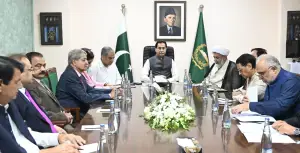
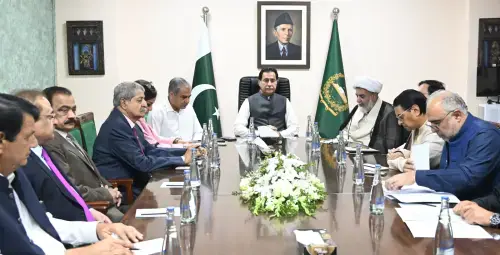
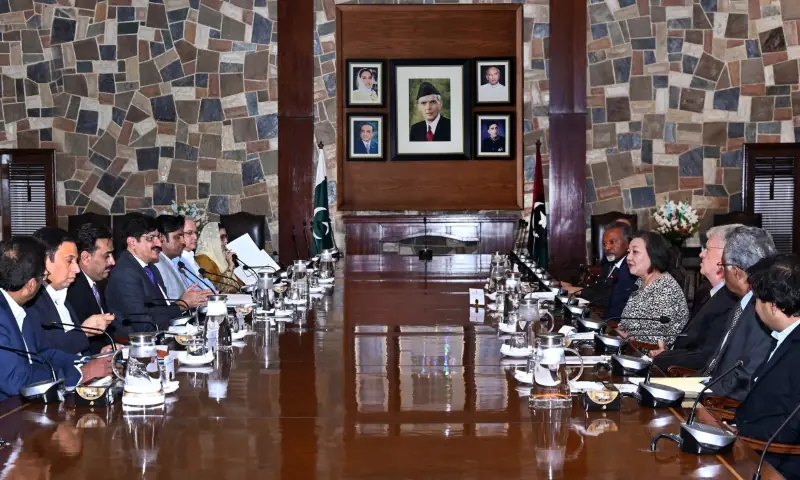
This emerged on Thursday during a meeting between Sindh Chief Minister Syed Murad Ali Shah and a World Bank delegation led by its Country Director Bolormaa Amgaabazar.
The meeting was held to review the proposed Sindh Transformational Accelerated Rural Water Supply, Sanitation, and Hygiene Services (STAR WASH) Project, aimed at tackling rural water, sanitation, and hygiene challenges and reducing child stunting across the province.
Held at the CM House, the meeting was attended, among others, by Irrigation Minister Jam Khan Shoro and Chief Secretary Asif Hyder Shah.
Steps discussed to improve water, sanitation and hygiene situation
According to a statement, it was pointed out in the meeting that the self-provision approach raised significant health concerns, given the potential risks associated with consuming untreated or inadequately treated water.
The meeting was informed that the previous water, sanitation, and hygiene initiatives focused on building infrastructure, then handing it over to local governments or communities.
However, these efforts have hampered due to inadequate operations and maintenance, leaving many without access to safe drinking water.
The World Bank delegation, following a month-long mission and extensive consultations with key stakeholders, presented its findings and proposals to the chief minister.
The meeting underscored that access to safely managed WASH services was directly linked to stunting rates and stressed the need for a paradigm shift from traditional asset-based interventions to a sustainable service delivery model.
It was pointed out that over 90pc of rural households in the province self-provide drinking water, often relying on contaminated groundwater.
The proposed STAR WASH framework calls for a comprehensive WASH policy and strategy with clear service standards, delivery models, and financing for operation and maintenance (O&M). It was informed that the multiphase programmes included STARS WASH Phase I, covering over two million beneficiaries, and Phase II reaching the remaining population.
The project roadmap, as agreed by the chief minister and the WB, envisions different models based on village size, such as large villages of over 300 households, which would be provided with piped water networks, overhead tanks, decentralised wastewater treatment, and O&M run by professional utility companies or under public-private partnerships.
Small villages of 150 households would be given hand pumps or stand posts linked to clean water, engineered septic systems, and community-driven development models, with professional backup for major issues.
The proposed reforms also included the Sindh Rural Water Supply and Sanitation Act, a quasi-regulator for monitoring, and financial alignment through provincial fiscal transfers.
The World Bank team emphasised that aligning water, sanitation, health, and nutrition strategies was essential for tackling stunting and ensuring long-term impact.
The chief minister and the World Bank agreed that the next mission scheduled for Nov 2025 would negotiate further to finalise the project.
Published in Dawn, October 3rd, 2025