Deep roots of rage as Ladakh seeks self-rule
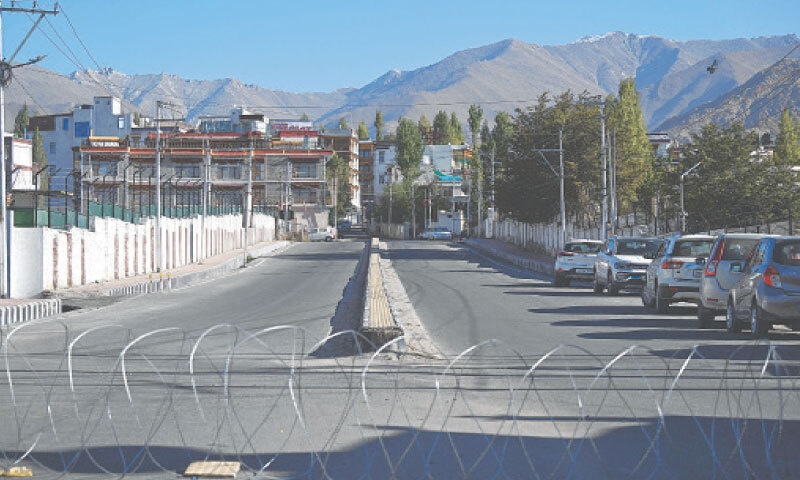


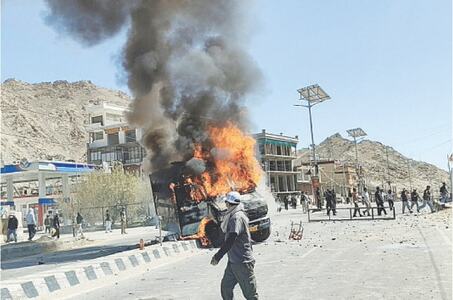
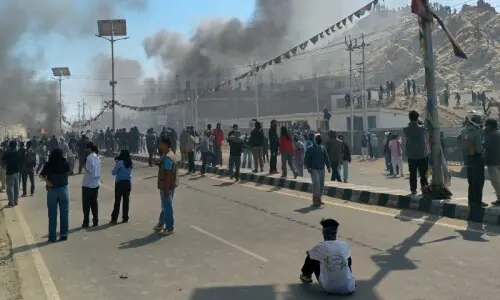
LEH: India’s remote high-altitude desert region of Ladakh has been in turmoil since four people were killed in violent protests demanding greater political autonomy for the Himalayan territory.
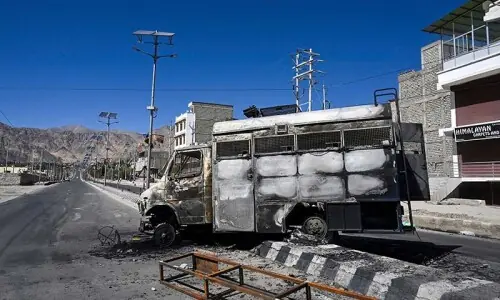
Growing resentment with New Delhi’s direct rule over the territory, and fears of losing livelihoods boiled over on Wednesday as crowds took to the streets in the main city Leh, torching a police vehicle and the offices of Prime Minister Narendra Modi’s Hindu-nationalist Bharatiya Janata Party (BJP).
Initially police said five people had died but later revised the toll to four.
The sparsely populated region, home to some 300,000 people, borders both China and Pakistan and is a strategic enclave for India. Around half of Ladakh’s residents are Muslim and about 40 per cent are Buddhist.
Why are people protesting?
Modi’s government split Ladakh off from Indian-occupied Kashmir in 2019, imposing direct rule on both after cancelling the region’s partial autonomy. Since then, resentment has been growing in Ladakh over Delhi’s rule, with concerns about losing traditional livelihoods, land rights, and cultural identity.
Residents say the end of semi-autonomy stripped them of protections over land, jobs, and resources.
Decisions on development are made in Delhi and implemented by officials sent from outside, leaving the local elected council sidelined.
“All the protections we had within held Jammu and Kashmir were all gone,” lawyer Mustafa Haji said.
Who is leading the demonstrations?
The Apex Body Leh, led by veteran leader Chering Dorjay, has become the main voice of the protesters.
“We have been used like slaves,” Dorjay, 77, said, vowing to continue the struggle in the days to come.
Wednesday’s demonstrations were also organised in solidarity with prominent activist Sonam Wangchuk, who had been on hunger strike for two weeks.
New Delhi blamed the unrest on “provocative speeches” by Wangchuk who was detained by police on Friday.
What are the core demands?
The protesters are demanding protection of land rights and to stop outsiders from buying property in Ladakh.
They also want constitutional autonomy under the “Sixth Schedule” of India’s constitution, which would allow a local legislature to make laws on land use and jobs.
Constitutional protections sought by Ladakhis may seem far off, but sustained negotiations with New Delhi have yielded some “small victories”, Dorjay said. The government has already reserved 85pc of jobs for locals and frozen acquisition of domicile status for Indians from outside Ladakh until 2036. But Dorjay says “there is a long way to go“.
Why is land a sensitive issue?
The government has announced large-scale solar projects and industrial plans in Ladakh that require thousands of acres of land. Locals fear this will endanger grazing grounds critical for pashmina goat herding, already under pressure from climate change and military buffer zones established with China.
“The danger to this centuries-old livelihood undermining lives of thousands of pashmina goat herders is another issue now,” Dorjay said.
Ladakh is heavily militarised, with Indian troops guarding its disputed borders with Pakistan and China. Tensions soared after deadly clashes with Chinese forces in 2020, and new buffer zones have further reduced land available to herders.
“A situation where you don’t have any protection for your land and identity is not a happy one,” lawyer Haji said.
How do Ladakhis view relationship with India?
Unlike in held Kashmir where opposition to Indian rule runs deep, Ladakhis have historically aligned with India, backing its troops in past conflicts with Pakistan and China. But many now say they feel betrayed.
“For 70 years we have helped protect India’s borders,” Haji said. “Now we want ourselves to be protected.”
Published in Dawn, September 29th, 2025