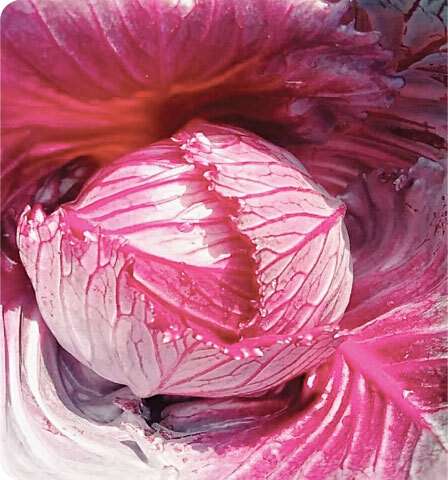
The journey of a red cabbage, from a tiny seed to a vibrant, dense head, is a rewarding process for any gardener. After the plant establishes its roots and sprouts its initial leaves, it enters a crucial maturation phase, where its form begins to take shape, a transformation marked by the careful folding of leaves at the central axis.
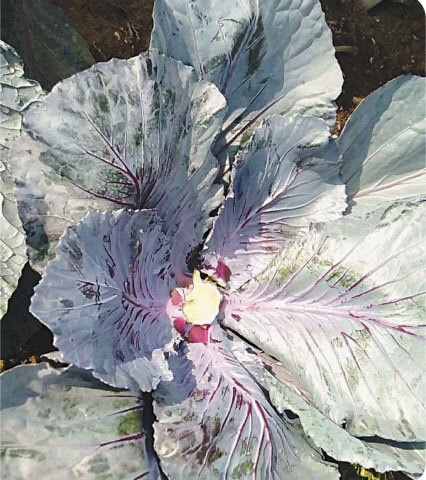
The emerging cabbage head is a bit smaller and denser than that of a green cabbage. At this stage, the red cabbage plant is a striking sight: large, purplish-grey leaves splay outward, framing the tight, purplish-pink cabbage head developing at its centre.
With each passing day, the red cabbage head begins to mature and increase in size. Applying a balanced fertiliser and watering consistently should be continued religiously, as it improves the quality and size of the red cabbage head. From germination to harvest typically takes around three to four months, depending upon factors such as cabbage seed quality, temperature, watering pattern, soil condition, fertiliser boosting, pest attacks and the overall plant health.
To check whether the cabbage is ready for harvest, gently press the head every few days. When the red cabbage head begins to feel firm and solid, it is time to harvest. If left too long, the cabbage will continue to grow and, often, split at the midline going across the capsule-like structure — a clear sign that the gardener is late and must harvest immediately.
A vibrant red cabbage is a garden prize, but knowing when and how to harvest it is key
The most anticipated day for kitchen gardeners is harvest. The common but crude method to harvest the red cabbage is to twist and snap off the cabbage head from the plant, though this process may damage the plant and roots. A smoother, more precise method is to use a knife to cleanly cut the stem at the base of the head. This leaves the rest of the plant intact and prevents bruising of the outer leaves of the cabbage head.
Gardeners hoping for a second harvest should always opt for the cutting method. This method allows the remaining plant to produce a few small-sized cabbages. However, these two to four cabbage heads that the plant will later produce usually grow simultaneously, require significant time and space, and are very small compared to the original. It is generally neither advisable nor beneficial to keep the plant after the first, main harvest. The space is better used for a new, more productive plant.
The plant remaining after the harvest can be removed entirely, along with its roots. It makes excellent compost or can be used as feed for poultry. For those who want to collect seeds, the leftover plant continues to grow and, in the subsequent season, flowers grow from the same plant and they provide the seeds.

It’s worth noting the one drawback of red cabbage from a gardener’s perspective: it typically yields only one substantial head, followed by a few smaller ones — provided you are lucky and invested in your plant’s growth. This is in stark contrast to the likes of the tomato plants or gourd vines, which can have multiple produce and in much greater quantity.
However, the red cabbage plant is beautiful in its own right, with its unique grey and maroon leaves making it a worthy ornamental. The bonus of a home-grown harvest, ready to beautify your salads, is always a worthy reward.
Please send your queries and emails to doctree101@hotmail.com. The writer is a physician and a host for the YouTube channel ‘DocTree Gardening’ promoting organic kitchen gardening
Published in Dawn, EOS, September 21st, 2025