THERE is a growing sense of unease over what fresh ignominies the future has in store for the Pakistani judiciary.
Once again, some of the senior-most justices of this country have publicly voiced their dissatisfaction with how the courts have been functioning. No matter what their detractors say, these are men and women who have spent their careers working with the law and constantly weighing its implications for society. Their complaints, no matter how wilfully ignored and scornfully derided, still hold meaning and weight. Unless they are addressed, the judiciary will continue to lose its legitimacy and credibility in the eyes of the public.
And the alarm is certainly not misplaced: laws, rules and justice are not merely tools of governance. They provide the architecture which holds together trust, fairness and the possibility of peace in human society. And it seems that that architecture is being dismantled bit by bit, often with the assistance of the judiciary itself.
It is rather alarming when a globally respected judge publicly regrets that the Pakistani Supreme Court has itself not been playing by the rules. The senior puisne judge’s recent letter to the chief justice, which surfaced shortly before a full-court meeting earlier this week, highlights six major instances in which norms and regulations were bypassed or overruled by the latter.
The most striking among the objections raised pertains to the Practice and Procedures Committee, which was ushered in with much fanfare by the current chief justice’s predecessor as a step to promote collegiality, and which seems to have been abandoned as soon as it became an irritant for the chief justice’s office.
The senior puisne judge made it clear his letter was not about personal grievances, but rather objections arising from concerns about the judiciary’s independence and integrity. Yet, there has been no explanation forthcoming from the chief justice as to why those decisions were taken.
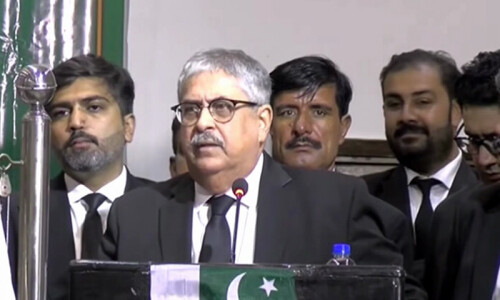
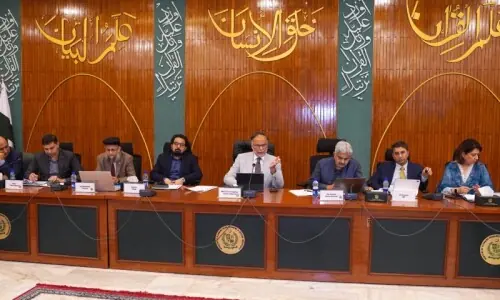
On the day of the full-court meeting, four senior justices, including the senior puisne judge, declined to attend. The approval of the Supreme Court Rules, 2025, had been on the agenda. The new rules had been notified by circulation earlier, to the disappointment of the recusing judges, who wanted them debated before the full court and approved after deliberation. This was certainly not an unreasonable expectation, given that these rules will govern the highest court of the land, and there should have been more transparency in their implementation.
“We see no point in attending a meeting that is premised on amending rules which, in our respectful view, already suffer from illegality both in substance and in process,” the judges regretted.
The Supreme Court is clearly fractured from within. It is unfortunate that matters have come to this point, but the judges have only themselves to blame.
Published in Dawn, September 10th, 2025