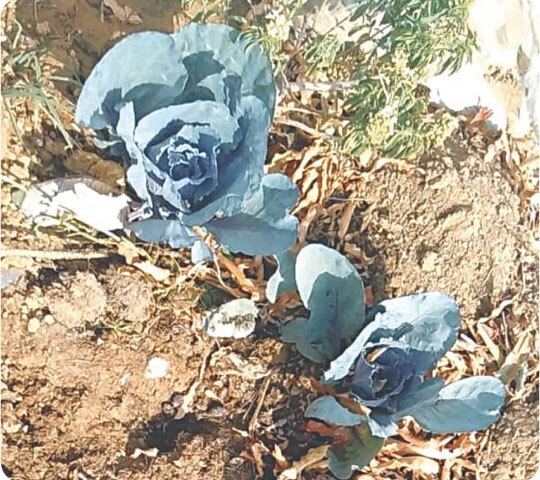
Red cabbage is botanically known as Brassica oleracea var rubra and belongs to the Brassicaceae family, which also includes kale, broccoli and Brussels sprouts. With its tightly packed heads of deep magenta and purple leaves, it is as pleasing to the eye as it can be to the tongue. While its green cousin is a reliable classic, red cabbage brings a dramatic splash of colour to the garden bed, transforming a vegetable patch into a vibrant tapestry.
Moreover, the red cabbage has a smaller and denser head compared to its counterpart. It is relatively uncommon, as it is not grown on a large scale for food. Therefore, it fetches a premium price as compared to the green cabbage, which is one of the least-expensive vegetables.
The red variant also offers an upgrade on the health benefits offered by the green cabbage. One of the most significant aspects is its role in heart health; red cabbage is said to increase the antioxidants that protect the heart and to decrease the bad cholesterol from the blood lipids.
In terms of taste, red cabbage has an earthier taste. It definitely has a peppery touch to its taste. Sometimes, when cooked, red cabbage can change the colour of the curries from pink to purple or blue, which makes the meal unpalatable and unpleasant to look at. These attributes make it less suitable for curries and main course dining.
With an earthy, peppery taste and as a nutritional powerhouse for heart health, the red cabbage has qualities beyond being pleasing to the eye…
At the same time, the finely diced red cabbage leaves are routinely used, albeit in a limited quantity, as a garnish to add colour to salads and other meals that are consumed raw. Furthermore, red cabbage is also consumed in stir-fried options, including in a variety of popular German dishes, such as pot roast.
The resilience of the plant also adds to its desirability. Members of the Brassica family tend to tolerate heat better. They readily survive and thrive in warm temperatures, such as those prevalent in Karachi.
The seeds of red cabbage, sown in a container covered with plastic and kept away from sunlight, will start to germinate within a week. But the duration required for germination also depends on the quality of the seeds and conditions.
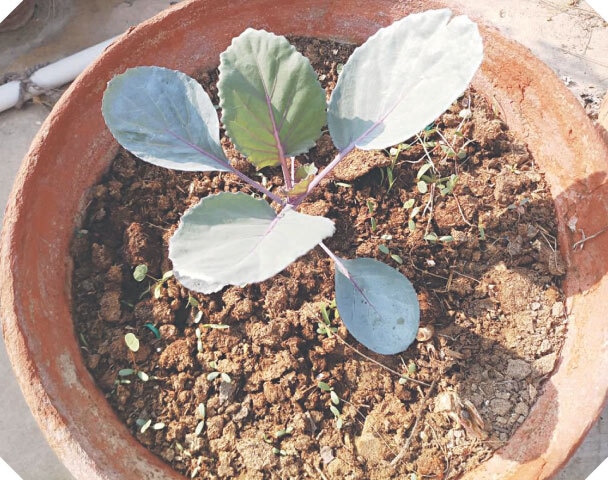
Once the germinating sprouts are visible, it is time to remove the plastic cover. With the plant now exposed to sunlight and moisture evaporating from the soil surface, the gardener should gradually increase the water given to the plant.
The first two leaves that mark the advent of a seedling growth are cotyledons, followed by the appearance and growth of true leaves in the next five to seven days. The true leaves are relatively broad in shape and have characteristic veins going through them. Unlike in the green cabbage, the veins present on the leaves of the red variant are purplish to maroon.
In a month’s time, four to five true leaves will appear on the seedling. During this phase, the soil should be boosted with mild, balanced nitrogen, phosphorus and potassium (NPK) fertiliser. This is also the best time to choose and shift the stronger seedlings to a dedicated space. Thinning, or selection of the stronger seedling, also results in the removal of the weaker seedlings. The removed seedlings should be placed in the compost bin.
After shifting, the seedling usually stabilises in a week’s time. Afterwards, a fine layer of compost should be added to the soil of the plant’s new environs. The smaller, nascent leaves at this stage are easily chewable and juicy. These attributes make the tender leaves a target of birds, pests, insects and diseases. Use a green net or a scarecrow to deter birds, and apply organic pesticides such as neem oil to ward off pest attacks. Slugs, caterpillars and aphids are the most likely pests to target red cabbage seedlings during the development stage.
Please send your queries and emails to doctree101@hotmail.com. The writer is a physician and a host for the YouTube channel ‘DocTree Gardening’ promoting organic kitchen gardening
Published in Dawn, EOS, September 6th, 2025