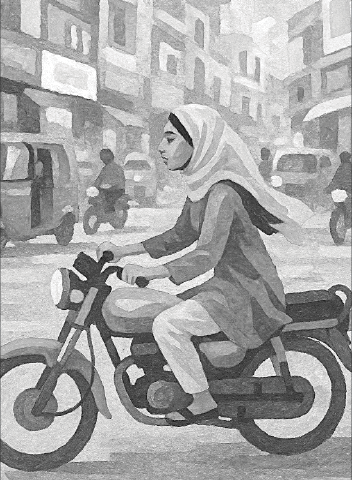
IN the swarming streets of Lahore, a silent but visible revolution is taking shape. It does not involve protests or rebellious political groups. This change is about self-reliance, confidence and conve-nience. Motorcycles, including e-bikes and scooties, are becoming the symbol of independence for women.
Housewives, once confined to their homes due to logistical limitations, are now seen carrying their children and running daily errands on two-wheelers. The transition from waiting for buses and rickshaws to independently riding through the city streets marks a significant shift in urban mobility. It is a movement powered by empowerment, autonomy and affordability.
Whether at traffic signals, in the bustling roads of the walled city, or around markets and parking lots, the sight of women on two-wheelers is becoming more and more common.
The varied designs, colours as well as shapes of scooties have played a huge role in attracting women to opt for them. However, naturally, the primary driver behind this drastic shift is practicality, not aesthetics.
The e-bikes are particularly favoured by women because they are more affordable to run, can be charged at home, and require minimal maintenance.
Besides, the lack of a clutch or complex gear system makes e-bikes user-friendly for women without earlier exposure to driving. And, finally, e-bikes are cost-effective, and are friendly to the environ-ment. In a smog-choked city like Lahore, this shift could not be more welcome.
Motorbikes were once seen as a masculine domain, but women are now taking control of their mobility, and performing daily tasks on their own.
While giving mobility to women, the emerging scenario has further reduced pressure on male family members, helping both the genders in managing time and work more efficiently.
Of course, challenges persist. Women still face judgment and unwanted stares even when dressed conservatively. But every social change has teething problems till they become a norm. It is time for policymakers and city planners to support and accelerate the change. Initiatives such as safety training programmes, better infra- structure, and public awareness campaigns can really go a long way towards making this revolution a social norm in the years that lie ahead.
Saba Liaquat
Lahore
Published in Dawn, August 31st, 2025