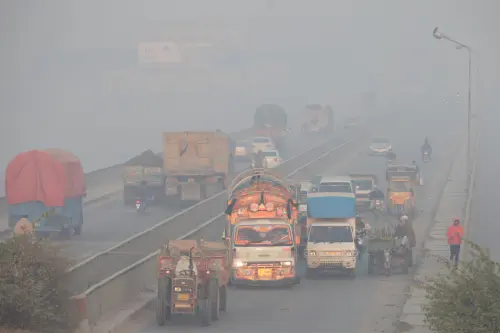
THERE was a sense of déjà vu when Prime Minister Shehbaz Sharif on Tuesday ‘formally’ launched Pakistan’s New Energy Vehicle Policy 2025-30. The same policy had, after all, been ‘officially’ launched on June 19, according to a PID press release issued on the same date. Perhaps the government is so enamoured with this achievement that it felt it necessary to talk about it twice. All that seemed different this time was the presence of the prime minister and his gifts. He handed over several electric scooters to high-achieving Intermediate students, promising more in the years to come. His office insisted that this event formally marked the effective date of the NEV policy. All this is well and good: one hopes that the actual policy will yield its intended benefits. The last attempt to formalise Pakistan’s approach to NEVs quickly fell apart. Launched in 2019 by the PTI government, the previous policy was abandoned due to the upheaval caused by Covid-19. Now, the government has reworked it and presented it as a means to save billions annually on petroleum imports and reduce urban air pollution, “which costs us over Rs105bn in healthcare and productivity losses”.
These are noble aims, indeed. The NEV policy’s ambition also deserves to be applauded: it aims for 30pc of all new vehicle sales to be electric by 2030, and sets an even more enterprising goal of 90pc by 2040. If these benchmarks can be achieved, it would mean this government would have triggered an energy revolution as significant as Pakistan’s globally celebrated transition to solar energy. However, many concerns remain about the policy’s viability. The key question is whether vehicle manufacturers will pass on real incentives to consumers, or repeat the industry’s old practice of maintaining high margins and giving minimal thought to the environmental impact of their activities. Unless the value proposition of NEVs becomes clear to consumers, those targets will prove difficult to attain. A key concern will be the quality of batteries sold in Pakistan, which the government must consider regulating. Charging infrastructure and battery-swapping facilities will also require sustained investment over a long period of time. Therefore, instead of grand events to celebrate NEVs, what Pakistan needs more is commitment and consistency. It has sown the seeds; now it must water the soil and hope it bears fruit.
Published in Dawn, August 28th, 2025