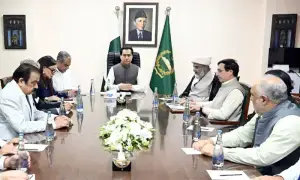
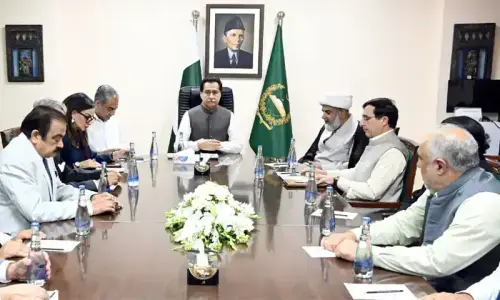
COX’S BAZAR: Bangladesh’s interim leader, Nobel Peace laureate Muhammad Yunus, said on Monday there was a “moral responsibility” to end ethnic cleansing of the persecuted Rohingya minority in neighbouring war-torn Myanmar.
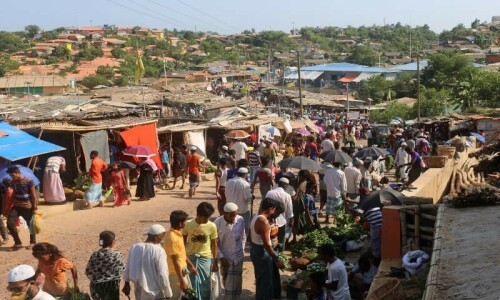
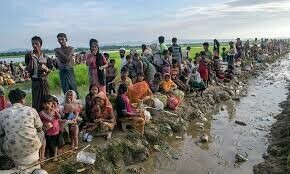
More than a million members of the mostly Muslim people live in refugee camps in Bangladesh’s Cox’s Bazar region, most of whom arrived after fleeing a 2017 military crackdown in neighbouring Myanmar.
“Bangladesh now hosts 1.3 million forcibly displaced Rohingya from Myanmar,” Yunus told the aid conference in Cox’s Bazar, calling it the “largest refugee camp in the world”.
The talks aim to address the plight of Rohingya refugees and seek the “early, voluntary and sustainable return” to Myanmar, he said, even as fresh arrivals cross over and shrinking aid flows deepen the crisis. “Due to continued persecution, Rohingya continue to leave Myanmar,” Yunus said.
“It is our moral responsibility to take the right side of history and stop the armed actors from carrying out their horrible design of ethnic cleansing of the entire Rohingya populace.” The talks on Monday come ahead of a UN conference on the crisis in New York on Sept 30.
Yunus said that while his nation was hosting Rohingya refugees, it needed global support. “It is not only the responsibility of Bangladesh, but also of the international community, to share the burden of the Rohingya crisis,” he said.
Bangladesh faces its own challenges, emerging from the mass uprising in August 2024 that overthrew the government of Sheikh Hasina, with fresh elections expected in February.
During the past eight years, Bangladesh, especially the community in Cox’s Bazar, has been “making a tremendous sacrifice”, Yunus said. “The impact on our economy, resources, environment and ecosystem, society and governance has been huge,” he added.
“We don’t foresee any scope whatsoever for further mobilisation of resources from our domestic sources, given our own challenges.” Yunus added that while Bangladesh was “working relentlessly” to end the crisis, it could not do it alone.
“The Rohingya crisis emanated from Myanmar,” he said. “And the solution also lies there.”
Bleak future for Rohingya
Bangladesh held talks aimed at addressing the plight of Rohingya refugees, even as fresh arrivals cross over from war-torn Myanmar and shrinking aid flows deepen the crisis. The meetings in Cox’s Bazar took place ahead of a UN conference in New York on Sept 30.
Both Bangladesh and the UN want to provide stable conditions in Myanmar for the Rohingya to eventually return. That seems unlikely any time soon.
“I consistently hear from Rohingya refugees that they want to return to their homes in Myanmar, but only when it is safe to do so,” Nicholas Koumjian, who heads the UN’s Independent Investigative Mechanism for Myanmar, warned ahead of the meeting.
“Ending the violence and atrocities against civilians from all communities in Rakhine is critical for the eventual safe, dignified, voluntary and sustainable return of those that have been displaced.” But Kaisar’s old homeland of Rakhine is the site of intense fighting in Myanmar’s civil war, triggered by the 2021 coup that ousted the democratic government.
Published in Dawn, August 26th, 2025