DAMASCUS: Syria’s first parliamentary election under its new Islamist administration, scheduled for September, will not include the southern province of Sweida and two other provinces because of security concerns, the electoral commission said on Saturday.
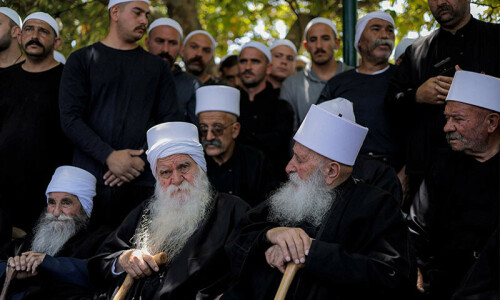
Hundreds of people were reported killed in July in clashes in Sweida province, pitting Druze fighters against Bedouin tribes and government forces. Israel intervened with airstrikes to prevent what it said were mass killings of Druze by government forces.
The Druze are a minority offshoot of Islam with followers in Syria, Lebanon and Israel. Sweida province is predominantly Druze but is also home to Sunni tribes, and the communities have had longstanding tensions over land and other resources.
The Higher Committee for People’s Assembly Elections said the ballot would also be delayed in the northern provinces of Hasaka and Raqqa until a “safe environment” is in place, according to state news agency SANA.
Seats allocated to the three provinces will remain vacant until elections can be held there, commission spokesperson Nawar Najmeh told SANA.
“The elections are a sovereign matter that can only be conducted in areas fully under government control,” he added.
The head of the electoral commission said last month that voting for the 210-member People’s Assembly was due to take place between September 15 and 20.
After toppling longtime ruler Bashar al-Assad in December, Syria’s new authorities, led by President Ahmed al-Sharaa, dissolved the Assad-era parliament and adopted a temporary constitution for a five-year transition.
The interim charter has been criticised for concentrating power in Sharaa’s hands after decades of autocracy under Assad and for failing to reflect Syria’s ethnic and religious diversity.
Appointed local bodies will pick two-thirds of the 210 lawmakers and Sharaa will name the rest.
But the process will be postponed in Druze-majority Sweida province in the south, and in Raqa and Hasakeh in the north and northeast “until the appropriate conditions and a safe environment are available”, the official SANA news agency quoted organising committee member Nawar Najmeh as saying.
A Kurdish administration largely controls Raqa and Hasakeh provinces. Implementation of a March 10 deal on integrating Kurdish institutions into those of the central government has been held up by differences between the two sides.
The postponement is due to “the security challenges these provinces are witnessing” and is “to ensure fair representation” in those areas, Najmeh said.
Seats will be “reserved” in the transitional legislative body for the three provinces to fill at a later date, he said, adding that the selection process can only go ahead in “territories controlled by the state”. The new body will have a renewable mandate of 30 months.
Published in Dawn, August 24th, 2025