0
0

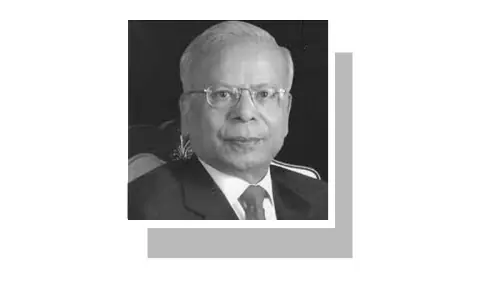
KARACHI: Indian historian Prof Dipesh Chakrabarty on Monday said that climate change was not an important agenda of discussions even at the turn of the century though steps to counter it had been taken a decade earlier.
He was speaking online from Chicago at a session about the Urdu translation of his book, The Climate of History in a Planetary Age.
The event was held at the National Academy of Performing Arts, where Climate Action Center’s Imagining Life initiative was launched on Monday.
Prof Chakrabarty mentioned a Harvard professor who wrote about the 20th century but did not mention climate crisis at all in his book.
“It was in 2003 that scientists were thinking that human technological advancement was similar to a meteor that had hit the earth wiping out the entire dinosaur population,” he said.
He mentioned the times of his growing up in India where industrialisation was the buzz word and every parent wanted their children to study engineering. He too studied physics, and later did his masters in management sciences. This did not allow him to study history in India for his PhD.
“It was only in Australia that I was allowed to enrol for a PhD program in my subject of interest, history,” he said.
This change in his perspective, he said, was because in India, though capitalism was booming, the education system still relied on Marxism to teach history.
He said in 1900, the world population was about 1.5 billion. In 2000, it had grown to roughly six billion, while now it stands at approximately eight billion. The increase in population, he said, meant more demand for everything and that had changed the way food, for example, was acquired using industrial means of production. That, he pointed out, had created a major climate crisis.
Humans, he said, should realise that they were a minority in the world while the microbes were the majority. This minority should not destroy the earth for everybody.
He said the middle-class lifestyle worldwide was responsible for the destruction of global climate.
About the Urdu translation of his book, he said: “It is a great privilege for me to see this book translated into Urdu, the first full translation in a South Asian language spoken across India, Pakistan and Bangladesh. For me, this gesture is more valuable than a big prize, because it represents an act of friendship beyond the boundaries of nation-states.”
Later, at a panel discussion, a message from the translator of the book, Ali Siddiqui, was read out, while the reviewer of the book, Tariq bin Azad, read from the translation.
Published in Dawn, August 19th, 2025