

EVERY Independence Day — this year is Pakistan’s 79th — offers a moment of celebration, as well as a moment of reflection on the nation’s past, present and future. Remember Independence Day 2023? I had just joined UNDP Pakistan and the country was facing concurrent, acute challenges — the aftermath of devastating floods, a balance-of-payments crisis, pockets of insecurity and a complex political transition on the horizon.
Yet, in just two years, Pakistan has begun to chart a remarkable turnaround. Despite navigating a precarious geostrategic landscape, signs of economic stabilisation are emerging, with GDP growing by 2.7 per cent last fiscal year and projected at 3.6pc next year. This recovery is powered by renewed reform momentum premised on fiscal discipline, institutional strengthening, and most notably, a national commitment to digital transformation supported by Pakistan’s greatest asset: its tech-savvy, dynamic youth.
For policymakers and development practitioners, however, they must still contend with a range of human development indicators that often temper fiscal optimism. While macroeconomic indicators trend upwards, progress on human development has lagged behind. According to the Sustainable Development Goals 2025 Report, Pakistan slipped to 140th out of 167 countries, and the 2025 Human Development Report continues to place the country in the ‘low’ human development category. Equally concerning are stagnating indicators on gender equality and governance. These disparities must remind us of a basic development principle: without commensurate investments in people, in education, health, gender equity and accountable institutions, GDP gains risk being neither inclusive nor sustainable.
As Pakistan walks this tightrope, the resurgence of the ICT sector in 2025 is particularly significant, signalling that the country is on the cusp of a digital leap, well positioned to pivot its development trajectory. As UNDP’s National Human Development Report 2024 showed, digital access is rapidly becoming a precondition to human development. Districts with higher levels of digital uptake consistently report better living standards, proving that access to internet and digital devices are powerful enablers of inclusion and progress.
The ICT sector’s resurgence in 2025 is significant.
Following a sharp decline in 2022-23, Pakistan’s ICT sector rebounded strongly, now leading growth in the services industry. In FY25, ICT exports surged by 23.7pc to reach $2.83 billion, generating a trade surplus of $2.43bn. Freelancers contributed an additional $400 million in foreign exchange, making Pakistan the world’s top IT outsourcing destination, and the second-largest supplier of digital labour globally. Take Sana Razzaq, a Lahore-based e-commerce entrepreneur exporting bath salts globally, or Karachi’s Zeenat Taj, who sells artificial jewellery to customers in the Middle East and America. They are not anomalies. Rather, they represent a growing wave of digital entrepreneurs, especially among women and youth, participating in, and shaping, global e-commerce. The dream of e-Pakistan is becoming a reality.
The landmark Digital Nation Pakistan Act, 2025, established regulatory bodies to build a unified, future-oriented architecture for digital governance and innovation. Complementing this, the National AI Policy 2025 provides a strategic blueprint for responsible and ethical AI use. The private sector has also stepped up, with companies like Jazz expanding to digital financial services, bridging the inclusion gap and enabling a future-ready digital ecosystem. And with the Securities and Exchange Commission of Pakistan, UNDP is supporting national efforts to digitise insurance and make it more affordable and accessible.
Moving forward, stronger legal frameworks around e-commerce, data protection, and cybersecurity will be essential to safeguard this space. For example, the Prevention of Electronic Crimes Act, 2016, continues to face enforcement challenges and requires explicit provisions to address online violence, particularly technology-facilitated gender-based violence. Meanwhile, recent fiscal decisions — the inclusion of new taxes on digital transactions, the removal of IT export tax exemptions, and the absence of a unified tax regime across the federating units — could risk dampening investor confidence.
Recognising the development dividend of the digital revolution, Pakistan’s youth are not merely showing up. They are ready to lead. With vision and support, they can drive a transformation that is inclusive, sustainable and uniquely homegrown.
As the nation celebrates 78 years, UNDP is ready to walk this path with you — towards a digital future that leaves no one behind.
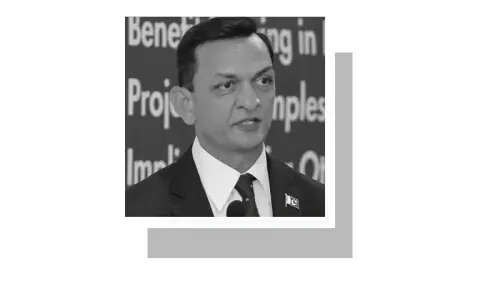
The writer is resident representative, UNDP Pakistan.
Published in Dawn, August 14th, 2025