Six Lebanese soldiers killed in explosion at Hezbollah site
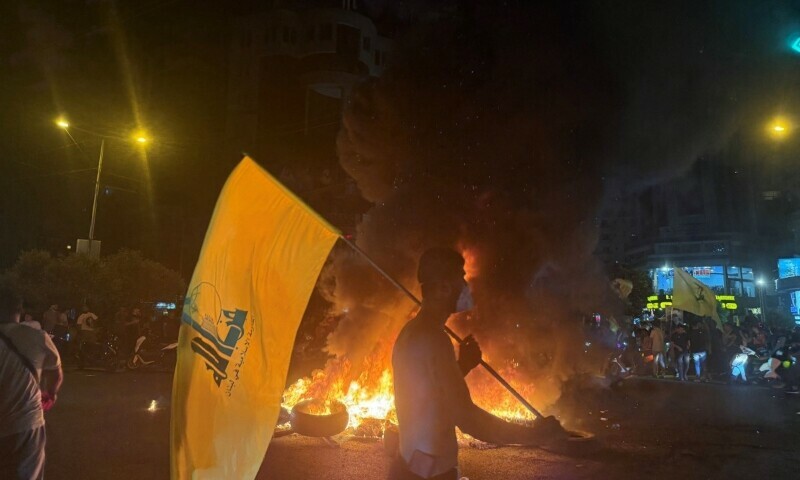


BEIRUT: The Lebanese army said a blast at a weapons depot near the Israeli border killed six soldiers on Saturday, with a military source saying the troops were removing munitions from a Hezbollah facility.
Under the truce that ended last year’s war between Israel and Hezbollah, Lebanese troops have been deploying in the country’s south and dismantling the Iran-backed group’s infrastructure in the region.
The deaths come after the Lebanese government decided this week to disarm Hezbollah and tasked the army with drawing up a plan to complete the process by year end.
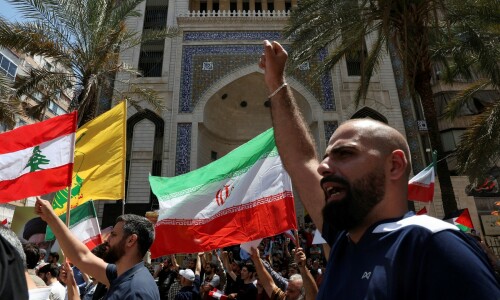
Hezbollah has said it will ignore the cabinet’s decision, which came under heavy US pressure, while the group’s backer Iran said it opposed the effort.
Beirut slams Tehran’s opposition to Hezbollah disarmament as ‘unacceptable’
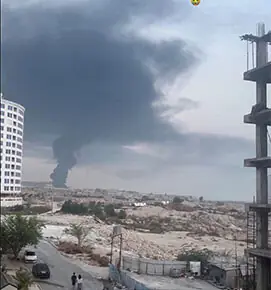
A military statement gave a preliminary toll of six soldiers killed “while an army unit was inspecting a weapons depot and dismantling its contents in Wadi Zibqin”, in Tyre district near the Israeli border. Investigations were underway to determine the cause of the blast, it added.
A military source said the blast took place “inside a Hezbollah military facility”. Troops were “removing munitions and unexploded ordnance left over from the recent war” when the blast occurred, the source added. President Joseph Aoun said he was informed by army commander Rodolphe Haykal of the “painful incident”.
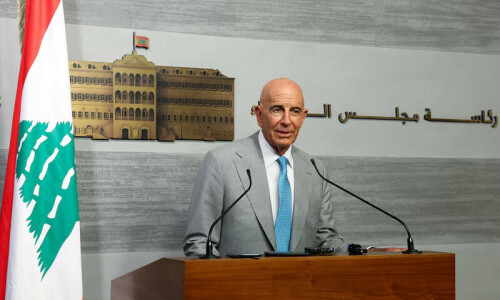
Prime Minister Nawaf Salam paid tribute to the troops who were killed “while performing their national duty”, calling the army the protector of Lebanon’s “unity and its legitimate institutions”.
US envoy Tom Barrack, who has led Washington’s efforts to press for Hezbollah’s disarmament, extended the administration’s “deepest condolences” over the “loss of these brave servicemen”. Hezbollah lawmaker Ali Ammar likewise offered his “sincerest condolences to the Lebanese army”.
Hezbollah disarmament
Lebanon slammed what it called “flagrant and unacceptable interference” by Iran on Saturday after an adviser to the Islamic republic’s supreme leader expressed opposition to the disarmament of its ally Hezbollah.
The Lebanese cabinet ordered the army on Tuesday to draw up a plan to establish exclusive government control over weapons by the end of the year — a move that would mean disarming Hezbollah.
“The Islamic Republic of Iran is certainly opposed to the disarmament of Hezbollah,” Ali Akbar Velayati, international affairs adviser to Ayatollah Ali Khamenei, was quoted as saying by the Tasnim news agency.
“Iran has always supported the people and the resistance of Lebanon and continues to do so.”
In a post on X, the Lebanese foreign ministry condemned Velayati’s remarks, which constitute “flagrant and unacceptable interference in Lebanon’s internal affairs”.
“Some senior Iranian officials have repeatedly overstepped by making unwarranted statements regarding Lebanese domestic decisions that are of no concern to the Islamic republic,” the ministry added.
It went on to remind “the leadership in Tehran that Iran would be better served by focusing on the issues of its own people”. Hezbollah is part of Iran’s so-called “axis of resistance” — a network of armed groups in the region, including Hamas in Gaza and Houthi rebels, united in their opposition to Israel.
‘Not the first time’
Beirut’s disarmament push followed a war between Israel and Hezbollah last year that left the group’s military clout and political influence severely diminished.
It also came amid pressure from the United States and anti-Hezbollah parties in Lebanon to commit to disarming the group, as well as fears Israel could escalate strikes on Lebanese territory if they failed to act.
Characterising the disarmament plan as the result of US and Israeli interference, Velayati said it was “not the first time that some in Lebanon have raised such issues”.
“But just as previous anti-Lebanese plans failed, this one will also not succeed, and the resistance will stand firm against these conspiracies.” Earlier this year, the Lebanese foreign ministry summoned the Iranian ambassador over critical remarks he made about the disarmament plans.
On Wednesday, Iran’s top diplomat Abbas Araghchi, said any decision on disarmament was Hezbollah’s to make, adding Tehran supported its ally “from afar, but we do not intervene”.
Hezbollah itself has slammed the cabinet decision as a “grave sin”, adding it would treat the move “as if it did not exist”.
The Lebanese government has cast disarmament as part of the implementation of the November ceasefire that sought to end the fighting between Israel and Hezbollah.
‘Doing their job’
The commander of the UN peacekeeping force in Lebanon (UNIFIL), Major General Diodato Abagnara, said the soldiers were “simply doing their job to restore stability and avoid a return to open conflict”.
The blast came days after UNIFIL spokesman Andrea Tenenti said troops had “discovered a vast network of fortified tunnels” in the same area. UN spokesman Farhan Haq told reporters that the troops uncovered a cache of artillery, rockets, mines and improvised explosive devices.
In April, the Lebanese military said three soldiers were killed in a munitions blast, just days after another was killed in an explosion as troops dismantled mines in a tunnel.
Under the November ceasefire that sought to end more than a year of hostilities between Israel and Hezbollah, arms are to be restricted to Lebanese state institutions.
The government has tasked the army with presenting a plan by the end of August for disarming non-state actors.
Published in Dawn, August 10th, 2025